A 2024 Chick-fil-A on South Dixie Highway sold for $8.9 million with 13 years remaining on its initial lease term.
Miami Chick-fil-A sells for $8.9 million
The remaining lease term is the key detail in this Miami sale: Chick-fil-A has 13 years left on its initial term, giving the buyer a long stretch of contracted occupancy. SRS Real Estate Partners negotiated the $8.9 million ground lease sale at 18240 S. Dixie Highway. That remaining term gives the transaction a clear starting point for analysis, but it doesn’t tell the whole story. A buyer assessing a leased property also needs to understand the rent, the timing and size of any increases, and the conditions under which the lease can continue or end.
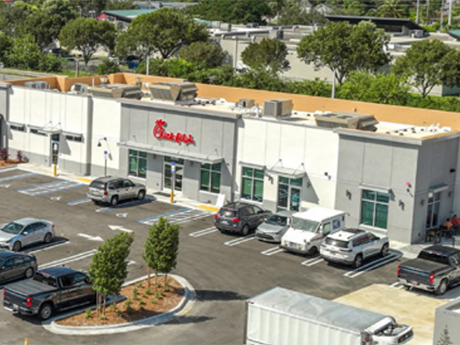
Built in 2024, the 5,399-square-foot restaurant is leased on an absolute triple-net basis with a corporate guarantee. That structure shifts property expenses to the tenant, though the announcement doesn’t disclose rent, lease escalations or the ground lease’s duration—details that would help explain the price. The buyer was based in New York. The expense structure can make ownership more predictable because the landlord typically has fewer routine property costs to manage, but it doesn’t remove the need to evaluate the contract, the tenant’s obligations and the remaining term.
Patrick Nutt and William Wamble of SRS represented the seller, a joint venture between Berkowitz Development Group and Landsea Development Group. The transaction is a compact example of how a newer, single-tenant restaurant can trade on the strength of its lease terms as much as the building itself. For a buyer, the building’s recent construction may be relevant, but the lease is what connects the property to an income stream.
What the lease structure tells buyers
In a typical triple-net arrangement, the tenant pays property-related costs such as taxes, insurance and maintenance in addition to rent. An absolute triple-net lease generally places an especially broad range of property obligations on the tenant, though the exact allocation depends on the lease language. That distinction matters: the label gives a useful outline, but it can’t substitute for the contract itself. The announcement identifies the lease as absolute triple-net, without detailing its individual provisions.
A corporate guarantee adds another layer to the arrangement. In general, a guarantee can give a landlord recourse to a corporate entity if the tenant fails to meet obligations covered by the guarantee. Its practical value depends on the guarantee’s scope, duration and terms, none of which were disclosed here. It’s therefore a meaningful feature of the reported deal, but not enough on its own to establish how much protection the buyer receives.
Thirteen years remaining on the initial term is a substantial period of contracted occupancy in the context of a property sale. It can reduce the near-term uncertainty associated with a lease that is close to expiry, and it gives the buyer time before any initial-term decision point arrives. But the remaining term doesn’t reveal whether the tenant has extension options, how those options are priced or what happens if the restaurant stops operating. Those provisions can shape the property’s value well beyond the headline lease duration.
And this is the part most people overlook: a long lease isn’t automatically a strong lease. The rent has to be considered alongside the term, any scheduled increases and the tenant’s obligations. If rent stays unchanged for a long period, the income may lose ground against rising costs elsewhere; if increases are built in, their timing and formula matter. The sale announcement doesn’t provide those details, so it leaves the central income questions unanswered.
Why the property type attracts attention
Single-tenant restaurant properties are often assessed differently from buildings with several occupants. With one tenant, the lease relationship is relatively easy to identify, and a buyer can focus on the credit support, rent and duration of that agreement. The trade-off is concentration: if the tenant leaves or defaults, there isn’t another occupant already paying rent. A restaurant building may also have design features suited to a particular operator, which can affect how readily another business could use the space.
The property’s 2024 construction date is another point of context. A newer building may have less immediate wear than an older one, but age alone doesn’t establish its condition, construction quality or future maintenance needs. Those questions require property-level information that isn’t included in the announcement. The building’s 5,399 square feet provide a measure of its size; they don’t, by themselves, show how well the rent supports the purchase price.
Ground lease terminology also calls for care. In a ground lease, the land and the building can be subject to different ownership and lease arrangements, and those arrangements affect what the buyer acquires and what obligations remain. The announcement describes this as a ground lease sale but doesn’t spell out the ownership structure, the ground lease’s duration or its relationship to the restaurant lease. Those distinctions matter because a buyer’s rights and income depend on the documents behind the transaction, not just the property description.
Here’s the thing: the reported price is a headline, not a valuation explanation. Without the rent and escalation schedule, readers can’t calculate the property’s income yield or compare it meaningfully with other leased assets. Even a simple comparison between sale prices can mislead when the properties have different lease terms, expense allocations, guarantees or land arrangements.
What the available details leave open
The announcement identifies the buyer only as being based in New York. That tells readers something about the buyer’s location, but not its investment strategy, ownership structure or reason for pursuing this property. There’s no need to infer those motives from geography. The reported facts support a narrower reading: a New York-based buyer acquired a recently built, single-tenant restaurant property with 13 years remaining on the tenant’s initial lease term.
For readers comparing this sale with other commercial property transactions, the missing information is as instructive as the reported terms. Rent would help show how the $8.9 million price relates to contracted income. Escalations would clarify whether that income is scheduled to grow. The ground lease duration would help establish how long the buyer’s interest lasts under the arrangement. Without those figures, any confident account of whether the deal was expensive or attractively priced would go beyond what’s available.
If you're working in this space, the practical takeaway is to treat the lease summary as a starting point for questions, not a substitute for underwriting. The tenant’s name, guarantee and remaining term provide useful signals, but the cash flow depends on details that haven’t been reported. The same caution applies to the absolute triple-net label: it suggests a particular allocation of costs, yet the actual lease governs the obligations.
Why the sale matters
This is more significant than it looks as a small case study in how commercial real estate gets described and evaluated. The building is new, the tenant is recognizable and the lease has a meaningful period remaining. Those features make the sale easy to summarize. They don’t make the economics transparent. A price without rent, escalations or the ground lease duration leaves readers unable to judge how much of the transaction’s appeal rests on income, the tenant’s credit support or the property’s underlying land and building rights.
That said, the disclosed information does show why lease terms can carry as much weight as the physical asset in a single-tenant sale. The tenant’s obligations and the length of its commitment shape the buyer’s expected ownership experience; the restaurant itself is only one part of that equation. The deal offers a clear example of the appeal of contracted occupancy, along with the limits of judging a property from a short announcement.
Unanswered, for now.
Discussion
Sign in to join the discussion.