A national bank financed the acquisition of a 62,364-square-foot retail property at 700 W. Big Beaver Road in Troy with a 6.1% loan.
Acquisition financing in Troy
The defining feature of this Troy deal is the gap between the loan’s amortization schedule and its term. The $25 million acquisition loan carries a 6.1 percent rate and is amortized over 30 years, while the borrower has a seven-year loan term. That structure spreads scheduled principal repayment over a much longer period than the time the loan is set to remain outstanding. It can reduce required payments during the term, though the available details don’t say whether the rate is fixed or floating, how often payments are due, or what other loan conditions apply.
That distinction matters because amortization and loan term describe different things. Amortization is the timetable used to calculate regular principal and interest payments; the term is the period before the loan reaches its stated maturity. When amortization extends beyond the term, scheduled payments generally won’t pay the entire principal balance down before maturity. The borrower may therefore face a remaining balance to repay, refinance or otherwise address under the loan documents. The exact amount and available options can’t be determined from the information provided.
The structure may support near-term cash flow by keeping scheduled principal repayment slower than it would be under a shorter amortization. But lower scheduled payments don’t establish that the property produces enough income to cover its debt, nor do they reveal how much equity the borrower put into the acquisition. The purchase price, property income, occupancy, operating expenses and other financing terms aren’t disclosed. Those omissions limit what the headline loan terms can tell us about the transaction’s risk or performance.
The property and its setting
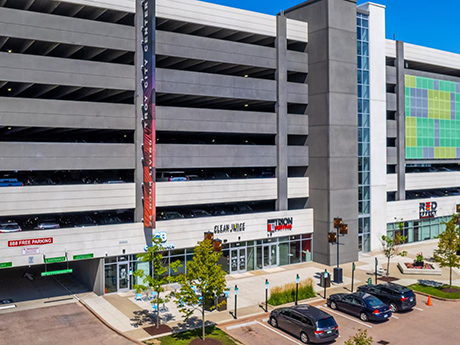
Marcus & Millichap Capital Corp. (MMCC) arranged the financing through a national bank, with Todd Phillips handling the transaction. The loan supports the acquisition of a 62,364-square-foot retail property at 700 W. Big Beaver Road in Troy, Michigan, near I-75. Several national restaurant and retail tenants operate at the property. The location and tenant mix help describe the asset, but they don’t establish how well it performs.
For retail property, highway access can shape how customers reach a site and how visible it is to passing traffic. That’s useful context for considering a property’s position, especially when its tenants serve customers who may arrive by car. Still, proximity to a major road is not a substitute for evidence about customer visits, tenant sales, lease terms or the property’s competition. A location can be convenient and recognizable while its financial performance remains unknown.
The presence of several national restaurant and retail tenants also gives a reader a basic sense of the property’s use. Tenant names, lease lengths, occupied square footage and rent levels aren’t included, however. Without those details, it’s not possible to assess how concentrated the income is, how much space is occupied, or when leases might expire. A recognizable tenant roster can be informative; it isn’t a complete account of a center’s operating position.
What the financing does and doesn’t show
A reported interest rate is only one part of the debt picture. The 6.1 percent figure offers a point of comparison, but the article fragment doesn’t provide the loan’s fee structure, repayment mechanics, covenants, or any conditions that could affect the borrower’s actual cost. It also doesn’t state whether the rate can change. Those details matter when comparing financing, so the headline rate should be read as a disclosed term rather than a full measure of the loan’s economics.
Similarly, the $25 million loan amount can’t be used on its own to infer the purchase price or the lender’s share of the property’s value. The purchase price is undisclosed, and there’s no information about additional capital or other debt. The loan amount is a concrete fact about the financing; any conclusion about leverage, valuation or the borrower’s cash contribution would go beyond the available record.
Here’s the thing: the structure is more significant than it looks because the seven-year term sets a decision point well before the 30-year amortization schedule runs its course. That doesn’t mean the borrower will encounter difficulty at maturity. It means the eventual balance and the property’s ability to support a payoff or replacement financing will matter, while neither is addressed in the fragment. (And this is the part most people overlook.) A long amortization can ease payments now while leaving more principal outstanding later.
Implications for retail observers
If you're working in this space, the deal is best read as a financing snapshot, not a verdict on the property or the broader Troy retail market. It identifies a sizeable acquisition loan, a seven-year term, a 30-year amortization and an asset with national restaurant and retail tenants near I-75. It doesn’t disclose the operating data needed to judge the property’s income or the debt’s coverage. The distinction is basic, but market coverage can blur it when loan terms are presented without the underlying property economics.
What this means for you as a reader is that the next useful information would be the kind that connects the debt to the asset: purchase price, rent and occupancy details, lease duration, property expenses and the principal balance expected at maturity. None appears in the available material, so the transaction’s long-term implications remain open. That said, the stated terms do show how the borrower’s scheduled repayment period extends beyond the loan’s stated term.
For now, the clearest takeaway is narrow. MMCC arranged $25 million in acquisition financing from a national bank for a 62,364-square-foot retail property in Troy, and the loan combines a 6.1 percent rate with a seven-year term and 30-year amortization. A longer repayment schedule may ease scheduled payments during the term. The remaining balance, the property’s income and the borrower’s plans at maturity are not disclosed. A financing detail, not a full performance story.
Discussion
Sign in to join the discussion.