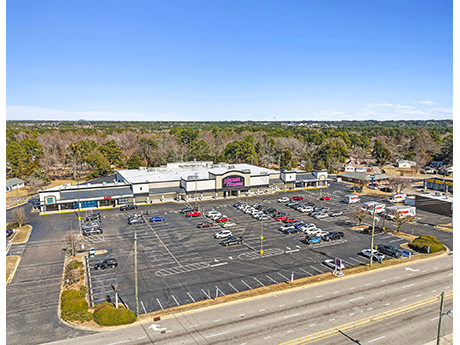
Hope Mills Crossing, a renovated 53,204-square-foot center anchored by Planet Fitness, sold for $7 million at 95% occupancy.
Hope Mills Crossing sells for $7 million
Hope Mills Crossing was 95 percent leased when it changed hands, a solid occupancy figure for a neighborhood center. Atlantic Capital Partners brokered the $7 million sale of the 53,204-square-foot property in Hope Mills, North Carolina, about five miles south of Fayetteville. Those figures establish the basic shape of the deal: a midsize retail property with most of its space occupied, located near a larger city, and anchored by a recently delivered fitness tenant. They don’t, on their own, explain the buyer’s underwriting or the seller’s return. The distinction matters because occupancy is only one measure of a shopping center’s performance.
What the occupancy figure does—and doesn’t—show
A 95 percent leased rate suggests that most of the center’s rentable area had tenants in place at the time of sale. For a neighborhood center, that can indicate a functioning tenant roster and a relatively limited amount of space to lease. But the figure is a snapshot, not a full operating history. It doesn’t establish how long tenants have been in place, whether leases are close to expiration, or how much rent the occupied space produces.
Leased area and collected rent also aren’t interchangeable. A space can count as leased even if a tenant hasn’t opened yet, depending on how the figure is reported, and the article doesn’t specify the measure’s definition. Nor does it say whether the remaining vacancy is one contiguous space or several smaller suites. That gap could affect how straightforward the next leasing decision is: a single vacant unit may suit a retailer seeking a larger footprint, while scattered vacancies can call for a different tenant mix. The available details don’t identify the vacant space, so neither scenario can be assumed here.
For a prospective owner, the rent roll would typically help answer those questions. It shows tenant names, leased areas, rents, lease terms and other details that inform an income estimate. The report provides none of that information, and it also omits operating expenses and any purchase financing. The sale price and occupancy rate are useful markers, but they aren’t enough to reconstruct the property’s cash flow or establish whether the transaction was priced aggressively.
A fitness anchor and a service-oriented mix
The newly delivered Planet Fitness gives Hope Mills Crossing a recognizable anchor and a use that can bring customers to the property for repeat visits. Fitness centers often rely on regular member visits rather than occasional shopping trips, which can contribute to activity across the week. That doesn’t guarantee that members will shop with neighboring tenants, and the source provides no traffic or sales data. Still, the anchor’s role is relevant: it can help define the center’s identity and make the property more than a collection of individual storefronts.
The rest of the tenant mix spans medical, financial, government and service-oriented retail businesses. That range suggests the center provides several types of everyday services, potentially drawing customers with different reasons to visit. It’s a broader role than a fitness anchor alone might suggest, but the category labels leave important questions open. The report doesn’t name the businesses, describe their space needs, or indicate whether any tenant depends on walk-in traffic. Without those details, it’s not possible to judge how much the uses complement one another or how concentrated the center’s income may be.
Here’s the thing: a varied tenant roster can make a neighborhood center useful to its surrounding community, but variety by itself doesn’t prove that the tenancy is durable. A buyer would ordinarily look at each tenant’s lease term, rent, renewal options and business stability, alongside the cost of replacing a tenant if a suite becomes vacant. Those details aren’t reported here. The mix is a positive sign of service breadth; its financial strength remains untested in the information available.
Renovation and the condition of the asset
The center was renovated in 2025, a fact that may have helped present the property to the market and support its current leasing position. Renovation can cover a wide range of work, from visible improvements to building systems or site components. The source doesn’t describe the scope, cost or timing of individual upgrades, so the word shouldn’t be read as proof that every major component is new or that future capital spending will be limited.
That said, a recent renovation and a newly delivered anchor are both relevant to how buyers assess a retail property. They can signal that ownership has invested in the center and that at least one tenant has recently committed to occupying space. The remaining questions are practical: what work was completed, what obligations remain under tenant agreements, and whether the center needs additional leasing or maintenance spending. The article doesn’t answer them. A buyer’s inspection and operating records would ordinarily supply that detail, but the available report offers no account of those materials.
One useful distinction: a renovated property can still carry leasing risk. Occupancy can change as leases expire, tenants relocate or new spaces are delivered, and a current leasing figure doesn’t establish how stable the roster will be. The source doesn’t describe that history. For now, the clearest reading is that Hope Mills Crossing had high occupancy when sold and had received renovation work in 2025, while the longer-term performance picture remains incomplete.
What the sale price leaves unanswered
At $7 million for 53,204 square feet, the reported figures imply a sale price of about $132 per square foot. That’s a simple division of the disclosed price by the center’s stated area, not a measure of investment performance. It doesn’t account for the property’s income, expenses, condition, financing or the terms of its leases. Without a rent roll or operating figures, the implied per-square-foot price can help readers orient themselves, but it can’t show whether the center was cheap or expensive relative to its earnings.
The buyer isn’t identified in the report, and there’s no information about the seller’s basis, the capitalization rate or any assumed debt. Those omissions limit comparison with other retail sales. Similar neighborhood centers can differ substantially in tenant credit, lease structure, vacancy, physical condition and local competition, so headline prices alone are a blunt comparison tool. The $7 million figure is the transaction’s central fact, but it isn’t a full explanation of the deal.
This is more significant than it looks: a high occupancy rate can make a sale sound straightforward, while the economics depend on the quality and timing of the income behind that occupancy. If you’re working in this space, the practical questions are familiar—who occupies the suites, what rent they pay, how long their leases run, and what it costs to keep the property in good condition. Here, those answers aren’t available. A clean headline, with an incomplete operating picture.
Implications for the center’s next owner
The sale gives the next owner a center that was largely leased, recently renovated and anchored by Planet Fitness, alongside tenants in several service categories. Those attributes may offer a useful starting point for operating the property, but they don’t remove the need to manage tenant retention and any remaining vacancy. The 5 percent of space not counted as leased could become an opportunity to add a tenant that fits the existing mix; its actual appeal depends on the space and the local demand, neither of which is described.
For nearby customers, the tenant categories point to a center serving practical needs as well as fitness visits. Whether that range translates into a stronger destination depends on how accessible and useful the businesses are to local residents, and the source doesn’t include customer or traffic information. And yet, the combination does give the property a more varied purpose than a single-anchor description would convey.
Atlantic Capital Partners brokered the sale. David Hoppe, Eric Suffoletto, Jordan Gomez, Mike Lucier, Ben Olmstead and Kendra Doherty of the firm represented the seller. Beyond those transaction details, the report doesn’t identify the buyer or explain the property’s valuation. The available evidence supports a concise assessment: Hope Mills Crossing sold for $7 million with 95 percent occupancy, a newly delivered fitness anchor and a broad service mix, while key details about income and lease durability remain undisclosed.
Discussion
Sign in to join the discussion.