Architecture + Design 7 Bone-Chilling Skeletecture Buildings Around the WorldFrom medieval ossuaries covered in human remains to designs inspired by skeletal structures, these sites are spooky spectac...

7 Bone-Chilling Skeletecture Buildings Around the World
“It should be harsh and cruel, as if made of bones,” Antoni Gaudí wrote next to his sketch of the Passion Façade, the west-facing entrance of his magnum opus, the Sagrada Família. In stark contrast to the organic, pictorial design of the Nativity Façade on the opposite side of the basilica, which depicts the birth of Jesus, Gaudí employed skeletal forms to evoke human suffering and Christ’s final days.
While the Catalan architect drew inspiration from skeletons for multiple projects—most notably Barcelona’s Casa Batlló, a residential building known as the House of Bones for its dragon-vertebrae-inspired design, and Casa Milà, with its undulating, rib cage–like arches—he was not the first to do so. Skeletons have long served as sacred ornamentation across cultures, representing the transience of life. As early as 7,200 BCE, Middle Eastern communities displayed human skulls in domestic spaces to honor their ancestors, while in Mesoamerica, the Aztecs erected elaborate skull racks known as tzompantli to display sacrificial captives’ remains as a demonstration of power. Following the Black Death in medieval Europe, memento mori, symbolic reminders of death’s inevitability, further ubiquitized skulls in art and architecture. Meanwhile, as European cemeteries became increasingly inundated from the Middle Ages into the early modern period, carcasses were exhumed and relocated to crypts featuring skeletal decorative displays, such as Portugal’s 16th-century Capela dos Ossos and the Czech Republic’s Sedlec Ossuary.
By the late 19th and early 20th centuries, architects such as Antoni Gaudí began studying skeletal anatomy not merely for adornment, but as the actual framework for buildings. After all, much like the human body, a building relies on its skeleton as the foundation for life within. From an avant-garde temple to to contemporary buildings constructed to resemble skeletal forms, below are architectural marvels that reveal why skeletons remain an enduring muse for architects.
 Photo: Dukas/Universal Images Group/Getty Images1/7
Wat Rong Khun (Chiang Rai, Thailand)
While historic ossuaries incorporated actual human remains into their architecture, contemporary designer and artist Chalermchai Kositpipat incorporated ornamental skeletal architecture into Wat Rong Khun, or the White Temple, an unconventional Buddhist temple and art installation that depicts the stages of Nirvana. To enter the temple, visitors must cross a bridge over a sea of sculpted hands and skulls, symbolizing human desire and the cycle of suffering on the path to enlightenment. Started in 1997 and still evolving, the complex features intricate white ornamentation and mirrored glass symbolizing purity and wisdom.
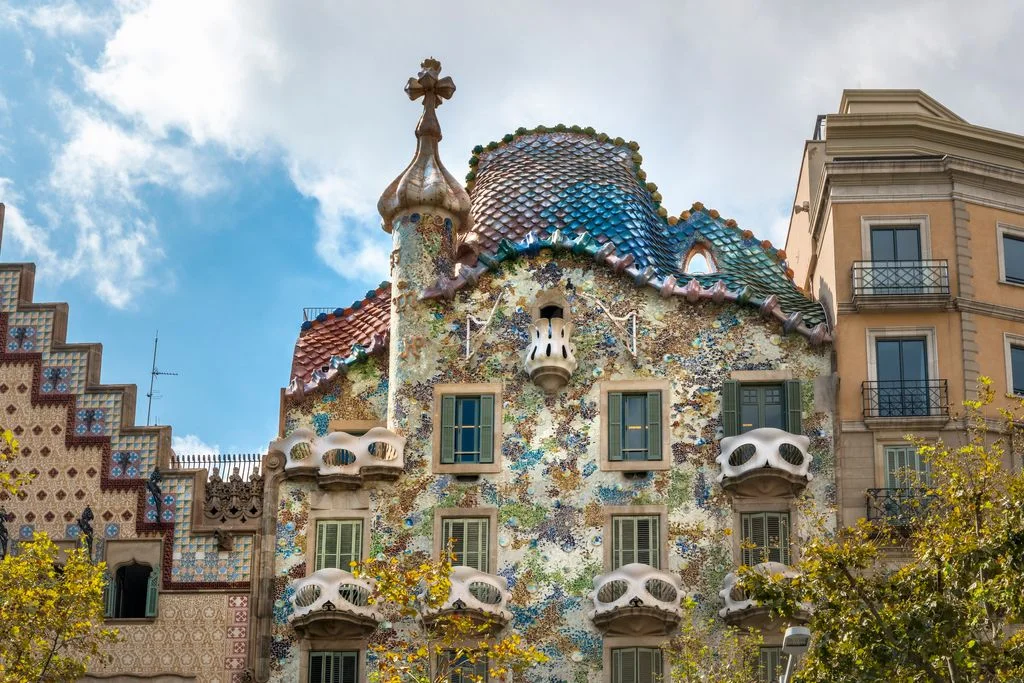 Photo: Getty Images2/7
Casa Batlló (Barcelona, Spain)
Moving beyond skeletal ornamentation, Antoni Gaudí helped pioneer Catalan Modernism, a late 19th- and early 20th-century architectural movement that challenged traditional academicism, rejecting rigid geometry in favor of nature’s organic forms and structural principles, including those of skeletal anatomy. Nicknamed the House of Bones, Gaudí’s Casa Batlló, which was created from 1904–1906, is among the most prominent examples of this movement. Its undulating façade features balconies resembling skulls, slender bone-like columns, and a roof covered in iridescent scales that evokes a dragon’s spine. Originally designed as a private residence for textile industrialist Josep Batlló, the UNESCO-listed building is now a museum open to visitors, its skeletal framework inspiring interpretations ranging from human anatomy to the legend of Saint George slaying the dragon.
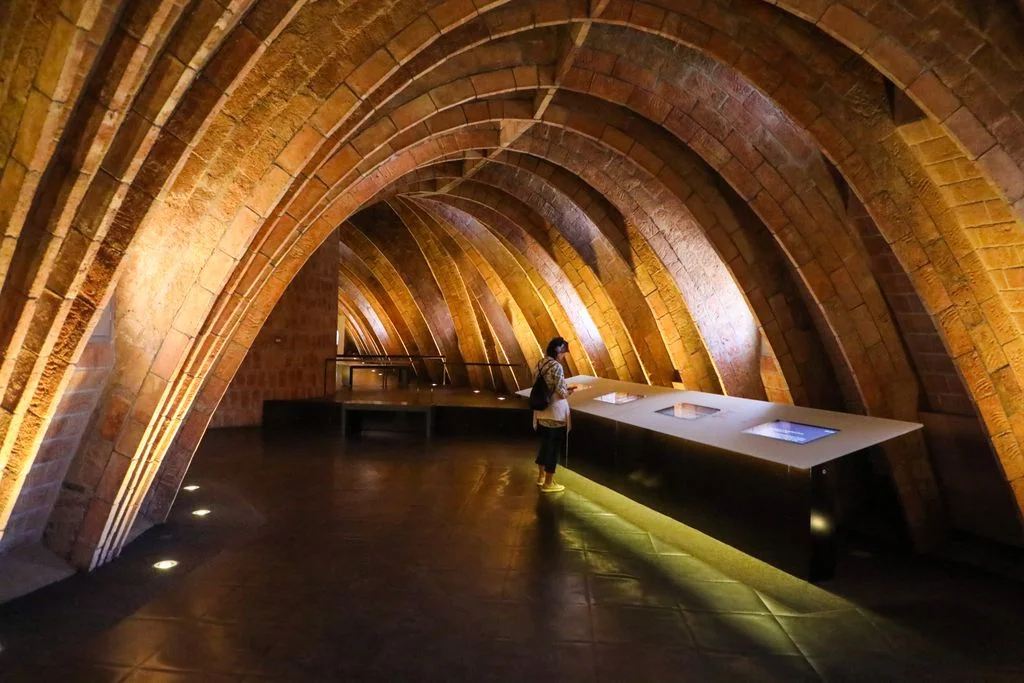 Photo: Maeva Destombes/Getty Images3/7
Casa Milà (Barcelona, Spain)
Built between 1906 and 1912, another of Gaudí’s architectural masterpieces, Casa Milà, also known as La Pedrera, draws inspiration from natural forms, most notably in what’s known as the Whale-Bone Attic, where 270 repeating brick arches expand and contract in size to resemble the rib cage of a giant whale. These catenary arches support the building’s rippling roof, demonstrating Gaudí’s fascination with the relationship between anatomy and engineering. More broadly, Gaudí conceived the building as an animal body, with internal supporting columns serving as its bones and the sculptural stone façade as its skin. Originally constructed as a residential apartment building, the UNESCO World Heritage Site remains partly residential, while its attic, rooftop with surreal sculptural chimneys, and other historic spaces are open to visitors.
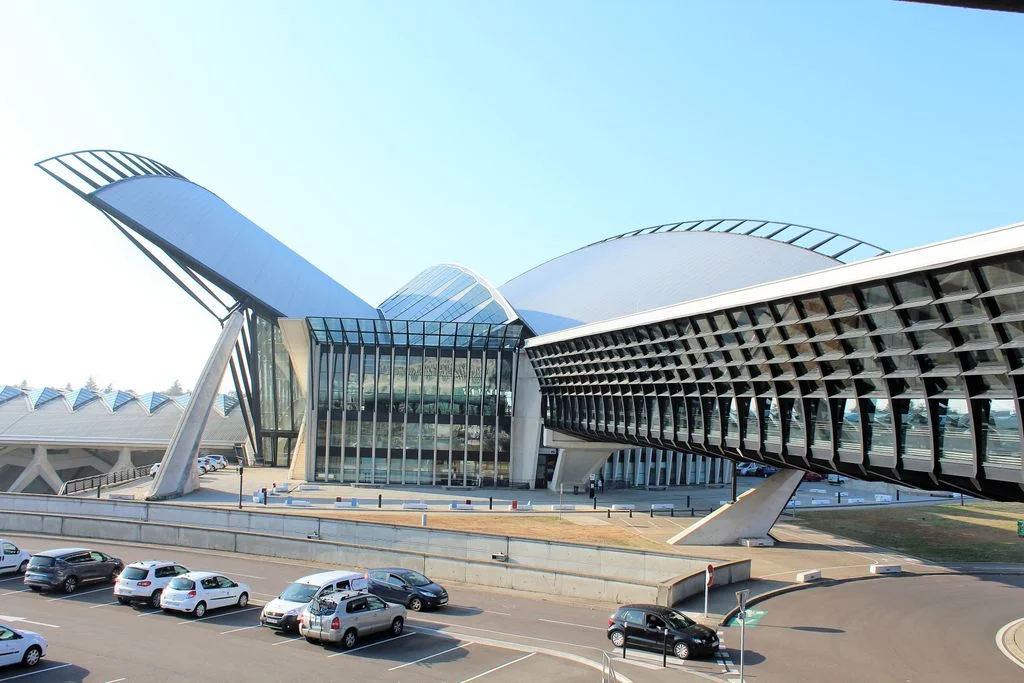 Photo: Eric Bascol/Getty Images4/7
Lyon-Saint Exupéry Airport Railway Station (Lyon, France)
Designed by Spanish architect Santiago Calatrava and completed in 1994, the Lyon-Saint Exupéry Airport Railway Station combines skeletal engineering with the imagery of a bird taking flight. “Sometimes I say [I’m inspired by] the human skeleton, because it’s true that there’s something essential in the construction of our body,” Calatrava once told Fast Company in 2010. (He’s also inspired by nature more broadly, he added.)
This idea is on full display at the Lyon-Saint Exupéry Airport Railway Station, where the expansive central hall features a soaring steel framework of intersecting arches, while the adjoining railway platforms are sheltered beneath a vaulted concrete roof supported by rib-like structures. The building’s curved, tapering spine and wing-shaped silhouette evoke avian anatomy.
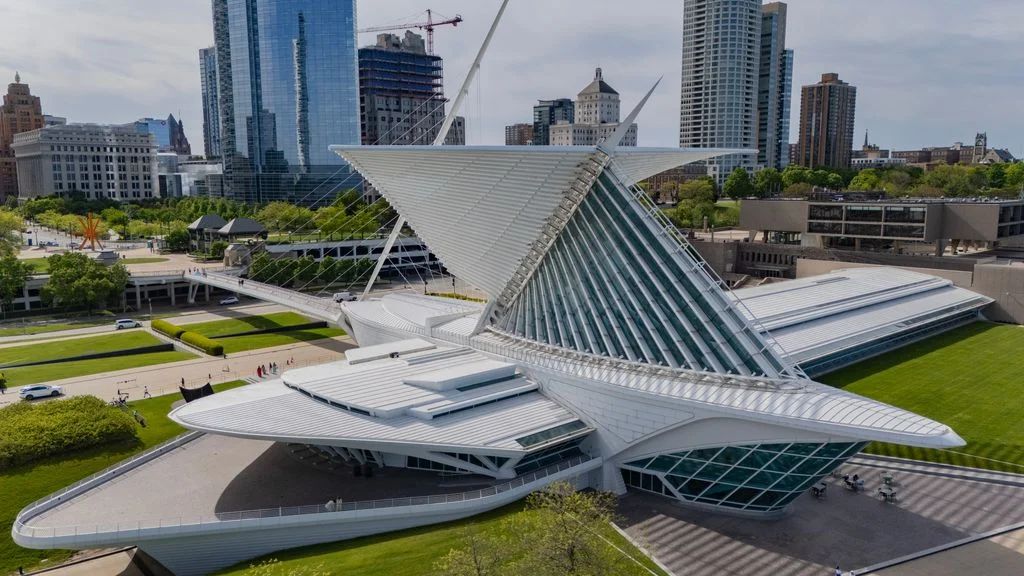 Photo: John Touscany/Getty Images5/7
Milwaukee Art Museum/Quadracci Pavilion (Milwaukee, Wisconsin)
Another Calatrava design, the Quadracci Pavilion at the Milwaukee Art Museum, completed in 2001, emulates a mythical winged skeletal form. Its soaring Windhover Hall features repeating white concrete ribs, pointed arches, and a 90-foot-high glass ceiling, evoking a Gothic cathedral with the anatomy of a fantastical creature. Outside, the building’s most recognizable feature, the Burke Brise Soleil, consists of 72 steel fins that open and close like enormous wings, spanning 217 feet when fully extended.
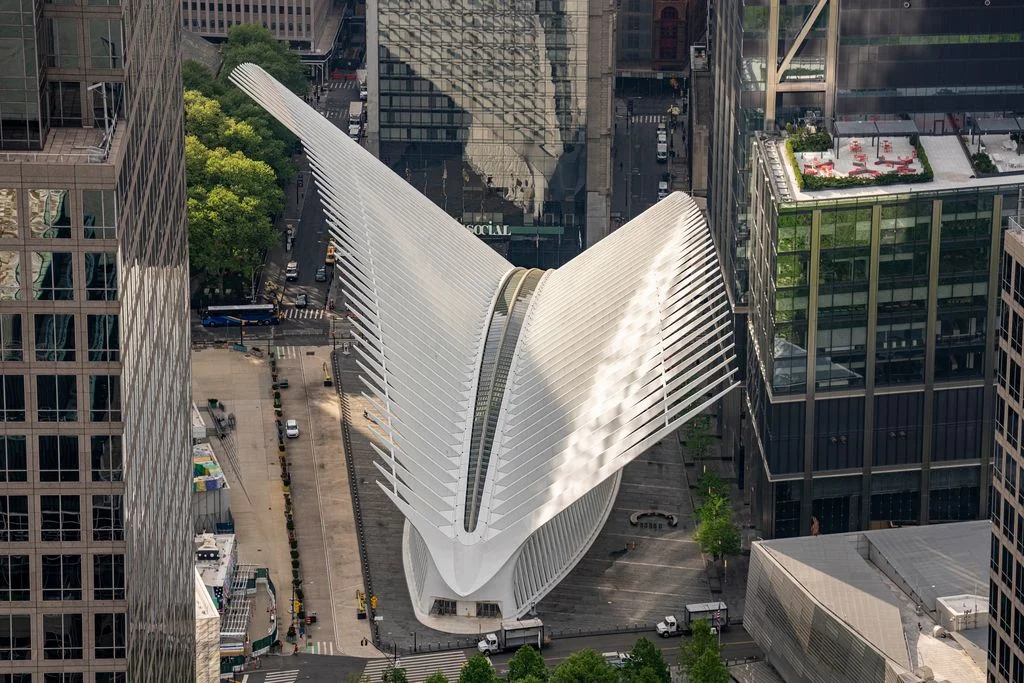 Photo: Nisian Hughes/Getty Images6/7
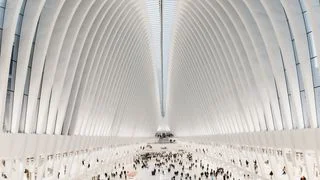
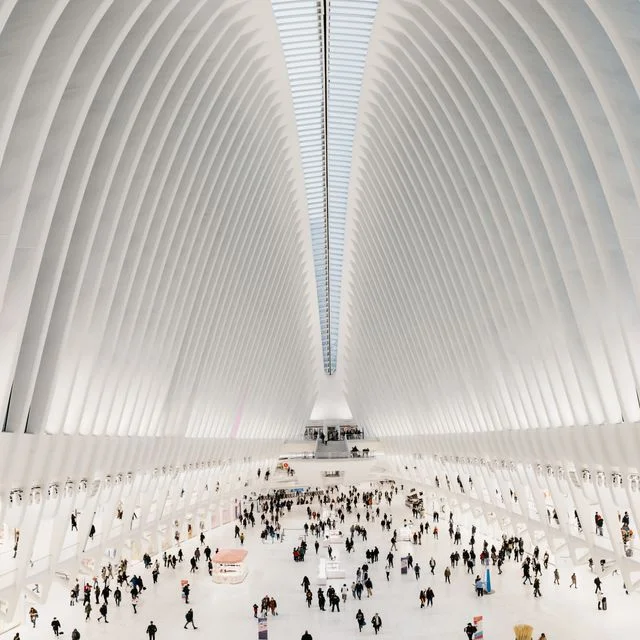
World Trade Center Oculus (New York City, New York)
The World Trade Center Oculus resembles an enormous skeletal structure through its repeating white steel ribs, which extend outward to form a pair of wing-like canopies. Another Calatrava project, the architect conceived it as a symbol of hope and renewal following the September 11 attacks—the transportation hub was inspired by the image of a bird being released from a child’s hands. Inside, its soaring, cathedral-like hall features an elliptical framework of steel and glass, with a central skylight that floods the space with natural light. The structure’s combination of skeletal anatomy and avian symbolism is one of the most renowned projects embodying Calatrava’s exploration of biological forms in architecture.
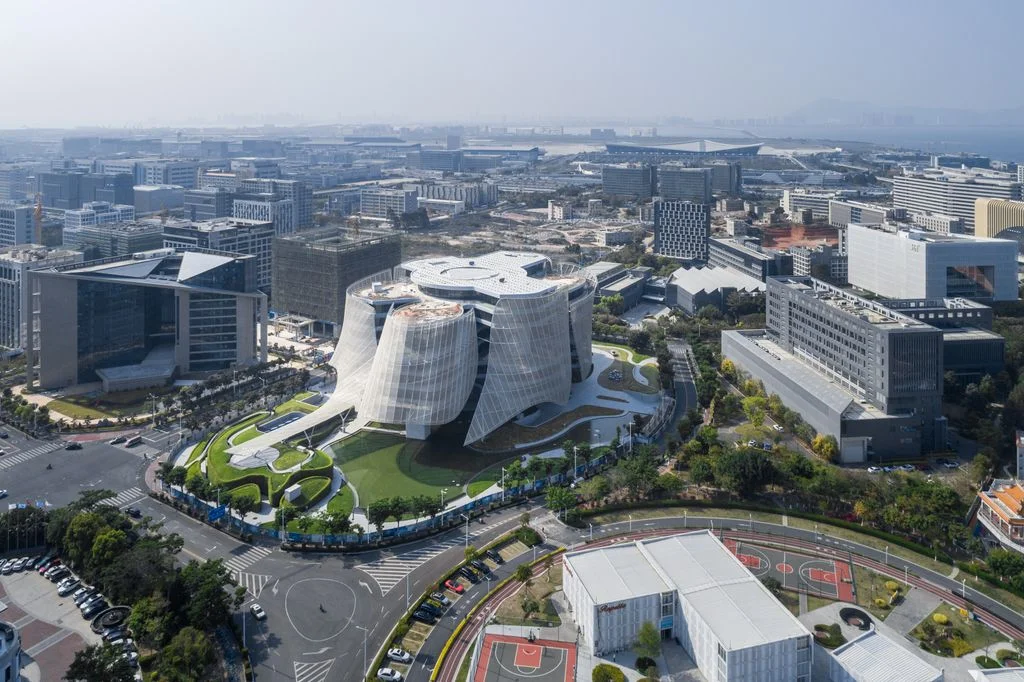 Photo: CreatAR. Courtesy of MAD.7/7
Xinhee Design Center (Xiamen, China)
The 61,000 meter headquarters for Chinese fashion company Xinhee, designed by Beijing-based MAD Architects and opened in 2017, conjures the architecture of the human body. Conceived of as a structure of “skin and bones,” the building features a diagonal steel skeleton enveloped in translucent PTFE membrane resembling fabric draped over the human body, while also filtering natural light and facilitating natural ventilation in the subtropical climate. Its flower-like layout consists of six radiating wings, each housing a different atrium, which are connected by a suspended footbridge that doubles as a fashion runway. With its elevated gardens and multistory green spaces, the structure integrates nature into the building’s skeletal framework. Known as one of the most innovative buildings in contemporary China, the design personifies the relationship between fashion and architecture.
More Great Stories From AD
Not a subscriber? Join AD for print and digital access now.
Sign up for our daily newsletter to get the best of design in your inbox.



Discussion
Sign in to join the discussion.