The fully leased, 20,309-square-foot retail center near Fullerton College sold for $12.7 million. FedEx Office anchors the property.
Fullerton Court sells for $12.7 million
Fullerton, Calif. — Fullerton Court changed hands for $12.7 million, with a Newport Beach private partnership selling the center to a Los Angeles private investor using a 1031 exchange. Hanley Investment Group Real Estate Advisors and Summit RE arranged the sale. Sean Cox and Kevin Fryman of Hanley, working with Scott Hook of Summit RE, represented the seller; the buyer handled its own representation.
The transaction brings together two private parties, with the buyer using an exchange structure to acquire the property. That detail identifies part of the buyer’s purchase approach, but it doesn’t disclose the broader motivation behind the acquisition or the seller’s plans after closing. The brokers’ roles are also clearly defined: the named representatives worked for the seller, while the buyer represented itself.
A sale price gives a useful headline, but it’s only one piece of a retail property transaction. Without details on income, lease obligations, operating expenses or financing, readers can’t use the price alone to assess the center’s returns or compare it precisely with another property. That’s a meaningful limit on what this announcement can establish.
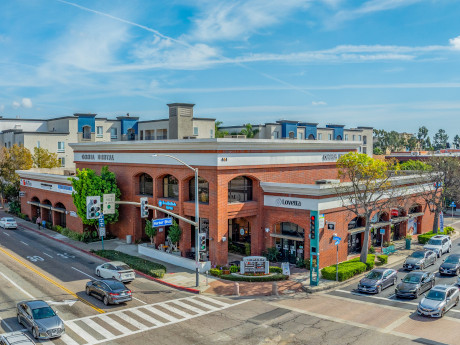
A fully occupied center near Fullerton College
The two-story property at 444 N. Harbor Blvd. sits next to Fullerton College. Built in 1982 and expanded in 2004, it now totals 20,309 square feet. At closing, every space was leased, with FedEx Office and Pixiu Mala Hongtang among its tenants.
Those facts sketch a compact, established retail property with a location beside a college and tenants operating across its space. They don’t establish how much customer activity comes from the college, whether tenants serve the same audience, or how the property performs at different times of day. Proximity can matter to retailers, but the actual effect depends on tenant needs and the surrounding trade area.
The center’s age and later expansion also provide context, though not a condition report. A building’s construction history can prompt questions about maintenance, layouts and building systems; the announcement doesn’t say whether upgrades were completed or what work might be needed. The expansion date tells us the property grew, but not how that change affected its current configuration.
What full occupancy tells us—and what it doesn’t
Full occupancy gives the buyer a functioning income stream at acquisition, though the reported details don’t explain lease terms or the center’s tenant mix beyond those two names. That limits what the sale price alone can tell us about the investment.
For a multi-tenant center, occupancy is a snapshot. Lease duration, renewal options, rent levels, tenant responsibilities and the timing of expirations can all shape how dependable that income is. A fully leased property may still face near-term turnover, while leases with staggered expiration dates can spread renewal decisions over time. None of those particulars is provided here.
The tenant names offer only a partial picture. FedEx Office is identified as the anchor, and Pixiu Mala Hongtang is another tenant, but the release doesn’t list the remaining occupants or their share of the space. The mix matters because different businesses can draw different customers and rely on different operating conditions. Here’s the thing: a single occupancy figure can make a property sound more predictable than the underlying lease schedule may be.
That doesn’t diminish the significance of a fully leased center at closing. It does mean the figure should be read narrowly: all spaces were occupied at that point, while the quality and duration of the income remain unknown. The distinction is easy to miss (and this is the part most people overlook).
The exchange structure and transaction context
The buyer used a 1031 exchange, as reported in the sale announcement. That identifies the transaction structure, but it doesn’t explain the buyer’s full strategy, the source of funds, or any other properties involved. The buyer’s self-representation likewise tells us who handled its side of the deal, not how it evaluated the center.
Private investors often assess neighborhood retail through a combination of current leasing, tenant durability, property condition and location. Those are general considerations, not confirmed details about this buyer’s analysis. Without reported rents or expenses, even a basic comparison between purchase price and property income isn’t possible.
This is more significant than it looks as a record of a completed transaction: the property changed ownership while fully leased, and the buyer used an exchange. But the announcement supplies no prior sale history, comparable transactions or operating figures. It supports a clear account of who sold, who bought, who brokered the deal and what the center contains; it doesn’t support a verdict on whether the price was high or low.
What the sale can—and can’t—signal
For readers tracking California retail investment sales, Fullerton Court adds a data point for a small, multi-tenant property near a college. One sale, however, can’t establish a trend in pricing or buyer demand. Property size, lease structure, condition and tenant mix can differ enough to make headline prices poor substitutes for direct comparisons.
If you’re working in this space, the next useful details would be the rent roll, lease expiration schedule, operating costs and any disclosed capital work. Those would help explain how the property’s reported full occupancy translates into ongoing operations. The announcement leaves those questions open.
And yet, the available information is still concrete: Fullerton Court contains 20,309 square feet, was fully leased at closing and sold for $12.7 million. A straightforward transaction report, with a narrower story than the headline price might suggest.
California · Investment sales · News
Reported by Abby Cox on October 29, 2026.
Discussion
Sign in to join the discussion.