PSP Investments and Nuveen Launch $790 Million U.S. Grocery-Anchored Retail Venture
Published
Oct 23, 2026
Views
947
PSP Investments and Nuveen have acquired 19 U.S. shopping centers totaling 3 million square feet, focusing on grocery-anchored retail in high-growth markets.
A $790 million bet on grocery anchored retail
The scale is notable, but the strategy is familiar: PSP Investments and Nuveen Real Estate are building a U.S. portfolio around shopping centers where grocery stores, everyday retailers and essential services can help sustain customer traffic through market cycles. The Montréal based pension investor and Nuveen, a major global investment manager, have launched a joint venture with $790 million in initial capital to buy open air centers. That starting commitment gives the venture room to assemble a sizable portfolio, though the announcement doesn’t say how much of the capital has been spent or whether the partners plan to add more.
The partners have already acquired 19 properties totaling 3 million square feet. The assets are in Arizona, California, Colorado, Florida, Minnesota, Texas, Virginia and Washington. The geographic spread suggests the venture isn’t relying on a single regional economy or retail market. But a broad footprint alone doesn’t establish how the properties will perform: location, tenant mix, lease terms and the price paid will matter center by center.
Their target markets have strong population growth, rising household incomes and barriers to new development. The venture is also looking for places where well capitalized retailers want to expand. That combination makes sense on paper, though the announcement doesn’t specify how the partners will weigh those criteria against acquisition pricing. Population and income trends can support retail demand, while barriers to new development may limit competing supply. Neither factor guarantees that a particular center will attract shoppers or retain tenants.
Early acquisitions span 19 centers
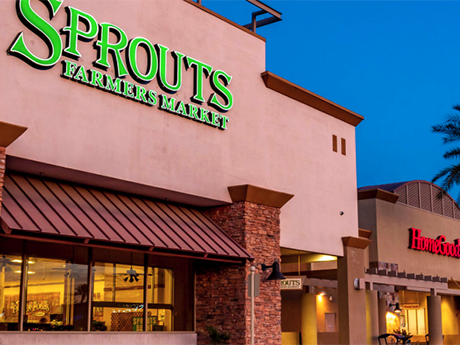
Two named purchases offer a sense of the portfolio. The Shoppes of Lorton Valley is a 110,000 square foot grocery anchored neighborhood center in Lorton, Virginia. In Chandler, Arizona, Las Tiendas Village totals 188,000 square feet and is anchored by Sprouts Farmers Market. These examples show the venture is buying neighborhood scale properties as well as assembling larger groups of centers. The announcement doesn’t provide occupancy, rent, or tenant sales details for either property, so the names and sizes offer only a first look at the investment approach.
Las Tiendas Village, a 188,000 square foot, grocery anchored shopping center in Chandler, Arizona, joined the new venture’s portfolio. Photo courtesy of Vestar.
The venture has also bought two larger portfolios. One includes six open air centers totaling about 801,000 square feet in the Fort Lauderdale, San Diego, Orange County, Dallas–Fort Worth, Minneapolis and Los Angeles metro areas. The other comprises 11 properties and approximately 1.9 million square feet across California, Colorado and Washington. The partners say the centers sit at busy intersections or along major corridors. Those locations can make a center visible and convenient, but traffic exposure is only one part of the operating picture; the tenant mix and the condition of each property also shape its appeal.
Nuveen portfolio manager Brian Wallick describes necessity based retail as resilient because consumers continue to need essential goods and services. He says the partners expect their scale, relationships and local execution to support the strategy. That’s the thesis; the early acquisition count shows they’re putting capital behind it, though the announcement offers no performance figures yet. Grocery anchors can draw regular visits, and nearby services may benefit from that activity. Still, the presence of an essential retailer doesn’t insulate an entire center from vacancies, competition or changes in how shoppers use retail space.
Why the grocery anchor matters
Grocery anchored centers occupy a distinct position in retail property portfolios. Food shopping tends to be a recurring household task, giving these properties a potential source of repeat visits that discretionary retail may not have. Other tenants can benefit when shoppers combine errands, particularly when stores and services are easy to reach. The model depends on the center working as a group, however: an anchor’s draw matters less if surrounding spaces are poorly suited to local demand or difficult to keep occupied.
The strategy also makes the quality of execution central. A buyer needs to assess more than the anchor’s name: the surrounding tenants, local competition, access and the property’s upkeep all affect whether shoppers return. The announcement doesn’t describe the partners’ plans for leasing, renovations or property management, so it’s too early to tell how they intend to improve or maintain the centers after acquisition. This is more significant than it looks. A familiar retail format can still produce very different results depending on the asset and its market.
The partners behind the venture
PSP Investments manages funds transferred by the Government of Canada for the pension plans of the federal public service, Canadian Forces, Royal Canadian Mounted Police and Reserve Force. Established in 1999, the Quebec based organization reported CA$320.6 billion in net assets under management at the end of its fiscal year on March 31, 2026. It is one of Canada’s largest pension investors. That institutional role gives the venture a large capital partner, but the announcement doesn’t spell out the partners’ respective ownership shares or governance arrangements.
Nuveen Real Estate is wholly owned by Teachers Insurance and Annuity Association of America (TIAA). The New York City based firm manages approximately $135 billion in real estate assets and is among the world’s largest real estate investment managers. The partnership brings together a pension investor and an established real estate manager, a structure that can combine capital with property expertise. What this means for you, if you’re working in this space, is that the headline commitment is only the opening signal; the portfolio’s composition and operating results will say more about the strategy.
What to watch as the portfolio grows
The venture’s initial 19 properties establish its scale and geographic reach, but they don’t yet show whether its selection criteria are producing an attractive portfolio. The partners have cited population growth, household incomes, limits on new development and retailer expansion plans. The next useful evidence would be how those factors translate into leasing and property performance across different markets. No such figures are included in the announcement.
And yet. The strategy has a clear operating premise: centers anchored by routine shopping and essential services may draw repeat visits, while a multi-market portfolio can spread exposure across regions. The premise is credible, but execution and purchase discipline will determine how much it delivers. For now, the $790 million commitment and the initial acquisitions mark a substantial entry into grocery anchored retail, with the investment case still ahead of the performance record.
Discussion
Sign in to join the discussion.