Wilmore Center sold for $14.5 million with 84% occupancy; medical tenants account for 68% of its leased space.
Medical tenants anchor a Wheat Ridge sale
HCA HealthONE has acquired Wilmore Center in Wheat Ridge for $14.5 million, in a transaction negotiated by CentrePoint Properties. The sale stands out for the property’s tenant mix: medical-related businesses account for 68 percent of its leased area, even though Wilmore Center also includes retail and food tenants. The data doesn’t identify the individual tenants or explain the buyer’s plans. That leaves the transaction’s clearest signal in the property itself: a multi-tenant center whose occupied space is weighted toward medical uses.
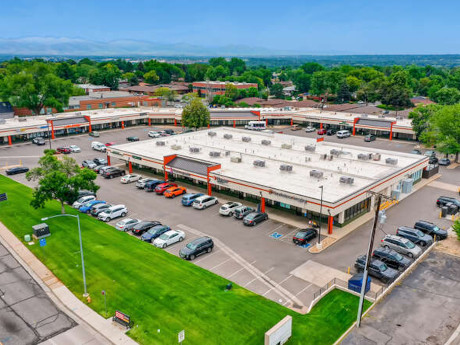
Located about five miles west of downtown Denver, the center occupies five acres at 7615 W. 38th Ave. Its two single-story buildings total 52,743 square feet and include 236 parking spaces. At the time of the sale, 15 tenants occupied 84 percent of the space. Those figures describe a modest-sized property with room still unleased, rather than a fully occupied asset whose income is already at its apparent ceiling.
Jon Hendrickson and Aaron Johnson of Cushman & Wakefield represented the seller. That level of occupancy gives the buyer an operating base, while the medical concentration may be the more telling feature of the deal. It points to the way the property is used today; it doesn’t, by itself, establish what HCA HealthONE will do with the center next.
What the tenant mix says—and what it doesn’t
The 68 percent figure needs to be read in context. It refers to medical-related tenants’ share of the leased area, not their share of the entire property. Because the center was 84 percent occupied, the medical share of leased space shouldn’t be confused with a claim that medical businesses occupy 68 percent of all 52,743 square feet. The distinction matters when comparing a property’s use mix with its vacancy or when estimating how much of its space might be affected by a change in tenant demand.
Even with that qualification, the concentration is substantial. Medical users can include a range of businesses, and the source doesn’t specify which kinds are at Wilmore Center. In general, medical tenants often need spaces that support patient visits, staff work, and specialized day-to-day operations. Their requirements can differ from those of ordinary shops or restaurants, making the existing tenant mix relevant to how a buyer assesses the property’s usefulness.
That doesn’t mean medical occupancy guarantees stable income or makes a center immune to vacancies. A tenant’s business, lease terms, space needs, and willingness to remain all matter, and none of those details is provided here. The available information offers a snapshot of who occupies the property by broad category, not a full account of the leases or the center’s financial performance.
Occupancy provides a base, with open questions
Fifteen tenants were in place at the time of the sale, and they occupied 84 percent of the space. That spread suggests income isn’t dependent on a single occupant alone, although tenant count can’t tell us how large each tenancy is or whether one business accounts for a disproportionate share of rent. A property can have many tenants and still face a meaningful risk if its largest space becomes vacant. The article’s figures don’t show that distribution.
The unoccupied portion also has two sides. It represents space that isn’t producing rent at the time of the transaction, but it may give an owner room to pursue additional occupancy. Whether that opportunity can be realized depends on the spaces’ condition, layout, lease economics, and tenant demand. Those details aren’t available, so the vacancy shouldn’t be treated either as an easy upside or as proof of a problem.
For a buyer, the practical starting point is likely to be understanding the leases already in place and the remaining space. (And this is the part most people overlook.) A headline occupancy rate can make a deal seem straightforward, but the quality and duration of income depend on lease details that aren’t captured by a single percentage.
A location and format suited to varied uses
Wilmore Center’s two single-story buildings and 236 parking spaces are part of the property’s operating profile. Medical businesses may place particular value on convenient access and parking, while retail and food tenants can also benefit from visibility and customer access. The source doesn’t provide building plans or describe the site’s access points, so it’s not possible to draw a firm conclusion about how well the layout fits each tenant. Still, the combination of uses makes the center a more varied asset than a property dedicated to one tenant category.
Its position about five miles west of downtown Denver places it within the broader Denver area, but that distance alone says little about the customer base or competition. Local access, nearby services, and the needs of surrounding residents and workers would help determine how well the different businesses perform. Those specifics aren’t included in the sale information. The location is useful context, not a substitute for evidence about demand.
Why the buyer’s identity matters, cautiously
HCA HealthONE’s acquisition naturally invites questions about whether the medical concentration influenced the purchase. It may have been relevant, but the available account doesn’t state the buyer’s rationale or identify a planned use for the center. The presence of a healthcare organization as buyer shouldn’t be taken as proof that the property will be converted, reorganized, or reserved for a particular service.
There’s a more measured reading: the buyer has acquired a property where medical-related businesses already represent most of the leased area, alongside retail and food tenants. That existing mix could be useful to an owner seeking to understand the center’s current role and operating needs. Whether it points to a broader strategy is an open question.
Implications for the property and the market
This is more significant than it looks, but the significance is narrow. The deal brings attention to a multi-tenant property with a high medical share of leased space and a vacancy cushion at the time of sale. It doesn’t establish a wider market trend, and one transaction can’t show whether similar properties are drawing the same buyer interest. The numbers here are a useful description of one asset, not a verdict on the full market.
If you’re working in this space, the useful questions are concrete: how much of the vacant area is ready for occupancy, how are the existing leases structured, and what kinds of tenants can use the available spaces? The source doesn’t answer those questions, but they’re the details that would clarify the significance of the 84 percent occupancy and the medical concentration. Without them, a reader can identify the property’s profile but can’t assess the durability of its income.
For now, Wilmore Center’s sale is best understood as a transaction involving an operating center with a defined, though not fully disclosed, tenant mix. Medical-related businesses anchor the leased area; other tenants broaden the property’s use. The buyer’s next steps remain unknown. A measured read is the strongest one available.
Discussion
Sign in to join the discussion.