A Rhode Island seaside home gains traditional New England details, updated systems and rooms shaped around its Atlantic and marsh views.
A coastal house rebuilt through detail
The challenge on Rhode Island’s rocky coast was to make a house feel whole without erasing its history. Built by the owner’s father in the 1980s, the shingled postmodern home looks across the Atlantic and a broad marsh, but decades of additions had left its architecture feeling pieced together. “It was like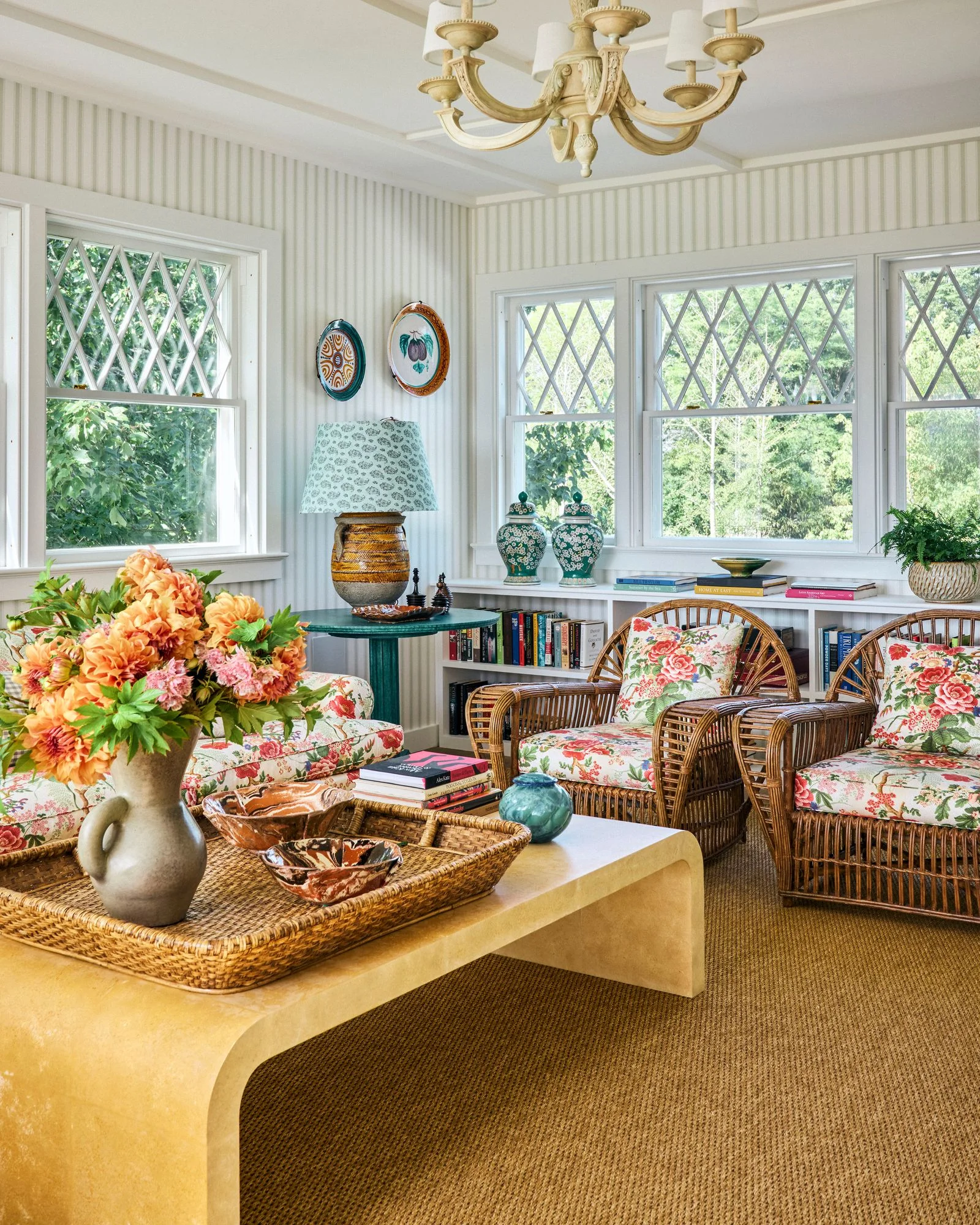 One sitting room offers a clear view of Huniford’s approach. He reshaped the room from a triangle into a rectangle, then furnished it with Audoux-Minet rattan armchairs, a custom sofa and 1930s Kittinger pedestal tables. Colefax and Fowler chintz cushions, Scalamandré wallpaper, Amalfi Coast ceramic plates from the 1950s, an antique French chandelier, a custom coffee table and a Sacco carpet bring together patterns and periods without making the room feel overly formal. The wife says she valued Huniford’s willingness to try things beyond his usual choices—and was pleased with the result.
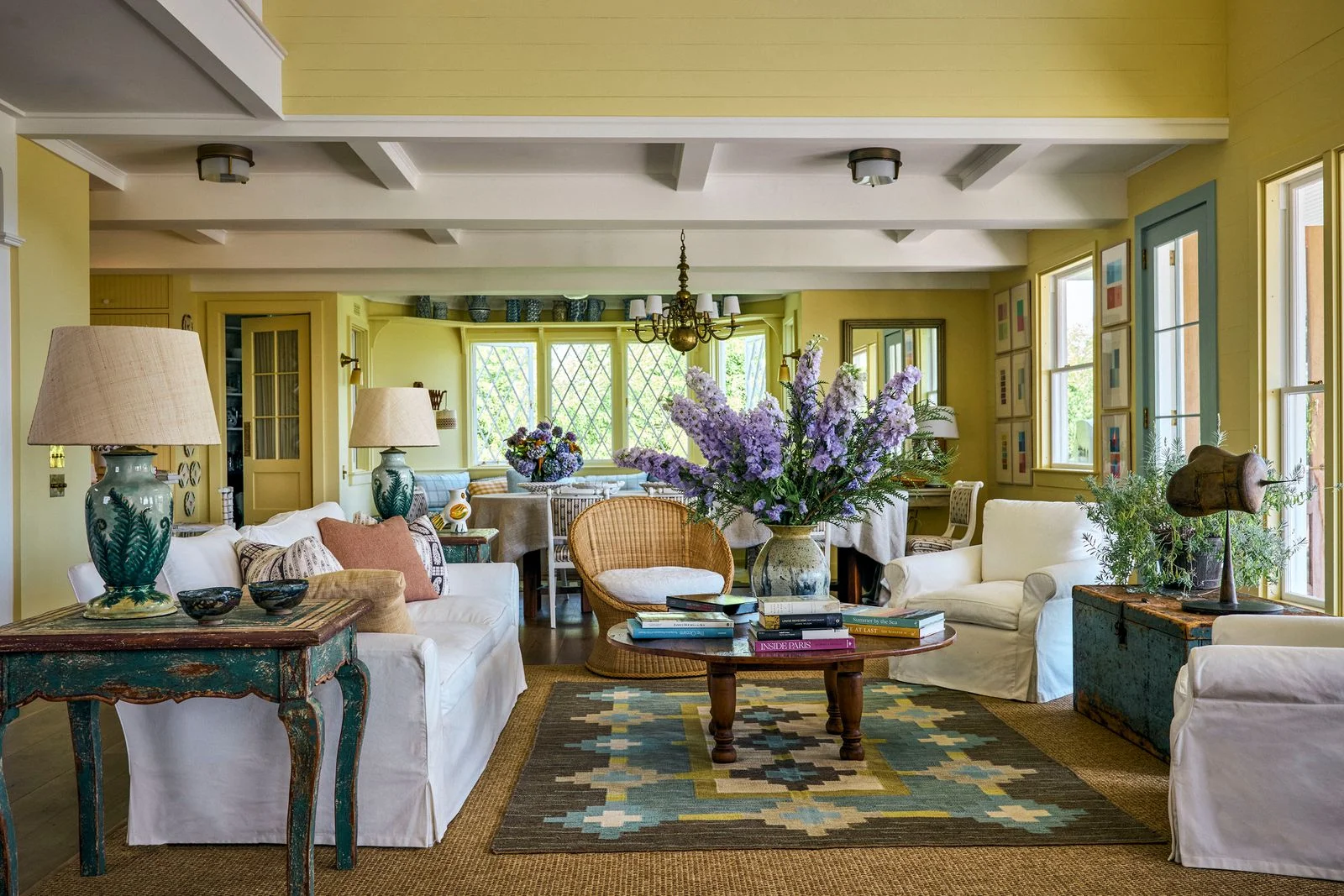 In another seating area, a French wicker barrel chair has a Jasper-covered cushion, alongside a custom Pierre Frey sofa and vintage coffee table. A midcentury Scandinavian rug from Doris Leslie Blau layers with a second rug from Sacco. Rococo side tables hold 1930s Camille Tharaud vase lamps; overhead, patinated-brass ceiling lights designed by Jacques Quinet in 1961 came from Galerie Apaganthe.
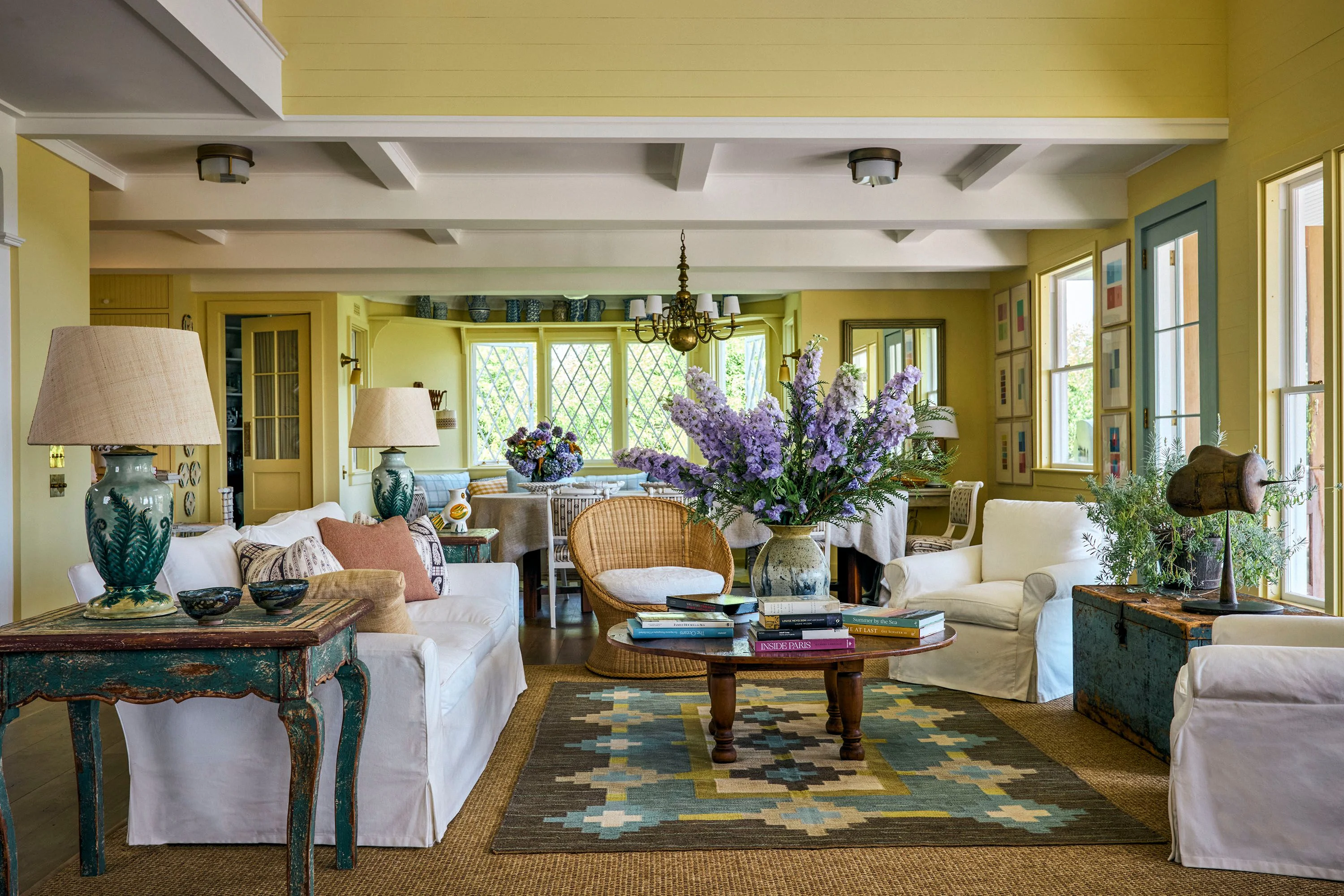
The palette follows the coast’s changing light. Huniford says the ocean can shift from black to blue to green, and that variation informed rooms furnished with English, French and early American pieces. Many are slipcovered in washed upholstery that looks relaxed and lived in. The clients, he says, wanted function and form without clutter or fuss.
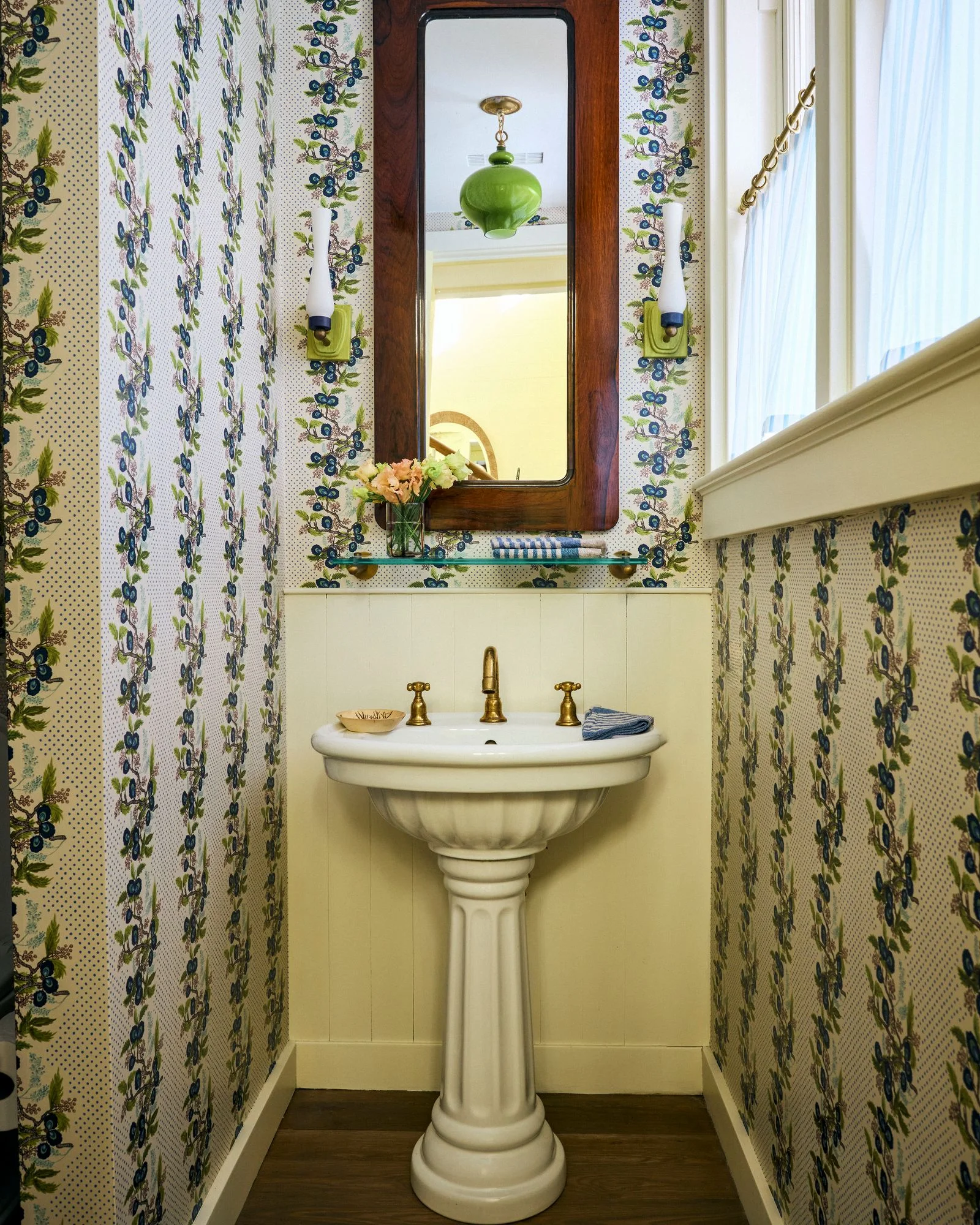 A small powder room takes a more decorative turn: garden-patterned Ferrick Mason wallpaper, a vintage pedestal sink and Samuel Heath faucet sit alongside antique Italian sconces, a vintage Italian mirror from Donzella, a green 1970s pendant by Hans-Agne Jakobsson for Staff and a Rug & Kilim carpet.
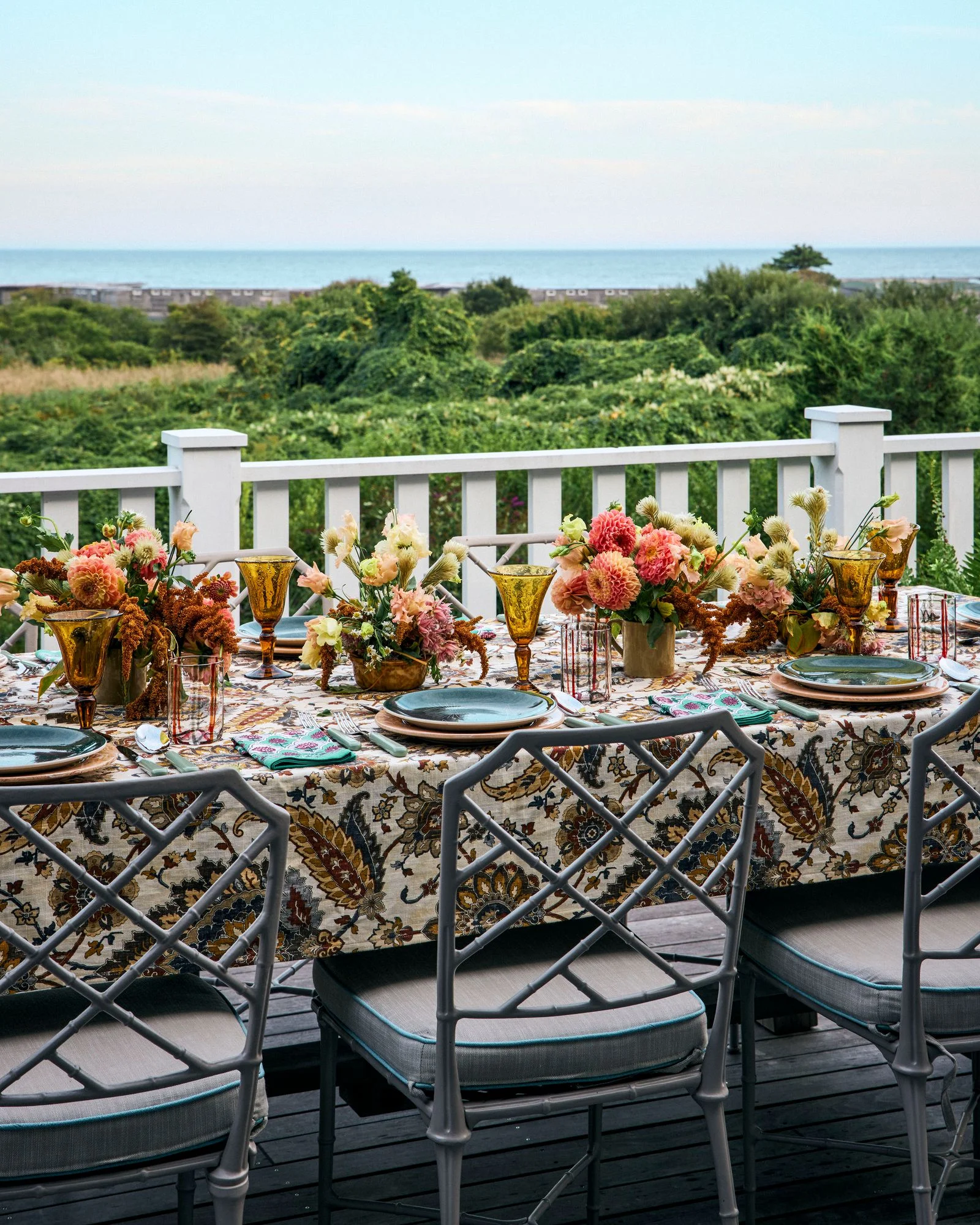
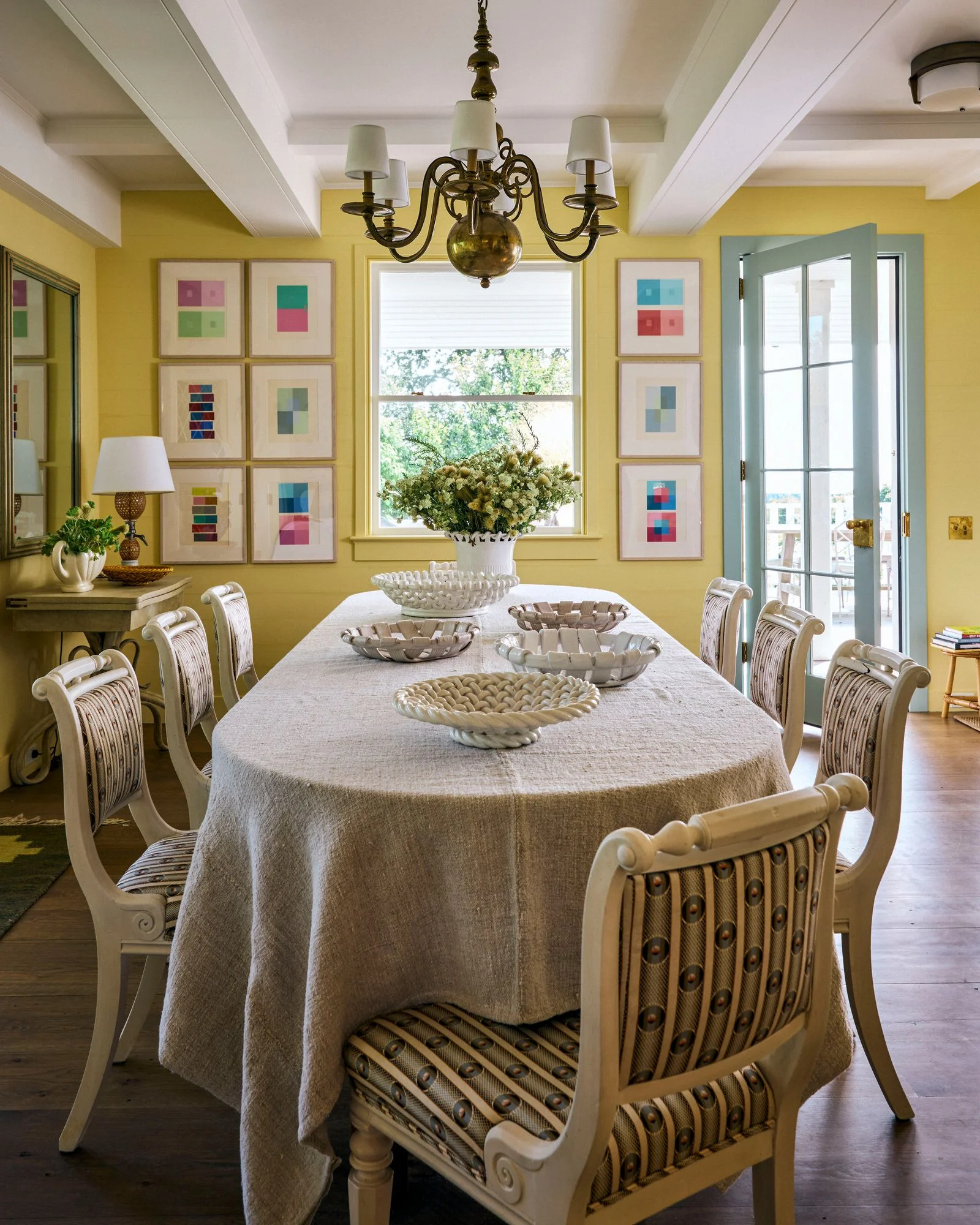 The dining room pairs English whitewashed chairs upholstered in Pierre Frey fabric with a custom table covered by an antique coarse-linen buggy blanket. Vallauris woven plates and a 1960s Émile Tessier cachepot sit beneath a 19th-century Dutch brass chandelier from Brownrigg; Josef Albers color case studies brighten the walls. The wife recalls questioning Huniford’s choice of yellow paint. He wasn’t entirely certain either, she says, but thought they should go ahead.
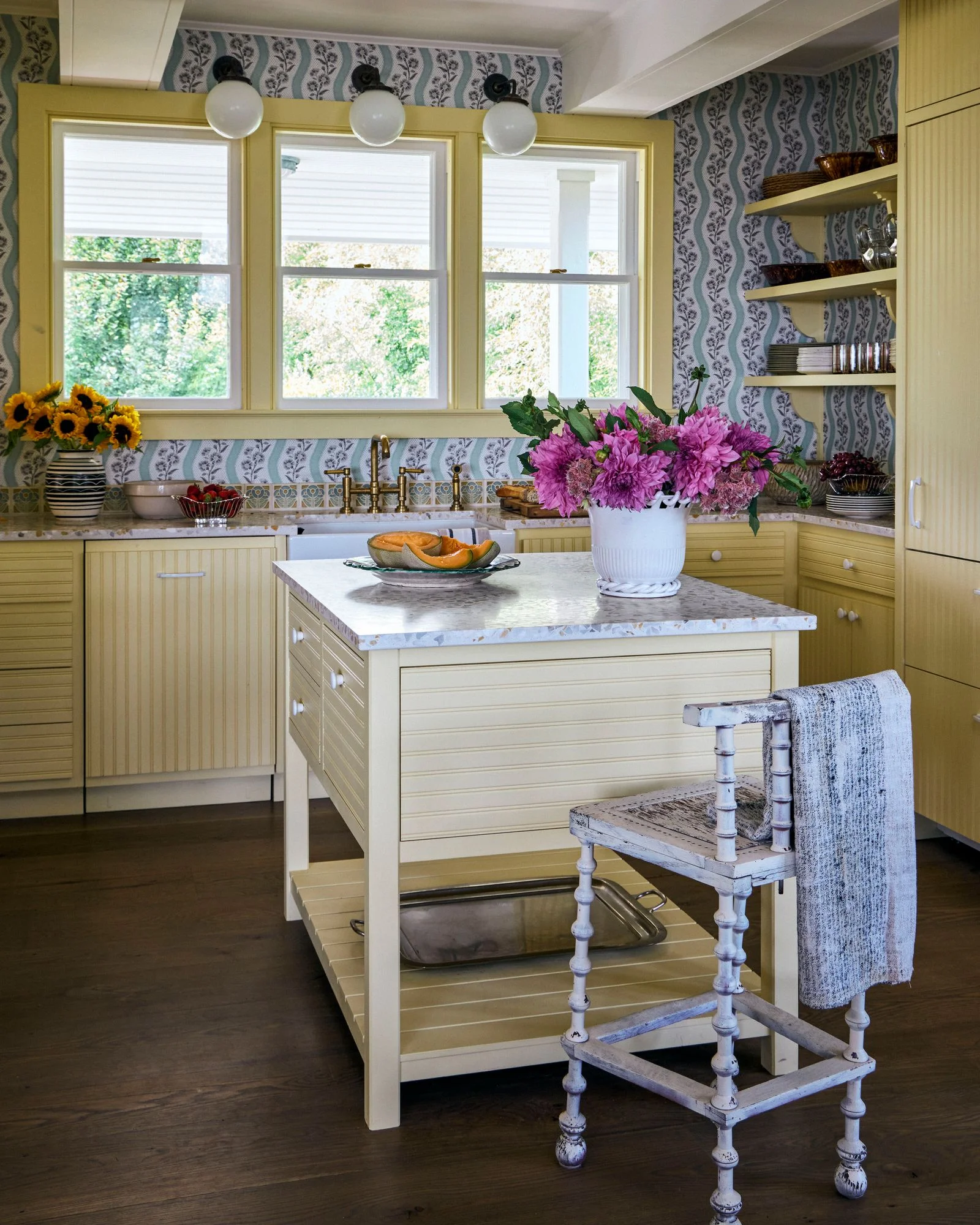 In the kitchen, striped Maresca Textiles wall covering sets off vintage opaline globe lights, Newport Brass fixtures, old ceramics and tableware. A French bobbin chair from Andrew Spindler Antiques & Design adds another note of age. The result isn’t a standard beach-house scheme. It’s a practical family home shaped by its views, its inherited structure and a designer willing to make the details carry the history.
Color gives the coastal rooms their edge
The house’s calm palette has a lively side. Huniford brought in sea-glass-green doors and buttery yellow paint across the open living, kitchen, and dining areas, leaving the windows bare. Josef Albers works, chosen by the husband and sourced by Huniford, add crisp geometry beside the dining table, whitewashed chairs, and an antique rough-linen buggy cover. The effect is restrained, but not timid. Chintz was new territory for both the designer and the clients. In a sitting room, rattan furniture wears bright floral cushions by Colefax & Fowler. The wife’s change of heart says more than any design rule could: “I never thought in a million years that I’d have chintz in my house,” she says, “but it now happens to be my favorite fabric.”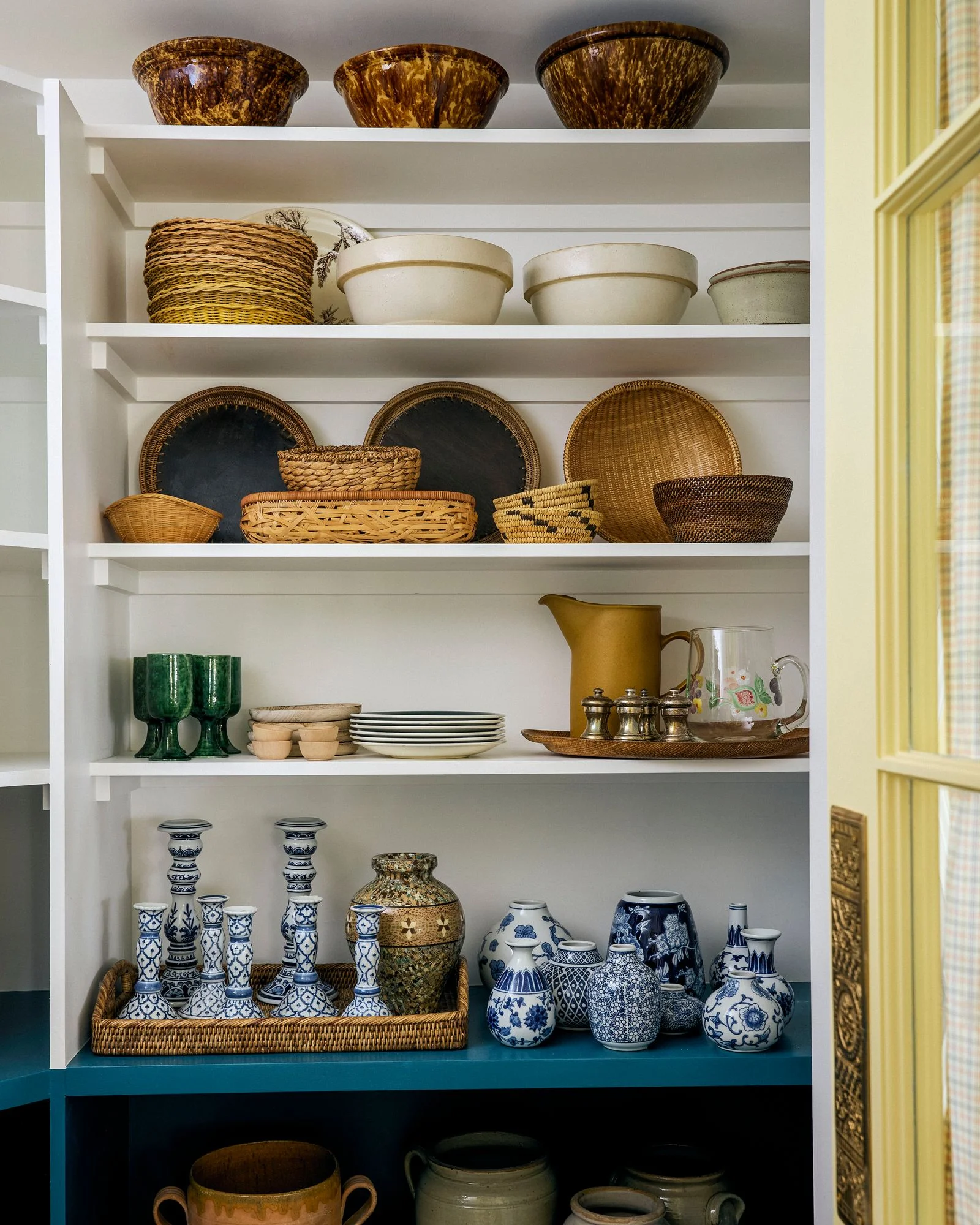 A pantry beside the dining area turns everyday storage into a display of tabletop finds: Tiffany & Co. salt and pepper mills, a Bennington Potters stoneware pitcher, green Dieulefit glasses, and bowls from Paula Rubenstein. Here, new and vintage pieces sit comfortably together.
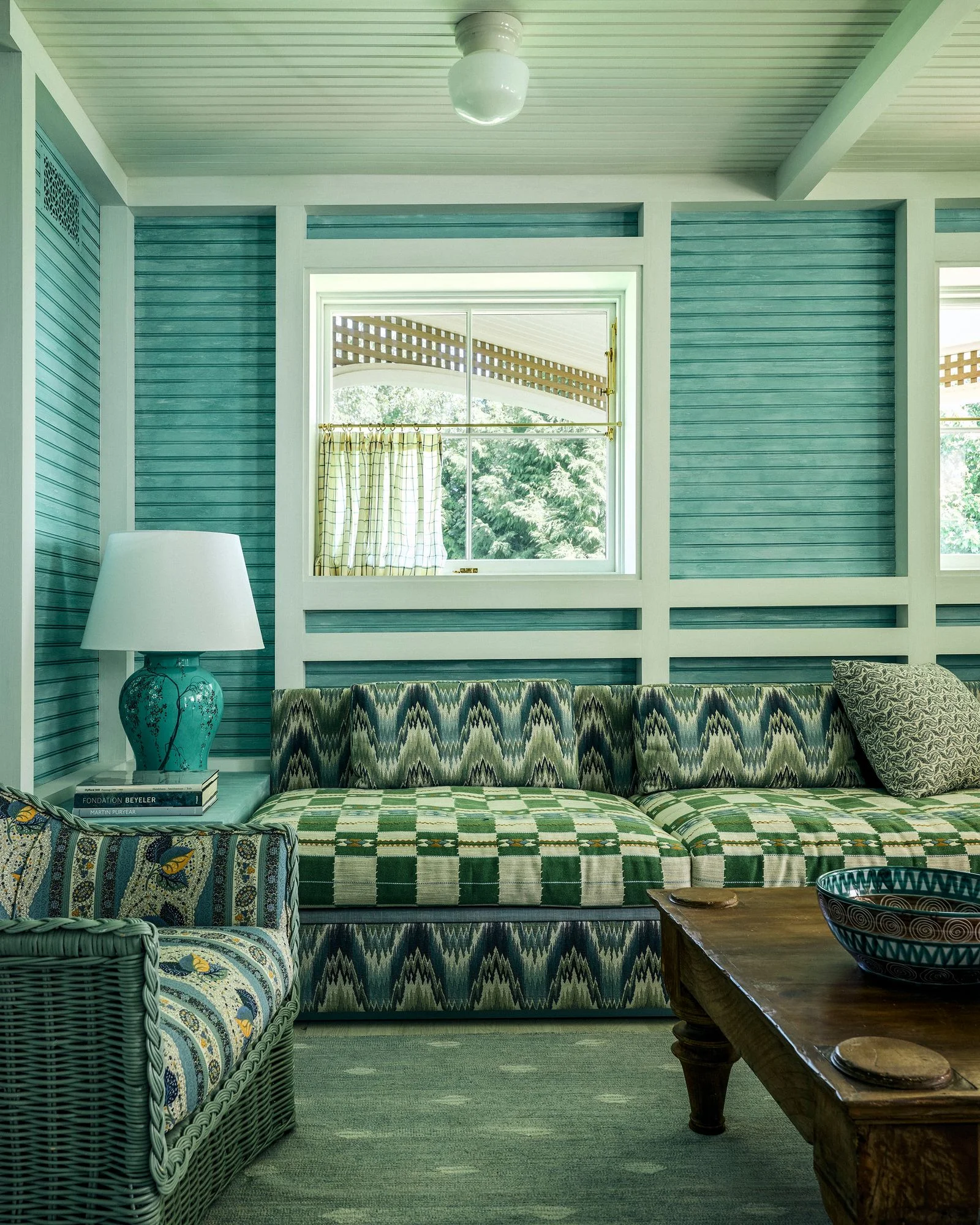 The ocean informs another sitting room’s colors. Henry Link braided-rattan chairs, found at Brimfield, carry cushions in Décors Barbares fabric. They flank an armless sofa with Christopher Farr seat cushions and backs upholstered in Fabricut textile. Vintage coffee and side tables and a vintage lamp keep the arrangement from feeling too coordinated; a Schoolhouse ceiling fixture and Stark carpet finish the room.
Pattern carries into the private rooms
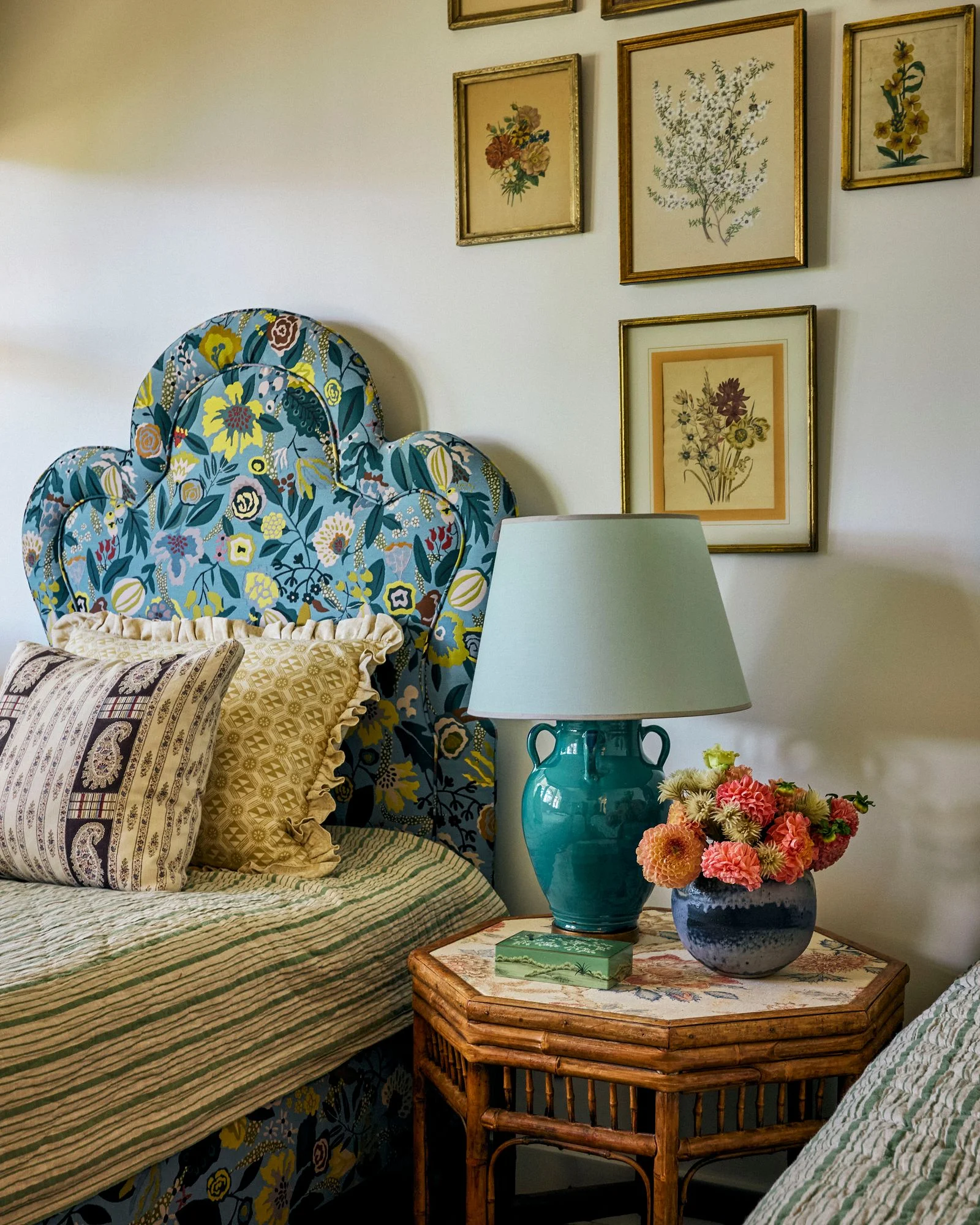
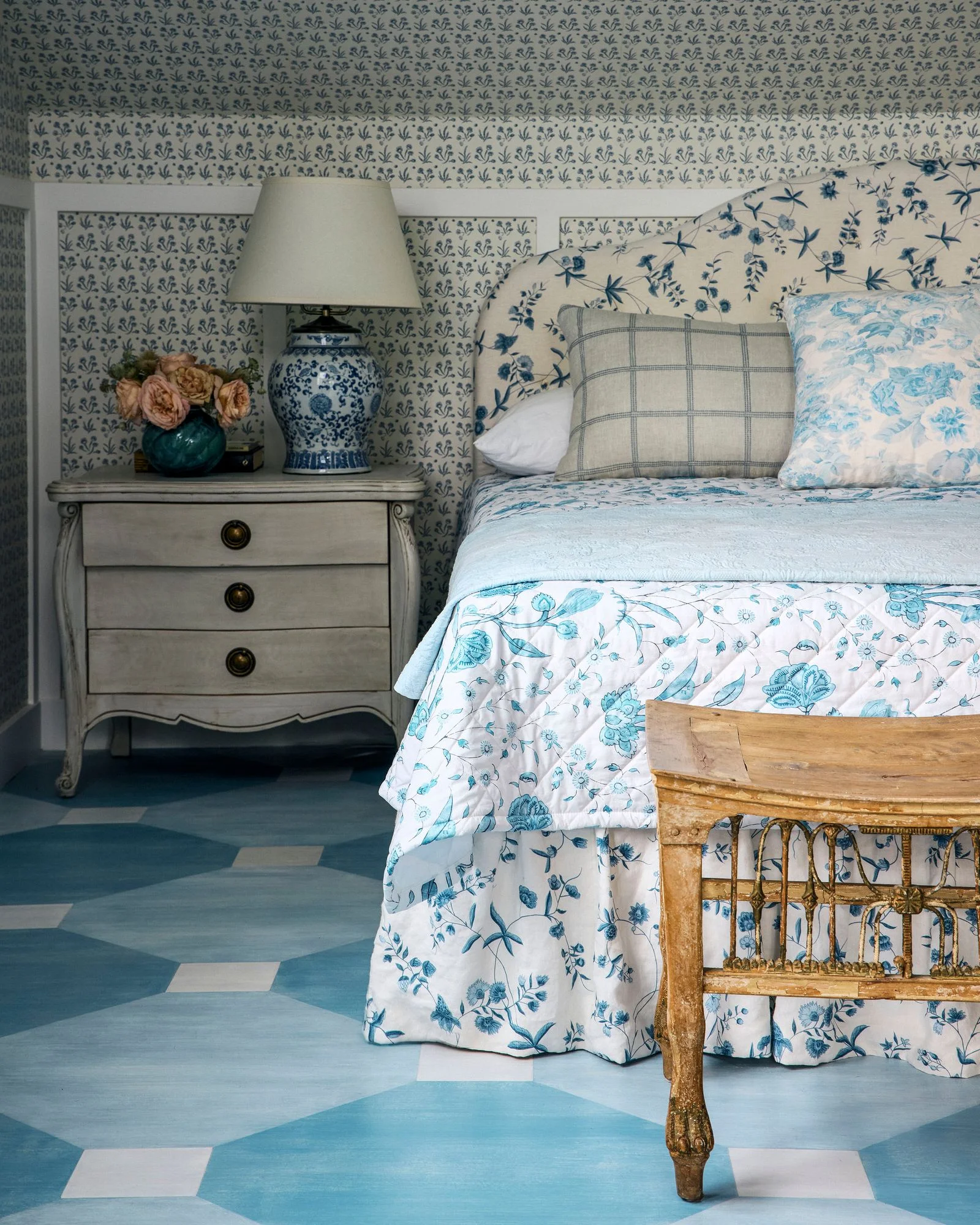 The primary bedroom commits fully to layered florals. Temple Studio wallpaper sets the backdrop; Bennison Fabrics textiles cover the headboard and bed skirt. Matouk supplies the bedspread and pillowcases, while a blanket comes from The Company Store. A vintage vase and lamp from Huniford’s own stock rest on a side table by Fernyhough Antiques.
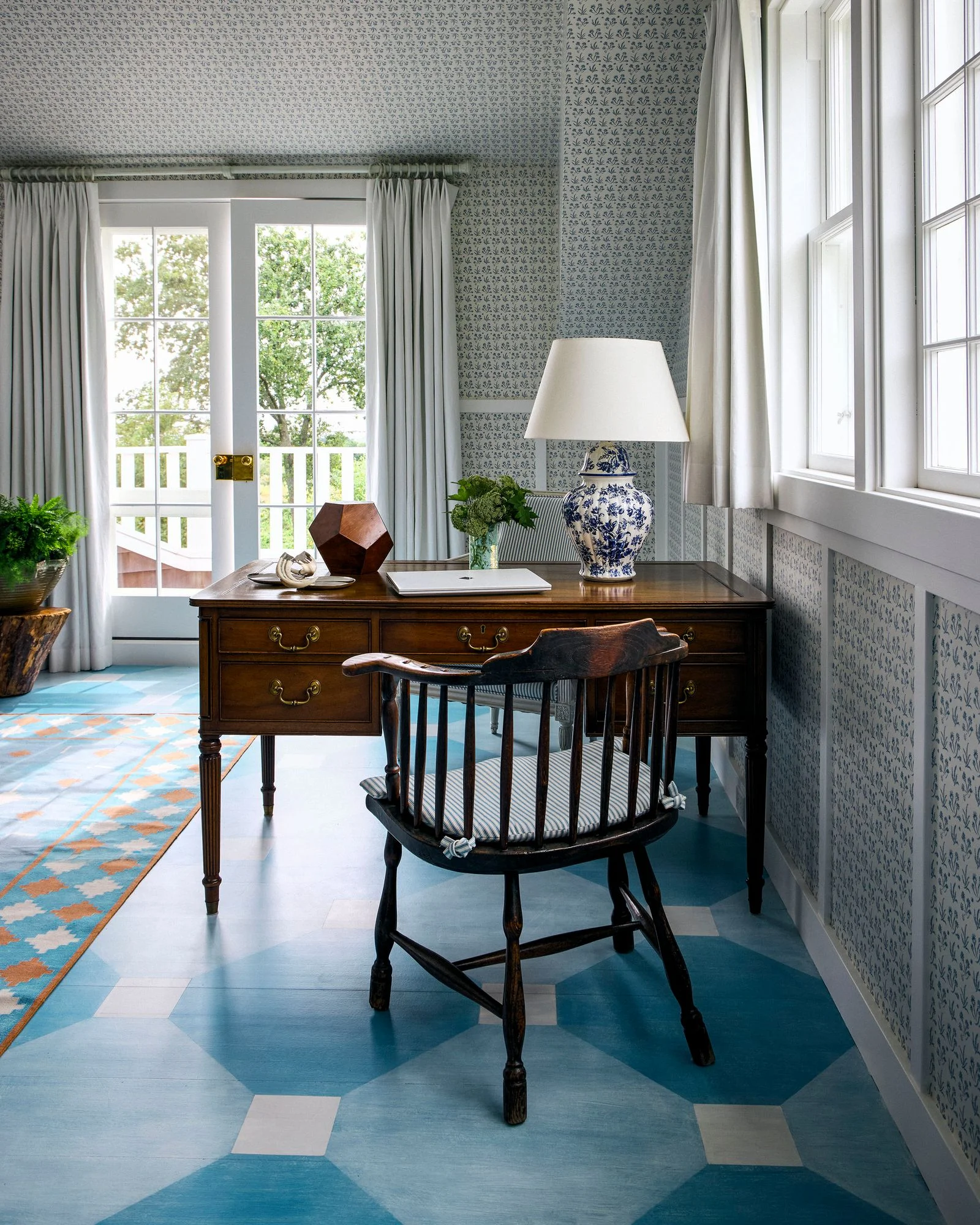
 The husband’s preferred work spot is a view-facing English neoclassical mahogany desk by Kittinger, found on Chairish. A vintage chair and lamp, plus a dhurrie rug from Rug & Kilim, furnish the office area. Its window treatments use Savel textile.
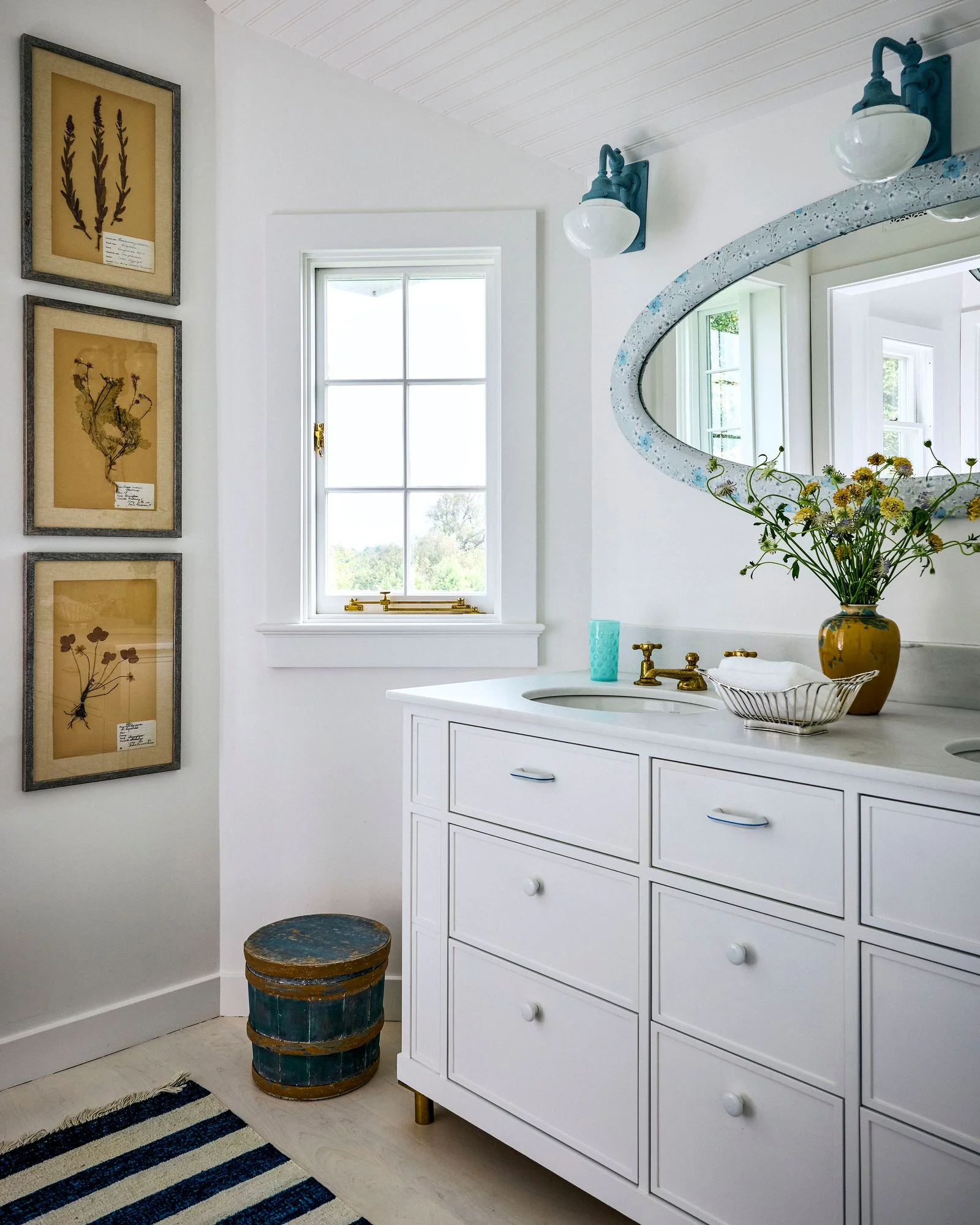
In the primary bath, painted vintage sconces with glass shades light a custom mirror and Grand Brass plumbing fixtures. Framed French botanical specimens hang above a vintage blue firkin.
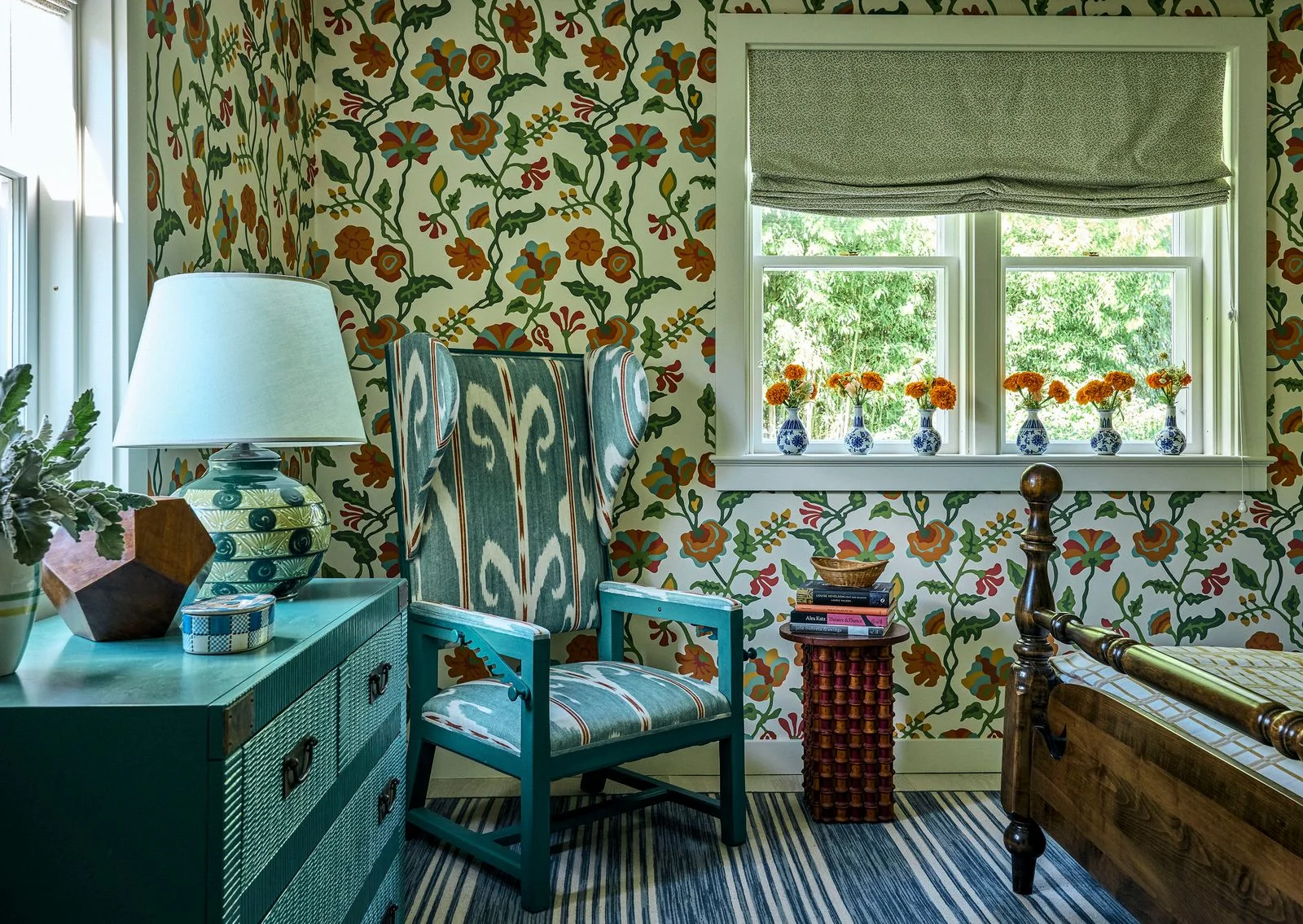 A second bedroom shifts the mood with Alan Campbell wallpaper. A vintage bed and console painted in Benjamin Moore’s Casco Bay join other pieces from Huniford’s stock, making the room feel like a retreat from the rest of the house.
A renovation measured by how the family lives
The strongest result here is that the house feels more accommodating without asking the family to change its routines. Huniford’s brief was to understand how the owners lived and make the home work better for them. A new windowed banquette beside the dining table has become a gathering place; its pottery shelf was inspired by a photograph of decorator and fashion editor Chessy Rayner’s Southampton home. Nearby, reshaping an awkward triangular sitting room into a rectangle made a long-standing family room more comfortable. “Our lifestyle in this house,” the husband says, “did not change.”
That kind of continuity is a useful measure of the three-year project. The couple gave Huniford room and time to shape the house, and the finish feels settled rather than newly imposed. “I think a great house should make you feel welcome and welcoming,” he says. The wife’s verdict is simpler: “Everyone loves to go there.”
The grounds follow the same logic
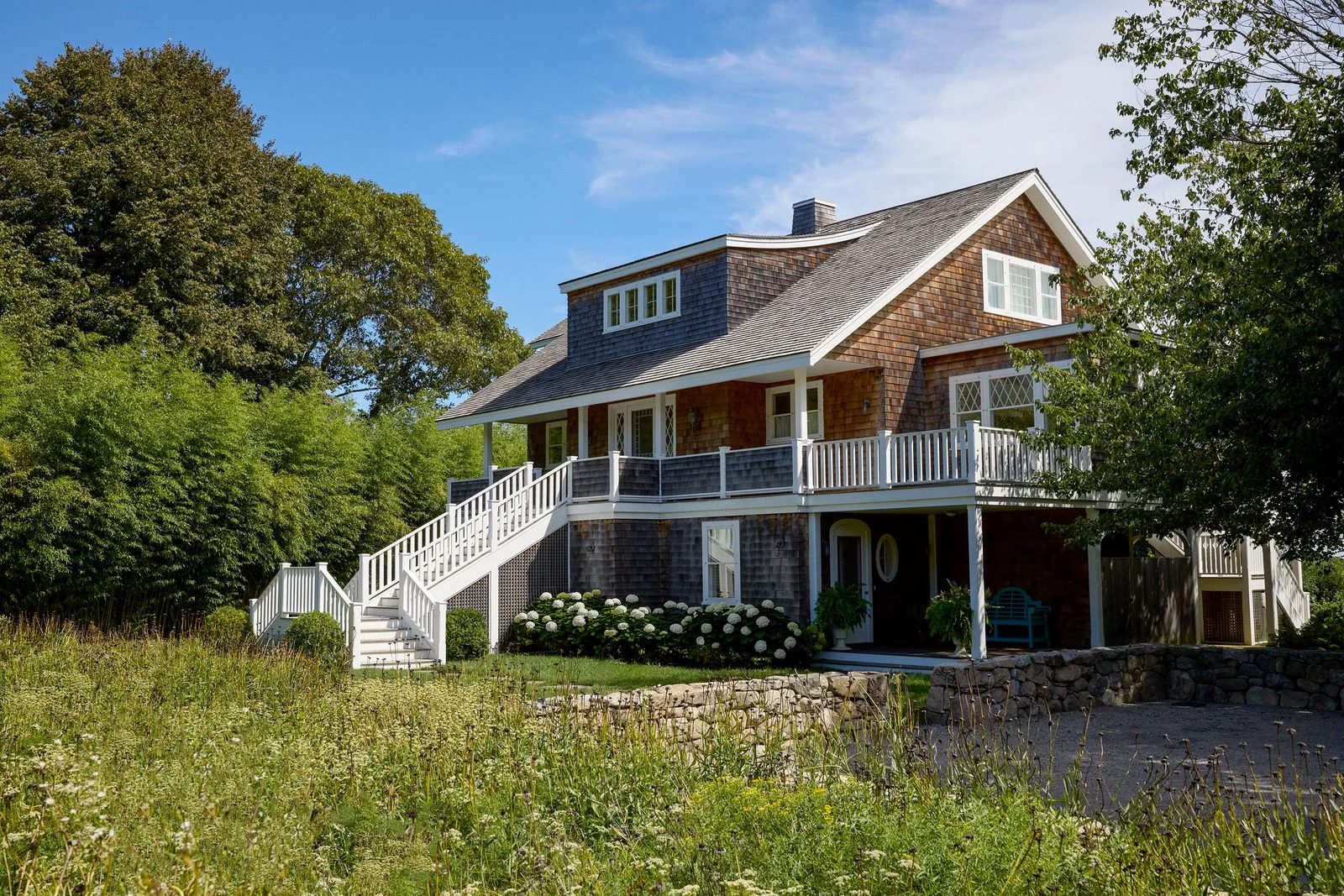
The grounds reflect the owners’ preference for a relaxed, low-maintenance setting over formal gardens. Huniford says they understood his approach; the staircase, in particular, is one of his favorite structural changes. The result makes a persuasive point: a successful renovation can sharpen a home’s character while leaving the daily life inside it intact.
Discussion
Sign in to join the discussion.