Bob Hope’s homes trace his rise from Cleveland rentals to a sprawling Toluca Lake estate built around family life, privacy and golf.

Bob Hope’s real estate story began with frequent moves through modest Cleveland homes and ended at a sprawling California estate. The change says something about the distance he traveled, but the houses also tell a more personal story: family mattered to him, and home offered a life beyond the stage.
Hope was born Leslie Townes Hope in Eltham, London, on May 29, 1903. His family moved to the United States when he was four, and money remained tight through his childhood. Later, after marrying Dolores DeFina in 1934 and starting a family, he settled in California. In his 1990 memoir, Don’t Shoot, It’s Only Me, he joked about his affection for the country—and its property: “Sometimes I do my best to hide it, but I’ve got a real crush on America.” He added, “Nobody ever had a girl like her. Nobody ever gave me as much affection, as much honor, or as much real estate.”
The numbers here are striking, but the contrast is the point: the boy from a family that repeatedly moved between Cleveland rentals grew up to own homes suited to raising children, hosting celebrated guests and escaping public attention. Golf was another draw. Below are photographs tracing Hope’s life at home, from his early family years to the residence where he died at 100.
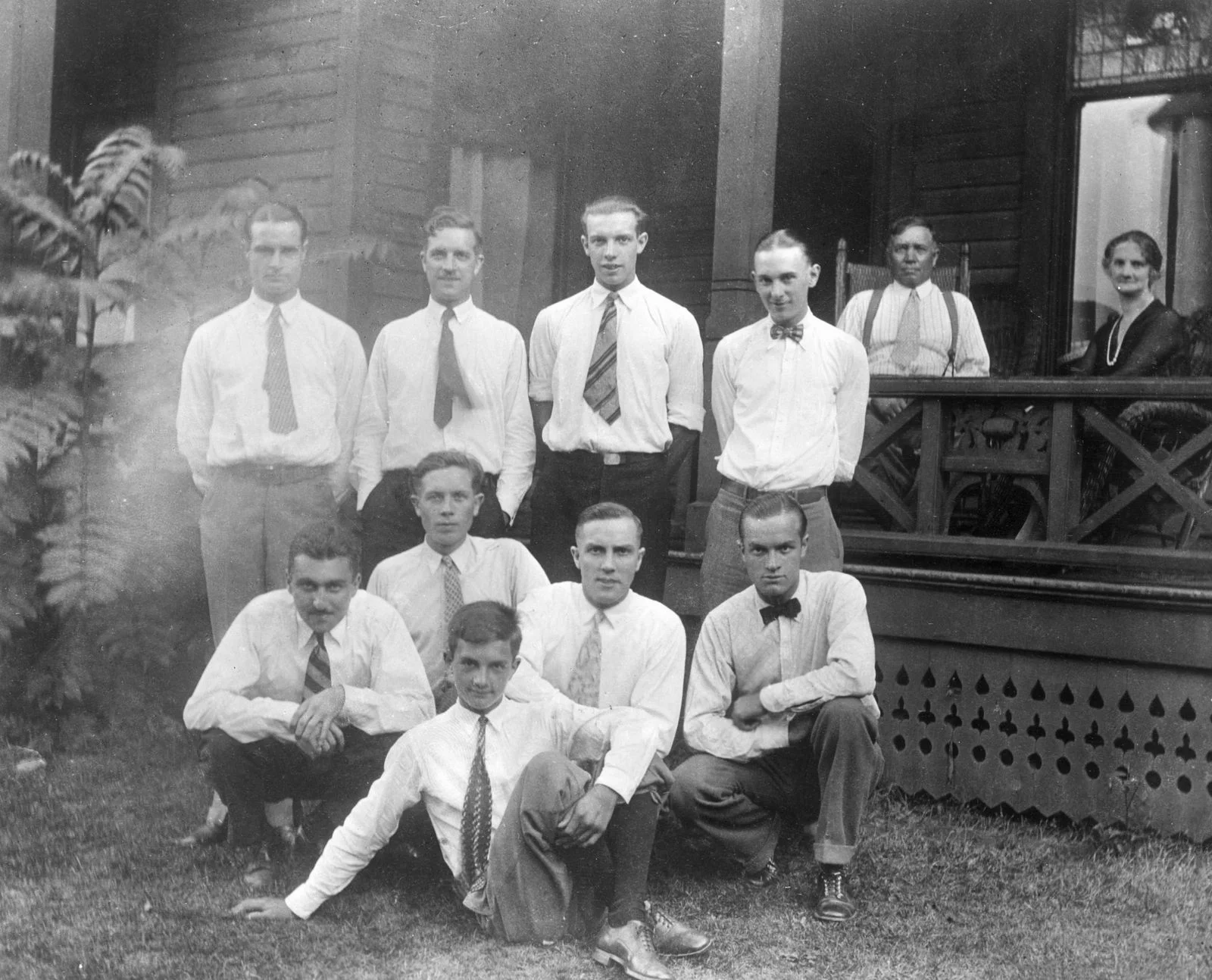
From London to Cleveland
Hope’s family left London for the United States when he was four. By 1923, he was pictured with relatives and friends at their Cleveland home. His father supplemented the family income by taking in boarders, according to the Library of Congress.
In Have Tux, Will Travel, his 1954 memoir, Hope recalled the family’s successive addresses: “The first place we lived by ourselves was Standiforth Court.” They also lived at 2029 Euclid, behind the Cleveland Express barns, and at 1925 and 1913 East 105th. “We didn’t move very far, only to bigger houses which had more room for roomers,” he wrote. One walk home after dark, between the barns and the family’s house, had felt frightening to him as a child.
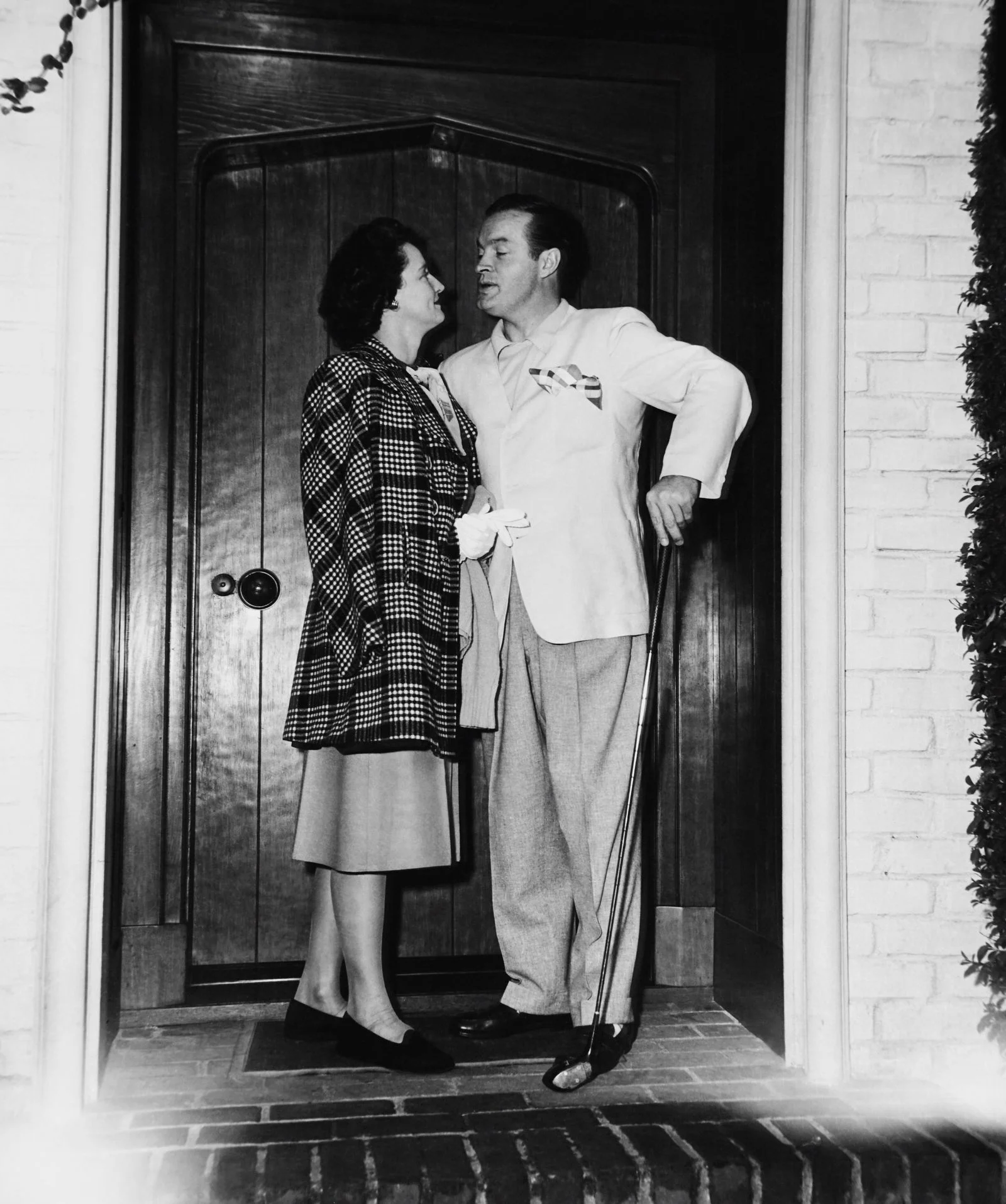
A Toluca Lake estate
Hope and Dolores married in 1934. They adopted their first child, Linda, in 1939—the same year Hope bought a five-acre former walnut grove at 10346 Moorpark Street in Los Angeles’s Toluca Lake neighborhood. He turned it into a French Revival estate. The main house measured 14,876 square feet and had eight bedrooms and eight bathrooms; the property also included a two-bedroom, two-bathroom guesthouse, a staff residence and a pool, according to coverage of the property.
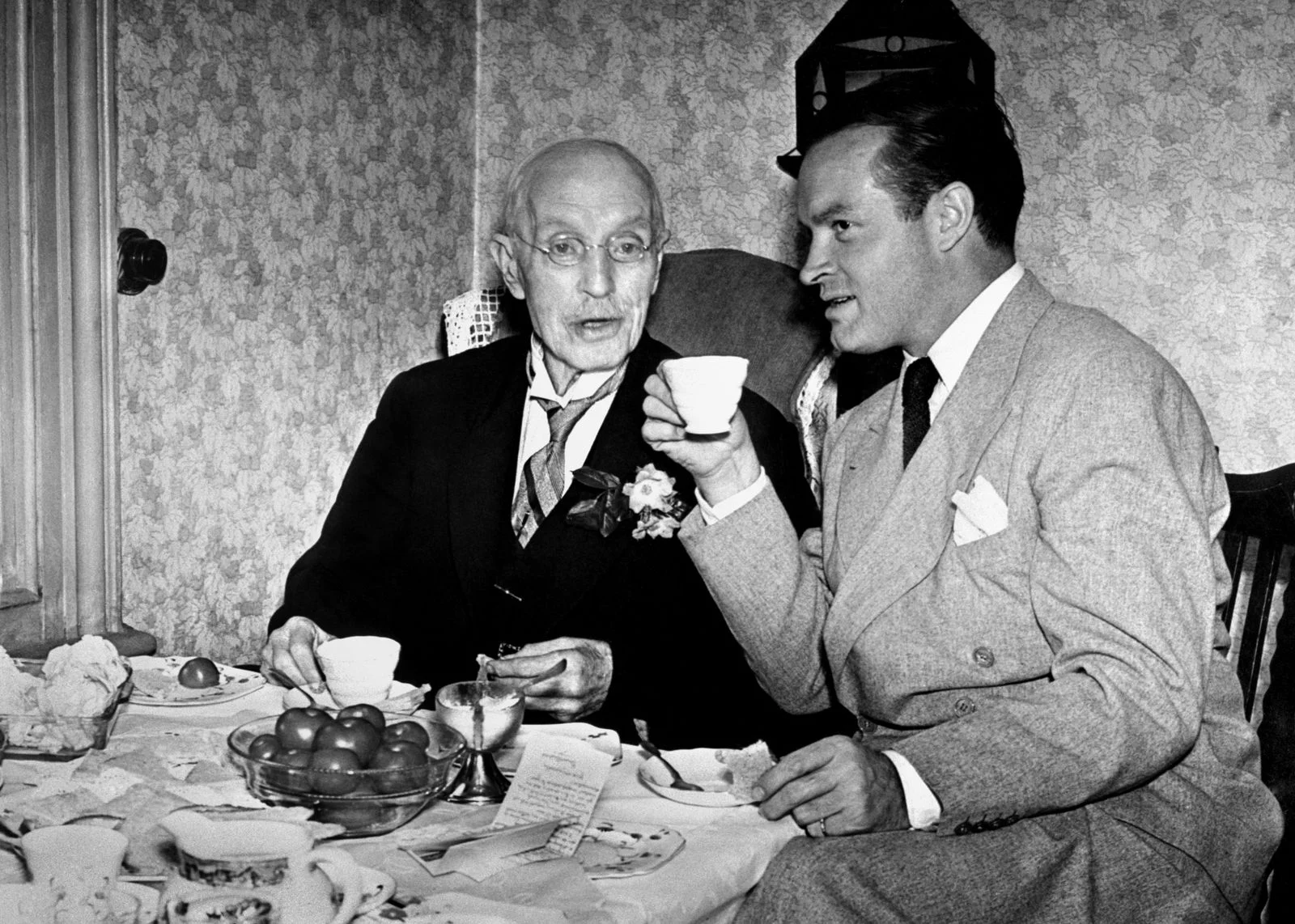
Family across two countries
Hope’s attachment to home reached back to England. As a boy, he lived with his family in one of a row of houses his grandfather had built in Eltham. “They were put together like stone battleships,” Hope wrote in Have Tux, Will Travel. After emigrating, his grandfather built churches in Cleveland and Detroit.
The two reunited during Hope’s 1939 trip to England, his first visit since leaving as a child. British papers called him a “One-time shoeshine boy and ironmonger’s assistant” returning home. Hope found the description absurd: “How could I have been a shoeshine boy or ironmonger’s assistant when I was only four when I left there?”
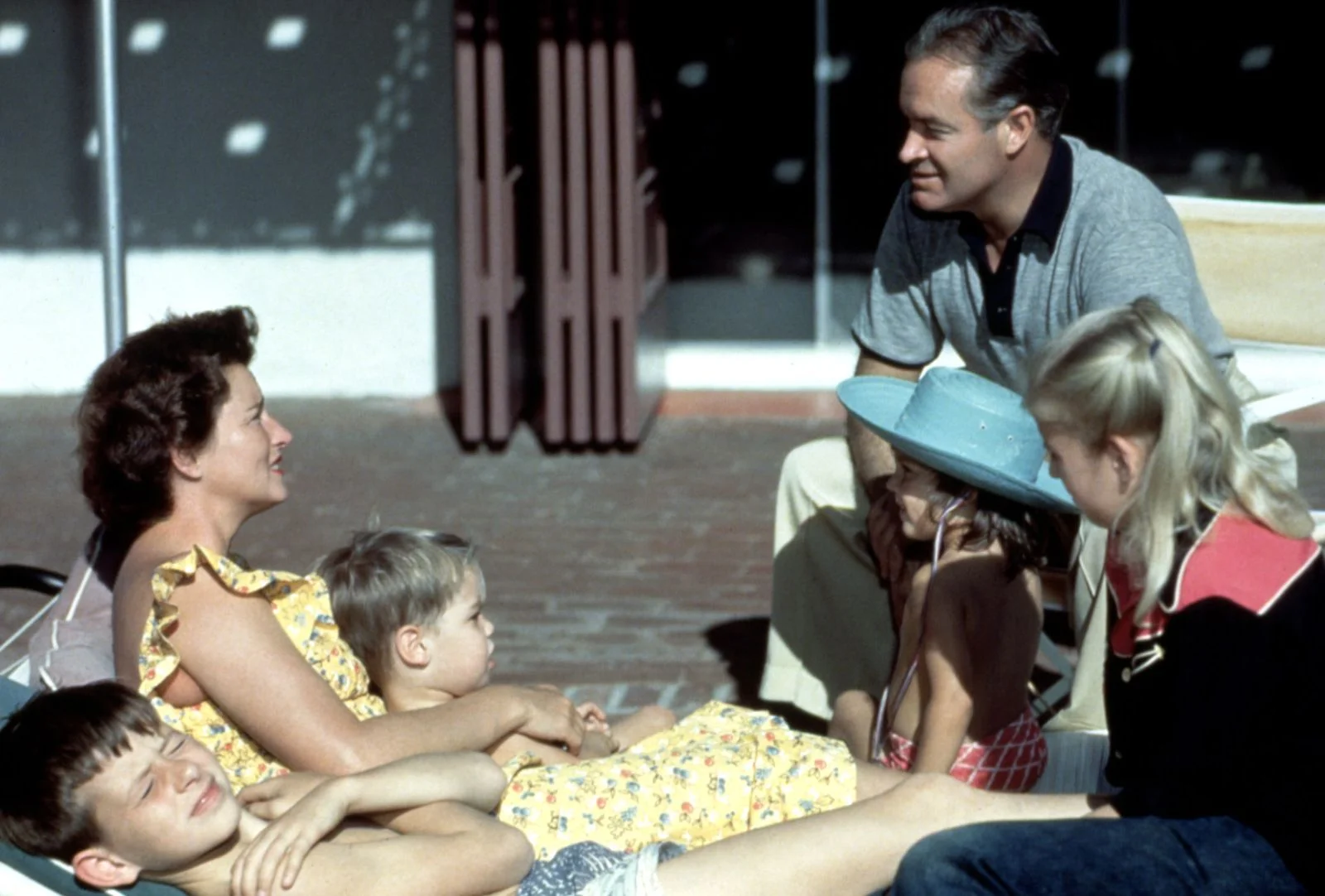
After Linda, the Hopes adopted three more children: Anthony, born in 1940, and twins William and Eleanora, born in 1946. They adopted through The Cradle, an agency in Evanston, Illinois. Hope credited Dolores with pressing for adoption; in his memoir, he wrote that when she learned she couldn’t bear children, “she began to bend my ear about adoption.”
He was proud that their children came through The Cradle, and wrote that eight of the agency’s children were then living in Hollywood. In a town he described as preoccupied with box-office results, autographs, premieres and Oscars, Hope drew a firm line between show business and family: “There’s nothing make-believe about our children. They are real.”
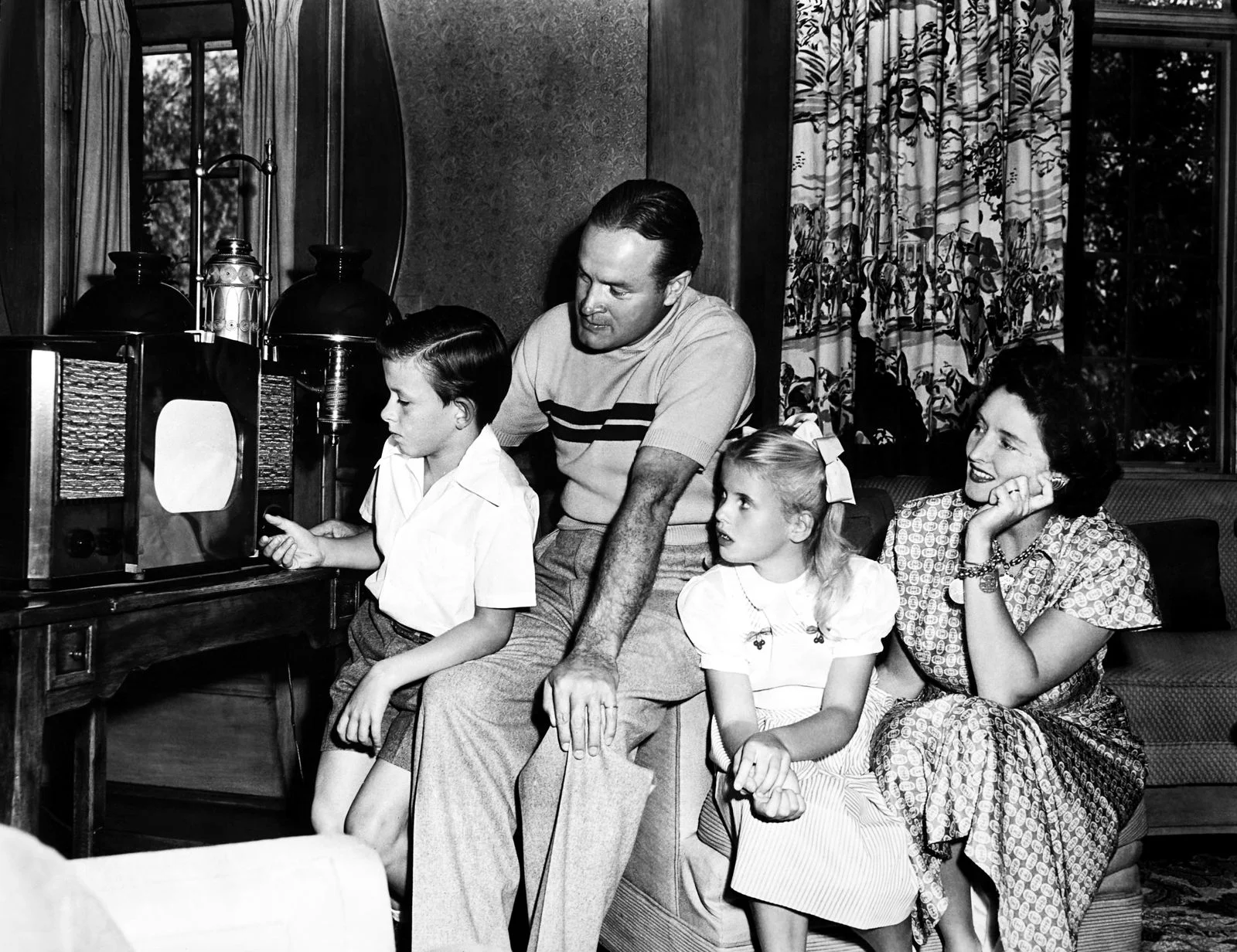
Esteemed guests at the Hope residence
A home built around family and company
Bob Hope’s Toluca Lake estate had a public life as well as a private one. Celebrities and politicians, including Bing Crosby and Richard Nixon, visited the home. When it was listed for $27.5 million in 2013, agent Jade Mills recalled that Hope’s daughter Linda would watch arrivals from the grand staircase. She even discussed writing a book with Lucie Arnaz and Maria Cooper about seeing famous guests come and go, tentatively titled Seen From the Landing.
The household ran on a scale to match its entertaining: Mills said it had a full-time cook, butler, estate manager, and two housekeepers, with extra staff brought in for large receptions. That detail says something about the property’s role. This wasn’t simply a spacious family home; it was a venue for hosting.
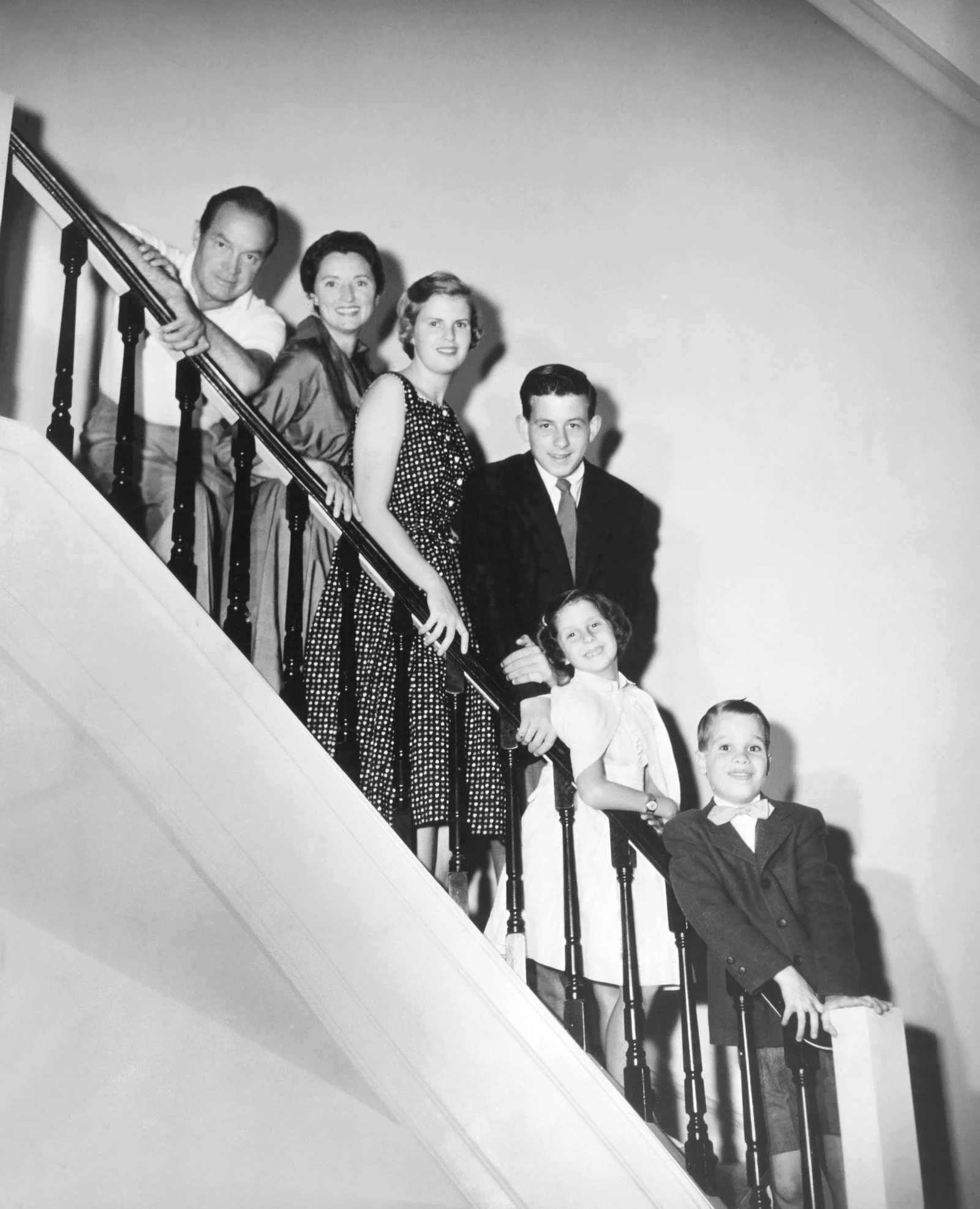
Room for family, work, and golf
Hope’s account in Have Tux, Will Travel puts family life at the center of the house. As the children grew, he and Dolores created a playroom and gave each child a bedroom. They also remodeled, replacing an entire downstairs wall with glass so the family could see the garden and catch the California sun. In the same book, Hope praised Dolores’s parenting, crediting her with raising grounded, well-mannered children and keeping him in line.
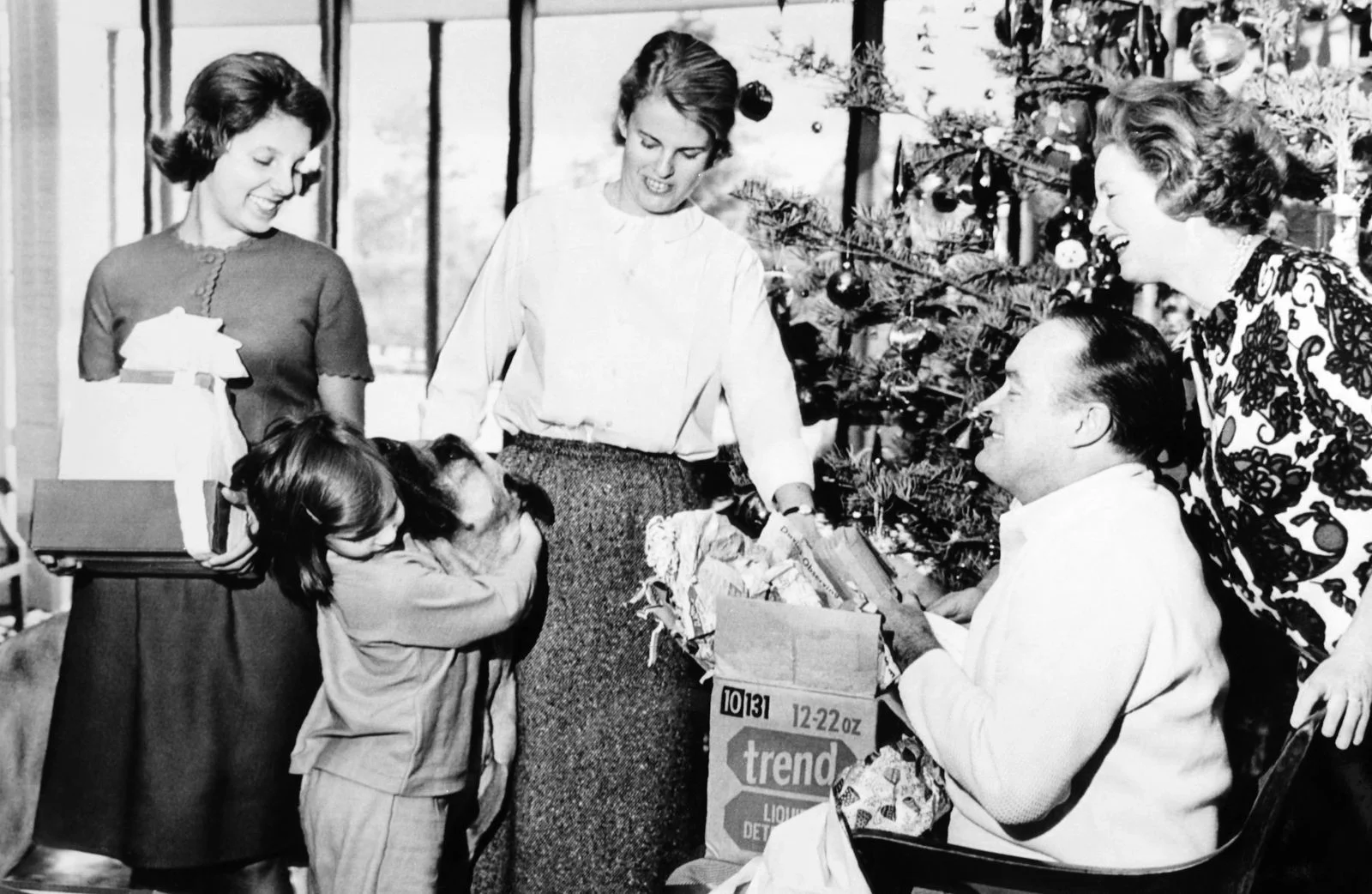
His work had its own address. Hope’s office adjoined the residence but stood on a separate property, built and owned by Hope Enterprises. He liked that business visitors could come and go without interrupting the household. And then there was golf: Hope had a one-hole course at the Toluca Lake estate and once quipped, “Golf is my profession. Entertainment is just a sideline. I tell jokes to pay my greens fees.” ESPN reported that he played more than 2,000 courses around the world, alongside figures ranging from Bing Crosby to Dwight Eisenhower and Bill Clinton. Hope joked that wherever he went, there was a course where he could three-putt.
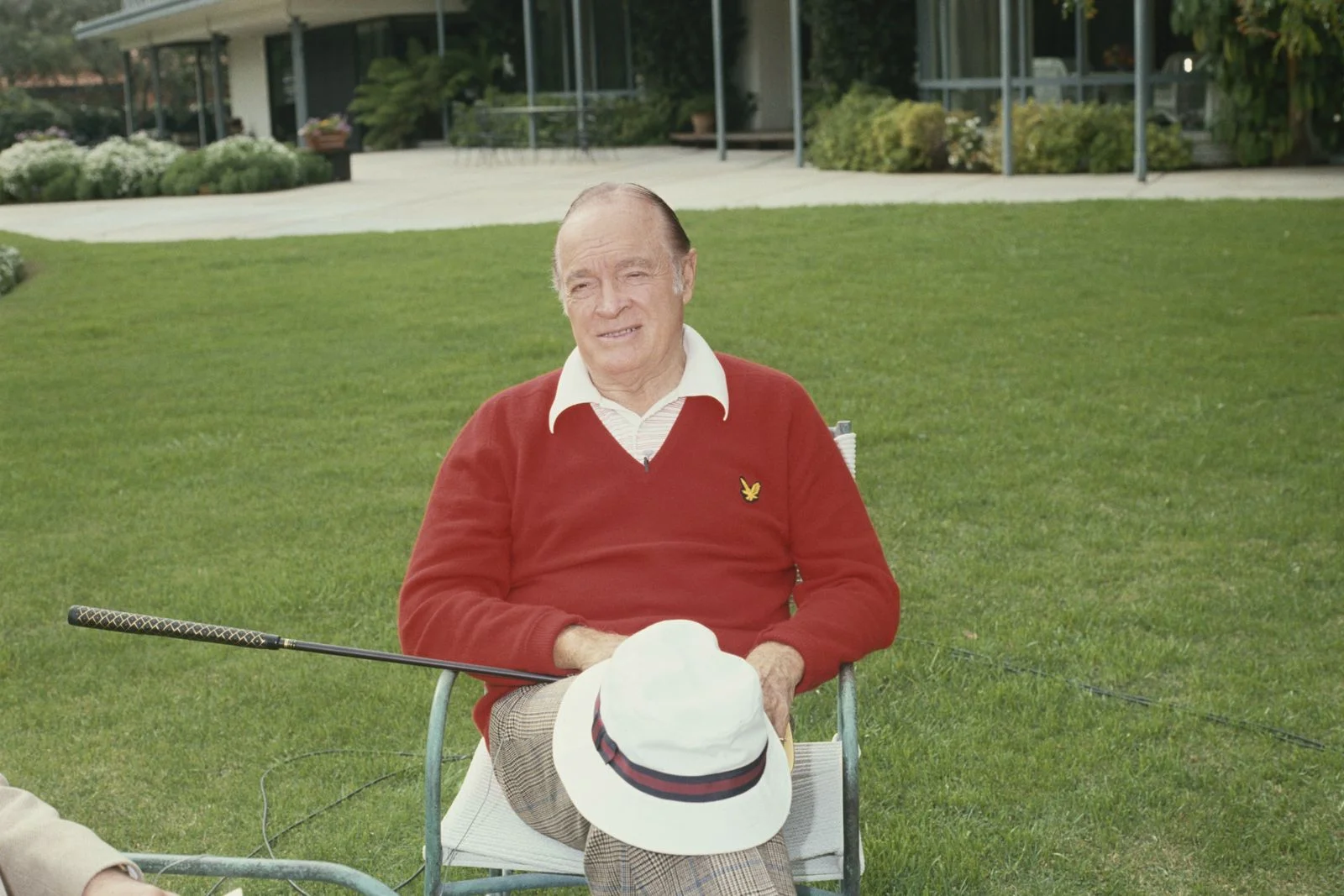
A landmark home with a long construction story
Toluca Lake was the family’s main residence, but the Palm Springs house designed by John Lautner became the more widely recognized architectural statement. The 24,000-square-foot estate had 10 bedrooms, dramatic arches, and a sweeping curved roof. Its futuristic silhouette invited a joke from Hope: “Well, at least when they come down from Mars they’ll know where to go.” The roof became one of the house’s defining features.
Getting there took years. The Los Angeles Times reported that construction began in the early 1970s, then a fire destroyed the structure and delayed the project for five years. During that period, interior designer Arthur Elrod died in a car accident, as the New York Times reported. Dolores took over the interior design. Lautner protégé Helena Arahuete recalled that she wanted rich, ornate rooms, with gold, pink, and mirrors; inspired by Walter and Leonore Annenberg’s pink-roofed home, Dolores asked for pink terra-cotta gunite on the curved roof.
From private estate to public occasion
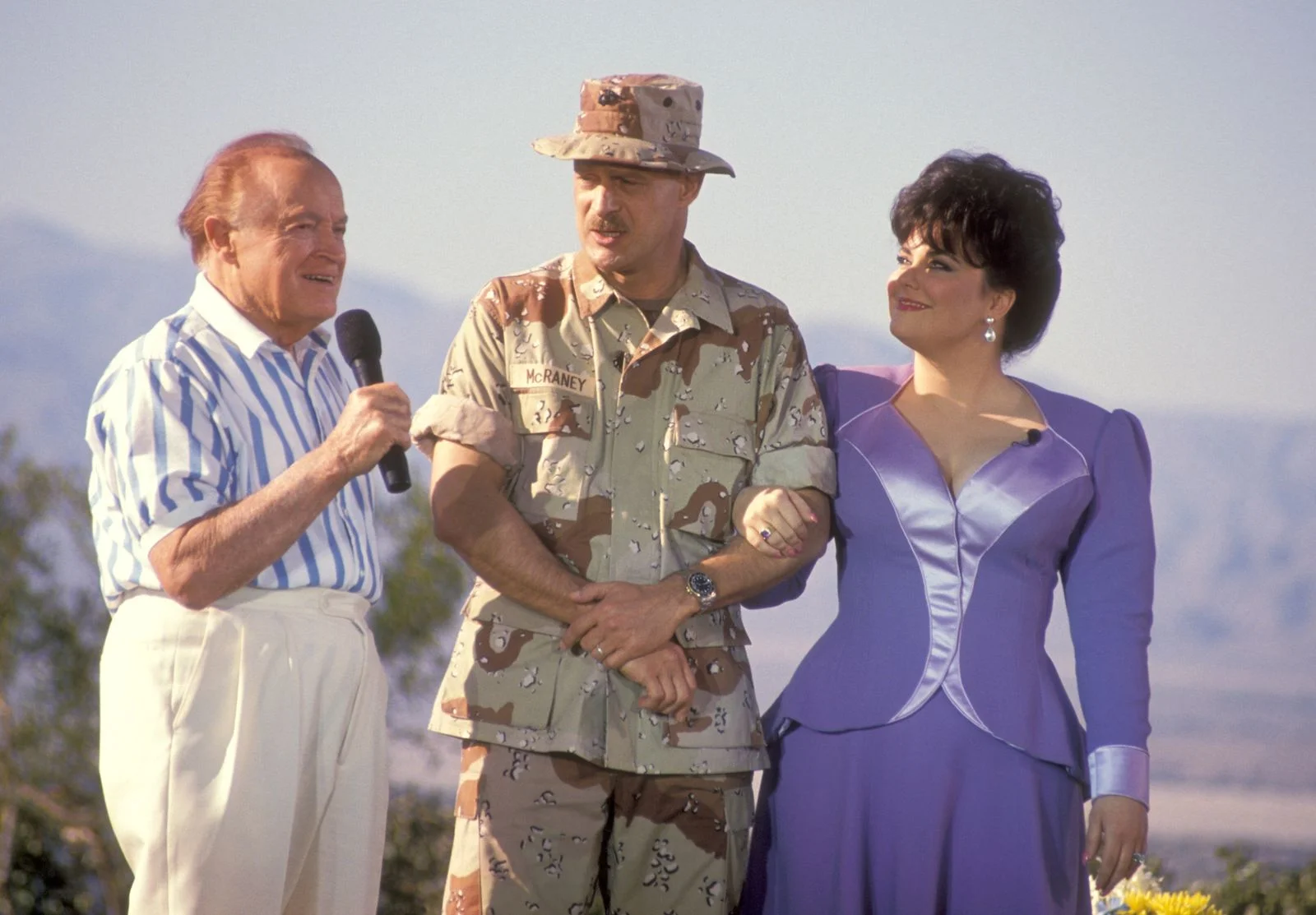
The Palm Springs house also hosted a major public celebration. In 1991, Hope held “Bob Hope’s Yellow Ribbon Party,” a homecoming event for U.S. troops. Guests included Brooke Shields, Patti LaBelle, Jimmy Stewart, and former President Gerald Ford with his wife, Betty.
Hope died at his Toluca Lake home in 2003, aged 100. The estate stayed in the family until Dolores died in 2011, then went on the market for $50 million. Ron Burkle bought the Palm Springs house in 2016, according to Architectural Digest, and acquired the Toluca Lake property two years later, the Los Angeles Times reported.
The homes tell two sides of Hope’s life: Toluca Lake was designed to keep family life, work, and entertaining in motion, while the Palm Springs estate turned architecture into spectacle. What makes the story memorable is how closely those roles overlapped—one house for the everyday rhythm, another that could become a stage.
Discussion
Sign in to join the discussion.