Flatiron’s Ditto Café Brings Design-Forward Dining to a Former Factory
Published
Nov 10, 2026
Views
685
Chef Andy Baraghani turns a 1905 Flatiron factory into Ditto, an all-day café with vintage lighting, bold blue walls and three distinct spaces.
Ditto’s design ambition is easy to spot: chef Andy Baraghani approached the New York café as if he were decorating a home, down to asking whether he’d want each choice in his own rooms. That personal test gives the restaurant a point of view. It also helps explain how a former factory can feel part neighborhood café, part design project.
“I’ve always been obsessed with design, since I was a kid,” Baraghani says. “I love how
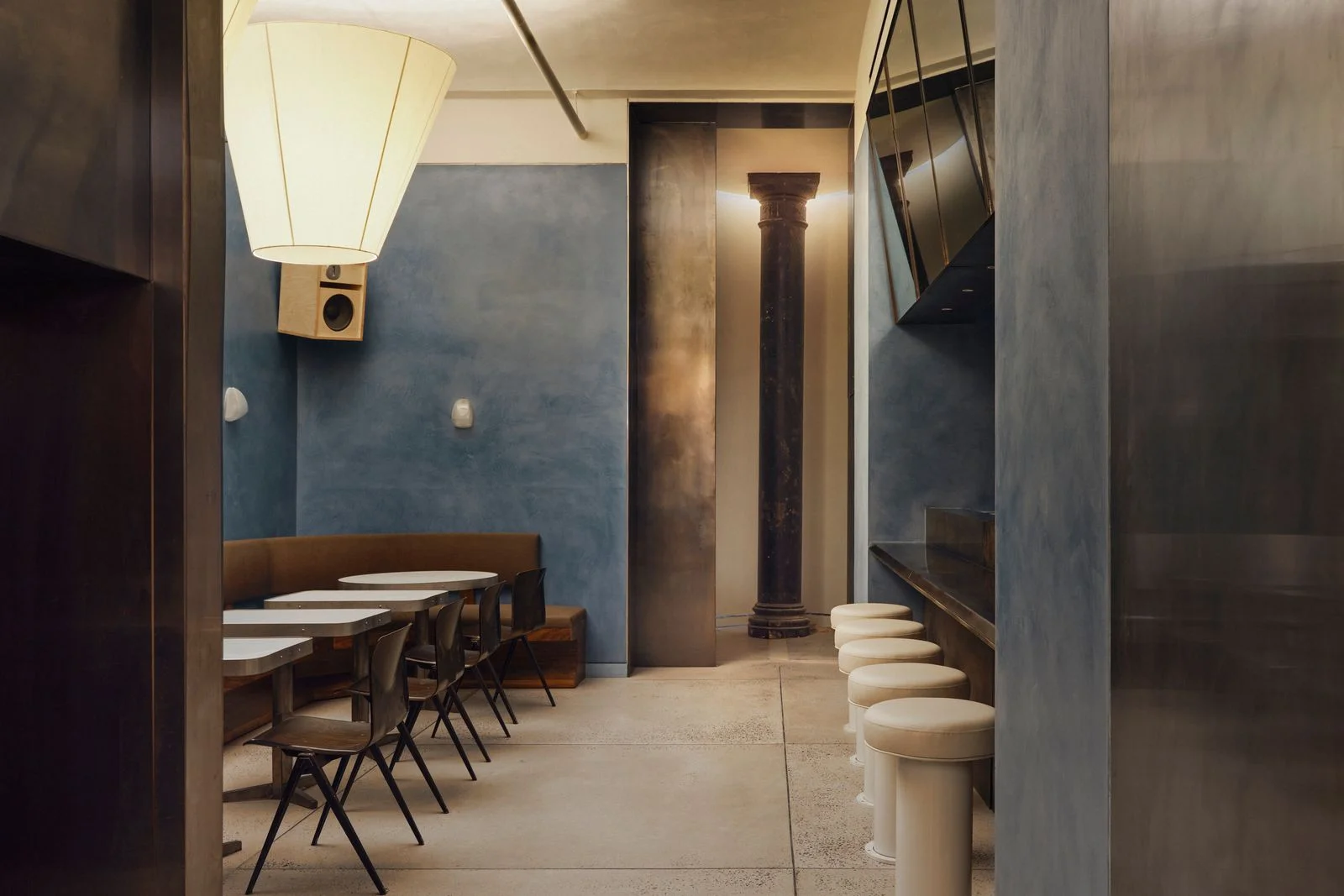
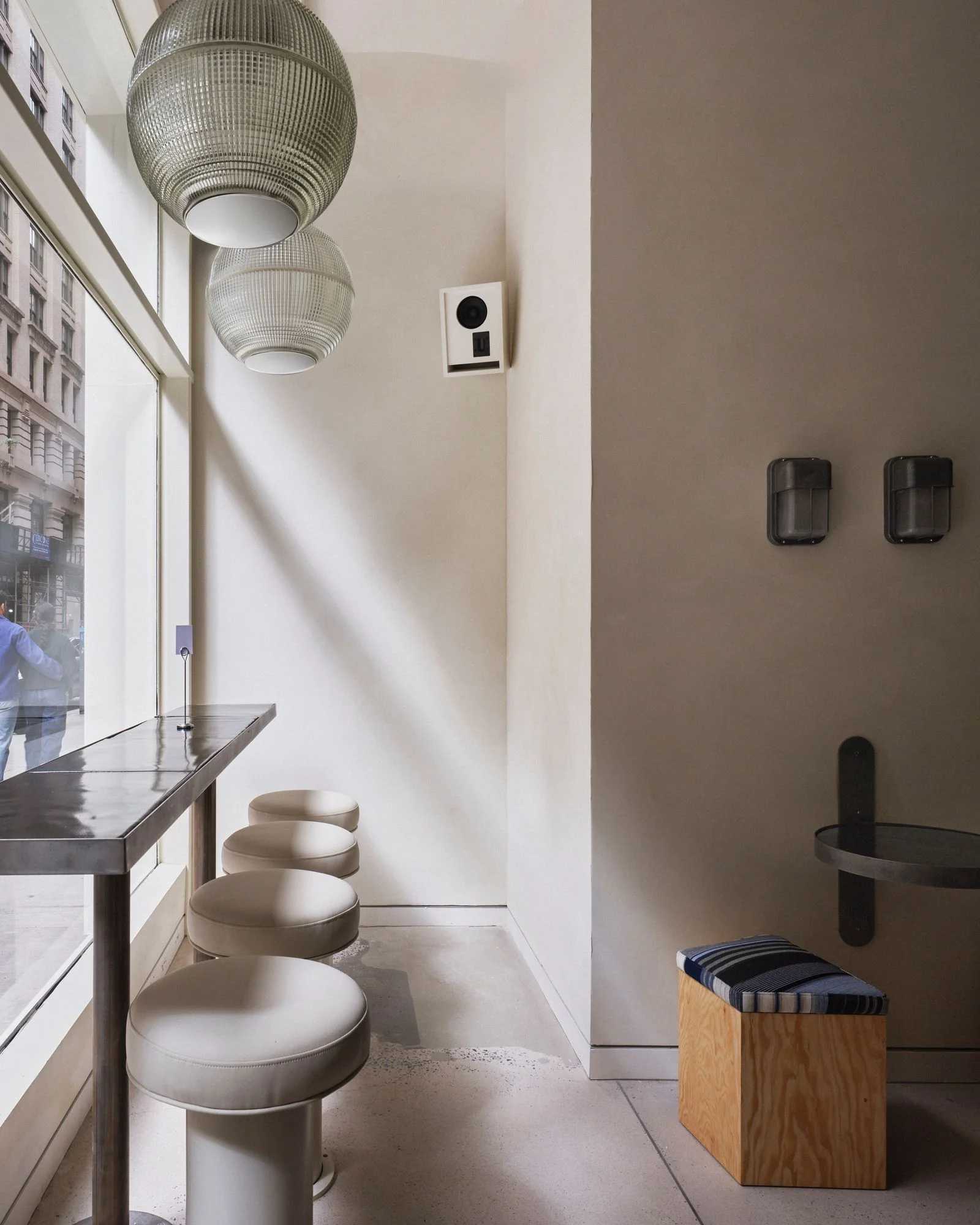
restaurant interiors can take you to a different place.” At Ditto, an all-day café opening in New York’s Flatiron, he put that idea to work: vintage Holophane glass-prism pendants by the front window, then vivid blue Venetian plaster in the rear dining room, tinted to match Benjamin Moore Buckland Blue. The test for each decision was personal: “Would I actually do this in my home?” If so, it stayed.
Ditto’s blue walls match Benjamin Moore Buckland Blue; the chairs are Model S22 by Galvanitas. Photo: Adrian Gaut.
### A restaurant that wasn’t the plan
Design runs in the family. Baraghani’s husband, Keith Pollock, is a former AD editor and now a West Elm executive. Still, Baraghani hadn’t set out to open a restaurant. When investor Michael Silber, whose New York projects include Borgo, Penny, and Bistrot Ha, proposed a relaxed place serving breakfast, lunch, and dinner, Baraghani’s first response was blunt: “I have no interest.”
He had plenty of restaurant experience. He started at Chez Panisse in Berkeley as a teenager, later worked at Estela in New York, then became a food editor at Bon Appétit. His cookbook, The Cook You Want to Be, won a James Beard Award. The hesitation, then, wasn’t a lack of credentials. Baraghani and Silber connected over greenmarket cooking and their shared appetite for deep dives into decorating, and the project began to make sense as a way to put his own style into a public space.
Their references ranged widely, from Bauhaus and de Stijl to classic modernism and Italian and French interiors from the 1970s and ’80s. “Andy and I talked about styles ranging from Bauhaus, de Stijl, and classic modernism to 1970s and ’80s aesthetics from places like Italy and France,” Silber says.
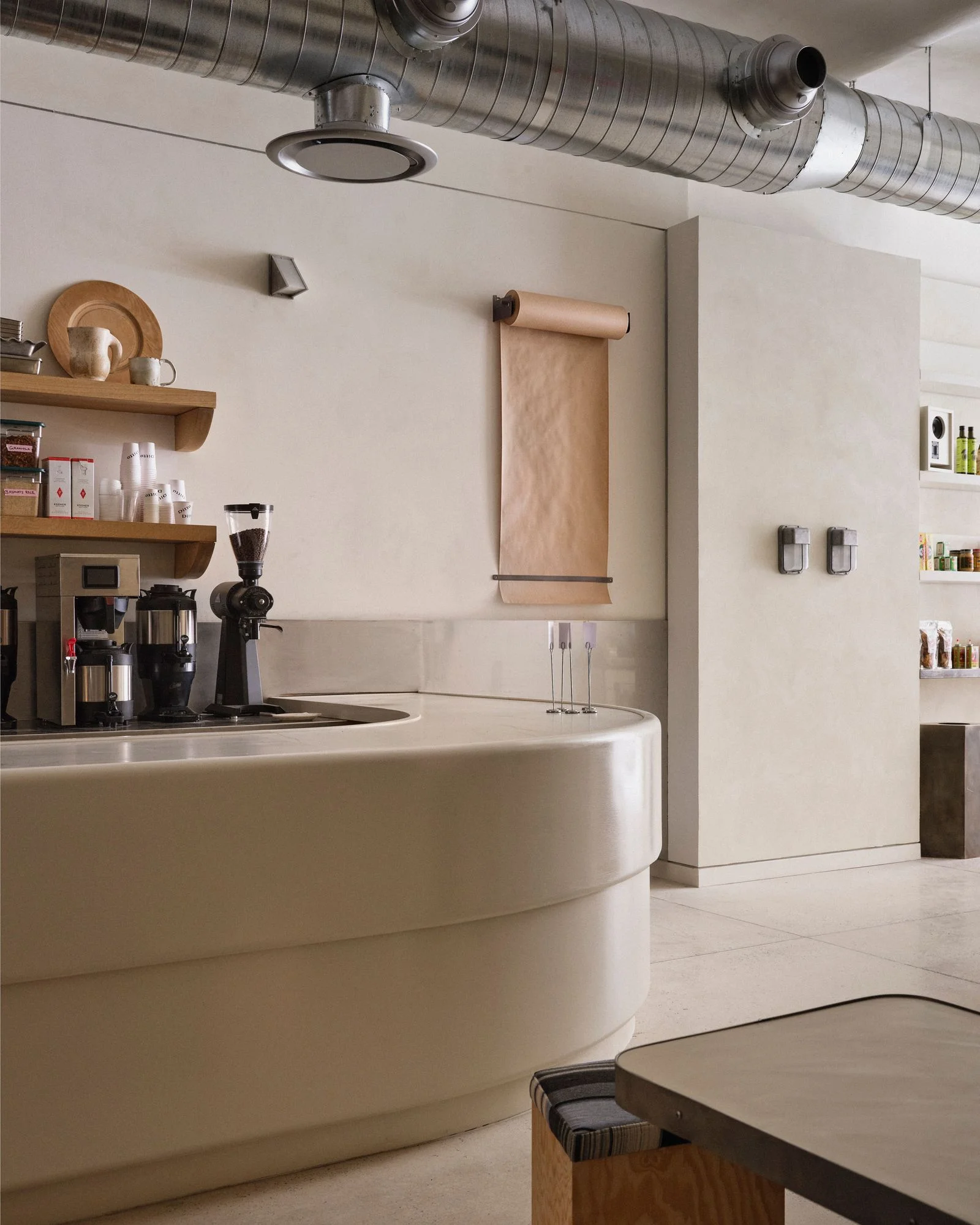
The counter at Ditto takes its cues from Bauhaus design. Photo: Adrian Gaut.
### Three rooms, three moods
Baraghani and Silber enlisted interior designer Eric Wink and architect Alta Indelman. Wink is a close friend of Baraghani and had helped design the home he shares with Pollock. One touchstone was the long-gone City Bakery, two blocks north of Ditto’s 16th Street address. Wink says the goal was a place that felt casual and welcoming, with some of the character of a New York diner.
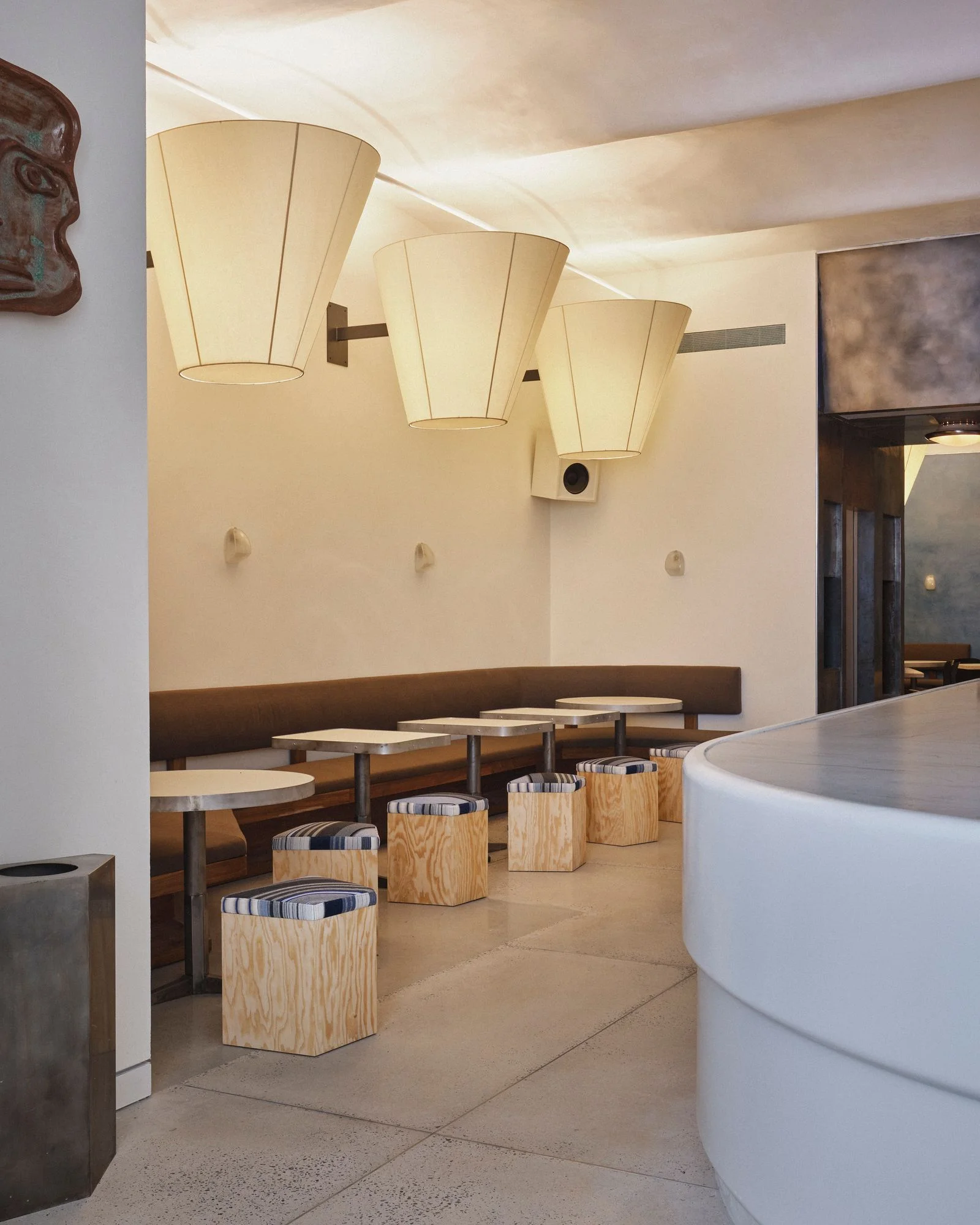
Ditto occupies a 1905 former factory, most recently an agnès b. store, and its interior unfolds in three sections. The front holds a small market of selected groceries. In the center, a glossy white counter with curved Bauhaus references organizes the queue: customers take a number, then either carry their food away or sit at laminate tables beneath three oversized custom fabric pendants. The daily menu is handwritten on butcher paper. It includes pomegranate spoon salad and Baraghani’s “Platonic ideal of granola,” made with tahini and maple syrup, with yogurt finished in fig-leaf oil.
Holophane pendants brighten the front window. Photo: Adrian Gaut.
The rear dining area shifts the pace. It’s painted blue, with an open kitchen and café tables alongside a long banquette. “There’s that good chaos in the middle and the back is a calmer moment,” Baraghani says. That contrast gives the three-part layout a practical logic: market, counter service, then a quieter place to settle in.
Indelman, whose past collaborators include New York restaurateurs Andrew Tarlow and Gabe Stulman, brought an industrial, high-tech edge to the room. Patinated stainless steel wraps the walls and open kitchen; structural arches and polished concrete floors remain visible. The result depends on the tension between hard-wearing materials and Baraghani’s more domestic design instinct.
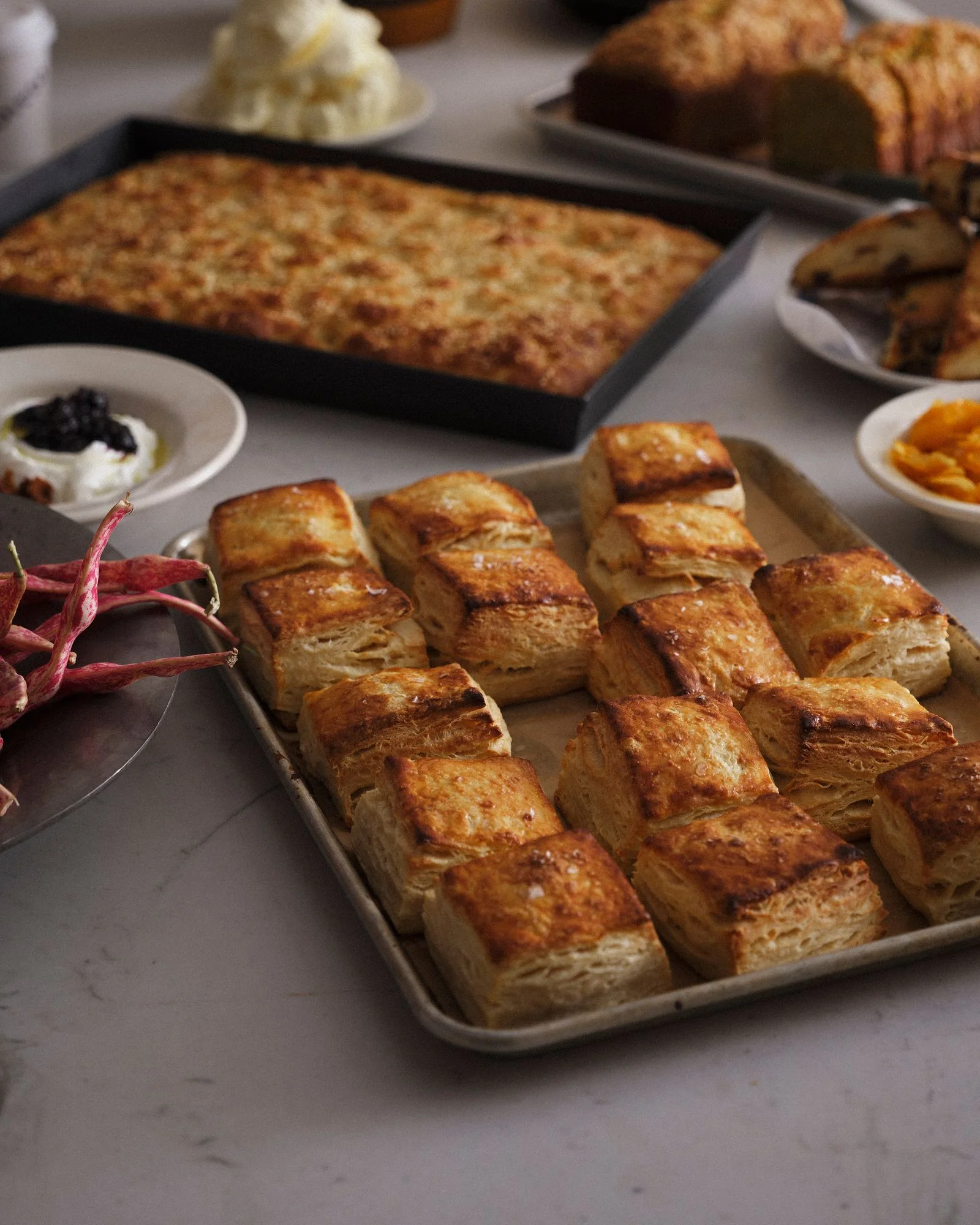
Flaky biscuits are planned as a signature dish. Photo credit: Adrian Gaut.
The details took persistence. “We went through 50 possibilities to find the right chair,” Silber says. Their choice was the Model S22, a Dutch industrial chair from the 1960s, sourced from Amsterdam Modern in Los Angeles. That kind of deliberation is more significant than it looks: Ditto’s character comes from the accumulation of specific choices, not from a single dramatic gesture.
Small choices give the room its character
The design works because it balances restraint with a few personal, slightly unexpected details. Silber found midcentury ceramic bud vases on eBay for less than $20 apiece. Grouped on a shelf, he says, they suggest a still life by Giorgio Morandi.
White speakers and a French ceramic mask hang above the banquette; the tables and stools are upholstered in Maharam’s Stripe It fabric.
Sound is part of the room’s design, too. Sound artist Tom Bloxam made the white wall speakers, while Michael Scanlon of Chandelier Creative, the firm behind Ditto’s branding, put together the playlists.
Then there’s the fabric. Baraghani pushed for Maharam’s Stripe It on the custom stools, describing its colors as having a “Baja California” feel. “We needed that twist,” he says. Wink brought his own preference to the restrooms: a wall-mounted MiniLoo by Neo-Metro, finished with a custom wood top to make the stainless steel feel warmer.
Art that feels at home
Two oversized midcentury French ceramic faces hang opposite the menu of the day. Baraghani lent them from his home, where he’d kept them until he realized they belonged here. “They anchor the space and add a touch of craft,” he says. “I just knew they needed to be here.”
That’s the point: the room’s character comes from specific decisions, not a single grand gesture. The vases are inexpensive, the speakers are purpose-made, and the ceramic faces have a personal connection. Together, they make a spare interior feel considered without making it feel overly staged.

Discussion
Sign in to join the discussion.