Tirana’s bold new buildings have put Albania’s construction boom in the spotlight, while protests raise questions about design, politics and public voice.

Albania’s building boom has become a test of what architecture can change—and who gets to decide. Prime Minister Edi Rama argues that design can act like “a strong medicine” for society, but Tirana’s striking new buildings have arrived alongside protests, political anger and questions about the influence of foreign architects.
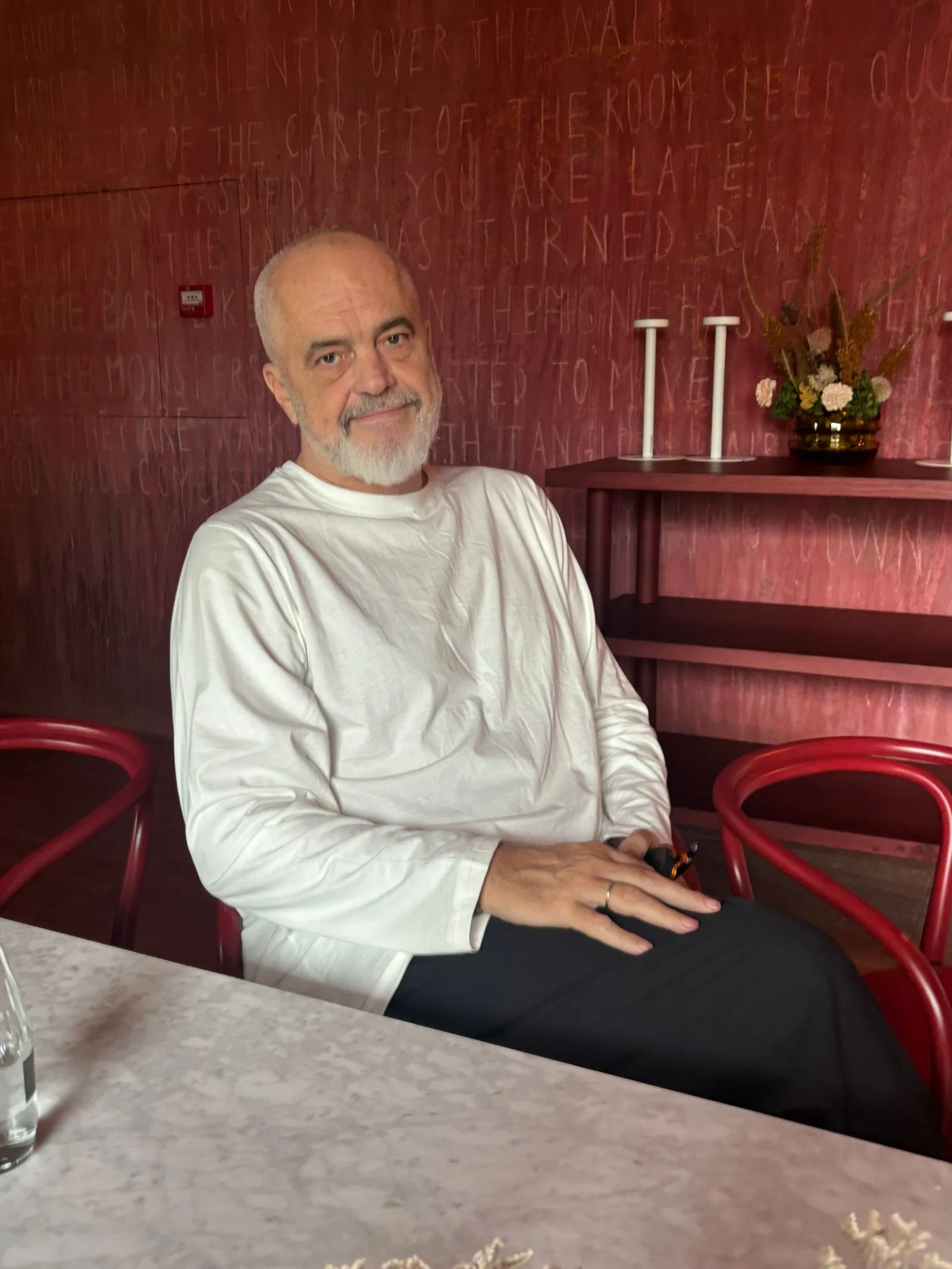
I went to Tirana on October 19 to see the buildings and speak with Rama. The trip was a short detour from a holiday in Greece with my husband; I’d been hearing about Albania’s construction boom for years, and New York architects seemed to know the prime minister personally. Rama is a former professional basketball player, a working artist and, at six-foot-seven, hard to miss.
The timing proved less straightforward than I’d been assured. After a night tracking violent demonstrations in the capital, Rama told me he would try to concentrate on our conversation. He had moved to a secure site outside the city. Protesters had vandalized some of the buildings I’d come to see, and I was publicly accused of helping a government spy—an absurd charge. I was also making my way around on a rented four-wheeled mobility scooter, which cost about $100, while managing the early stages of Parkinson’s disease.
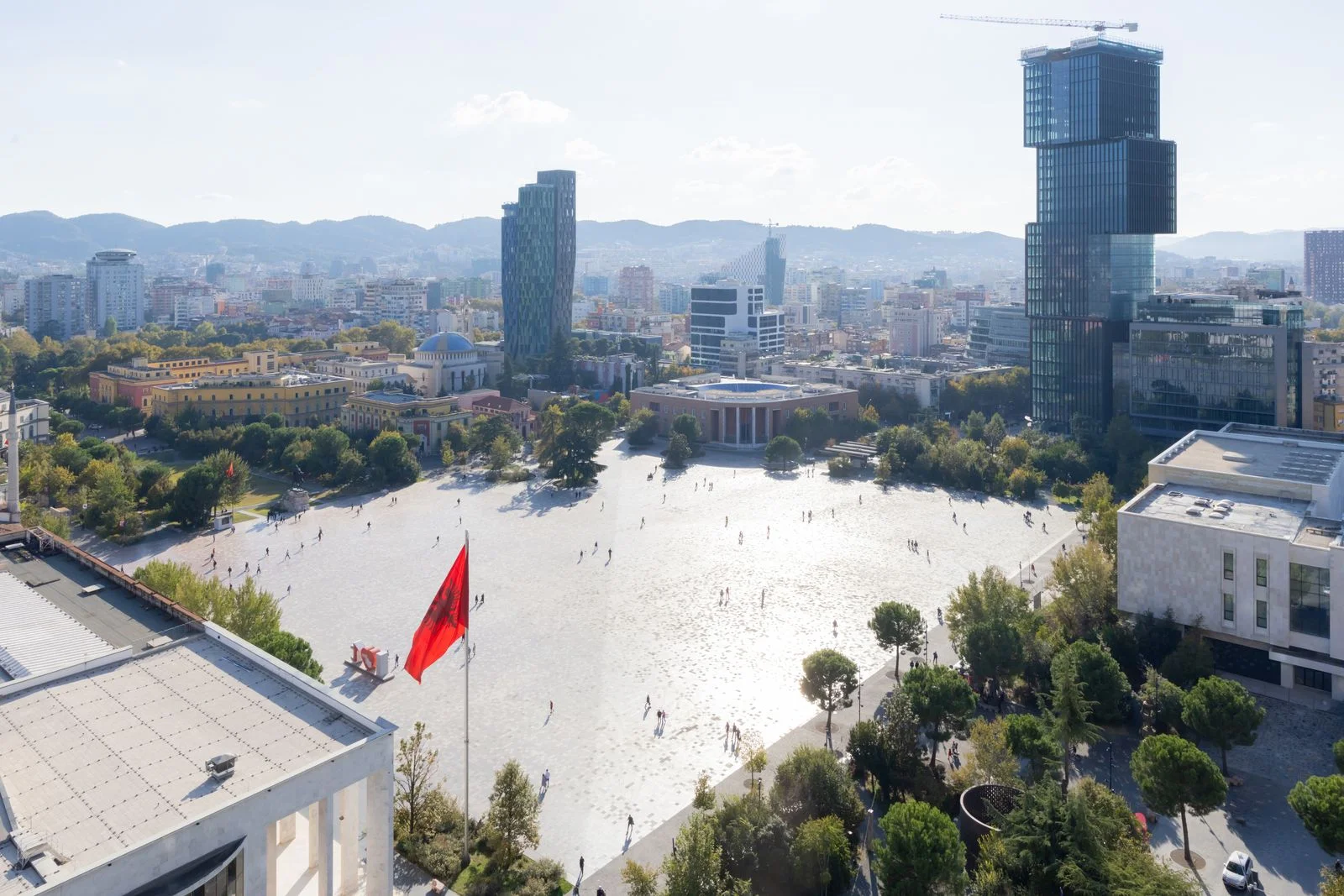
The city center could still feel charming and almost untouched. Then came the sound of what seemed to be Molotov cocktails during an outdoor dinner. Tirana’s population is about 600,000; Albania’s is roughly 2.3 million. Yet the question hanging over the visit was larger than the capital: why were protesters so angry, and why did Rama appear so calm?
A building boom under political pressure
Rama has spent 13 years in office reshaping Albania, often with help from architects based abroad. Even the guarded villa where we spoke—a raw concrete structure stained bright red—was largely designed by Spanish architect Pablo Bofill.
Foreign architects have also become part of Rama’s public program. In May, as protesters called for his resignation, he was preparing to host an annual international architects’ gathering. The event, held June 3–5, drew prominent visitors including Danish architect Bjarke Ingels and Chilean architect Alejandro Aravena, the 2016 Pritzker Prize winner. Rama says architects pay to attend and enjoy the event. Protesters had a different message: “Starchitects go home!” The demonstrations foreshadowed more violent unrest in October and November.
The setup brought back memories of Ordos City in Inner Mongolia, which I visited in 2008 and wrote about for The New York Times. There, a wealthy industrialist and artist Ai Weiwei brought 100 young architects to an isolated desert city to design villas for wealthy Chinese buyers who seemed not to exist. The two projects are different, but both have the strange quality of architecture being staged at a distance from the people meant to live with it.
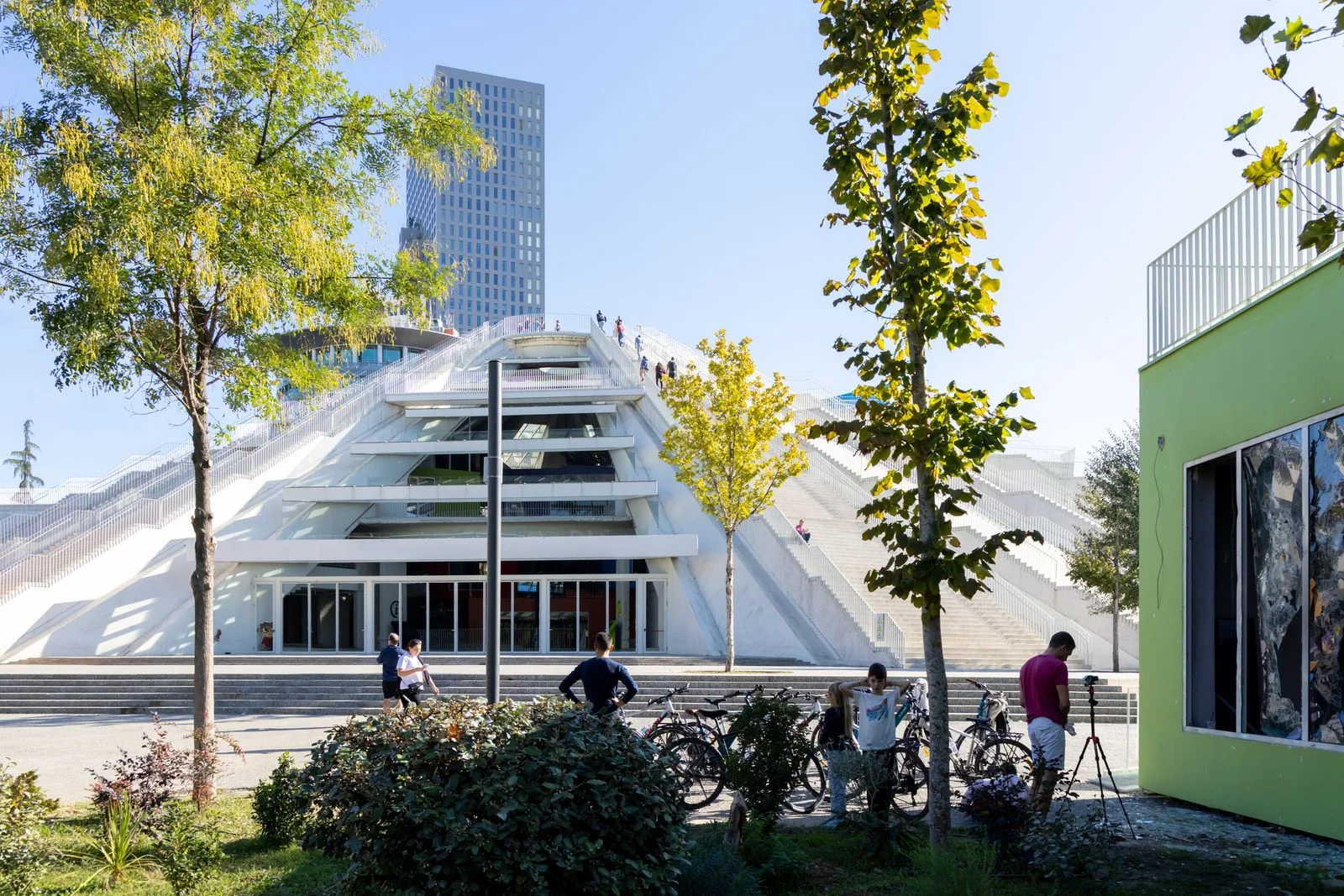
That tension is visible on Tirana’s streets. On October 20, protesters had torn hundreds of paving stones from the boulevard where Rama usually works and used them to smash shopfronts; some were reportedly thrown at police. Authorities said nighttime clashes injured hundreds. Police fired tear gas and rubber bullets, while demonstrators set small structures alight, including an information kiosk in Skanderbeg Square. Workers scrubbed graffiti from a statue of the square’s namesake. The Tirana Pyramid, a late-1980s monument associated with followers of dictator Enver Hoxha and later converted into a public space by Rotterdam firm MVRDV, was damaged too.
It’s hard to know how many Albanians object to the role of foreign designers, but the numbers help explain the resentment. Over 26 years as Tirana’s mayor and then Albania’s prime minister, Rama initiated or encouraged more than 50 international architecture competitions, covering projects from parks and museums to major housing developments. Adelina Greca, head of the National Territorial Planning Agency, which runs government competitions, says foreign architects won 48; Albanian firms working alone won just two. Rama has also recommended foreign architects directly to private developers.
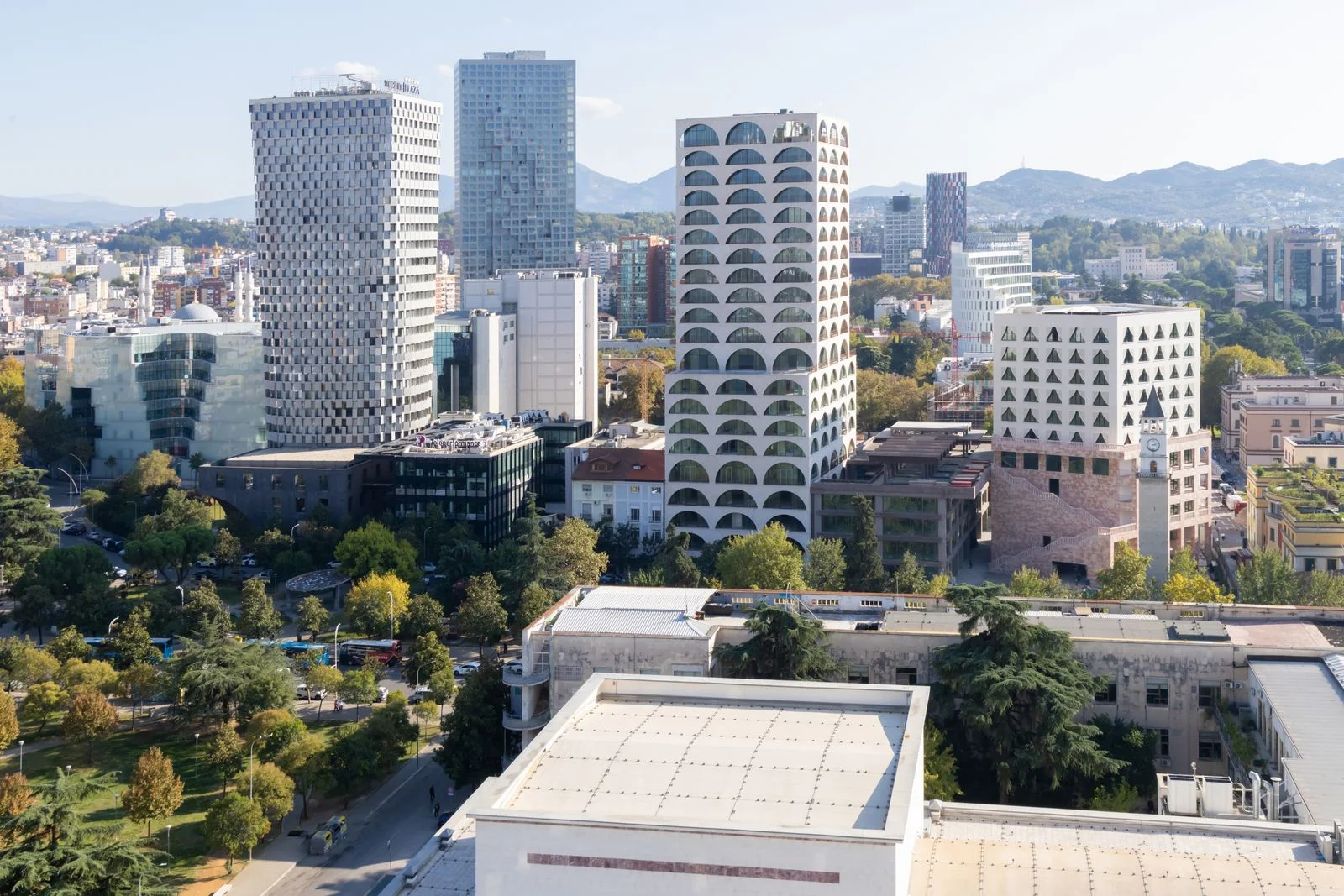
Buildings that invite interpretation
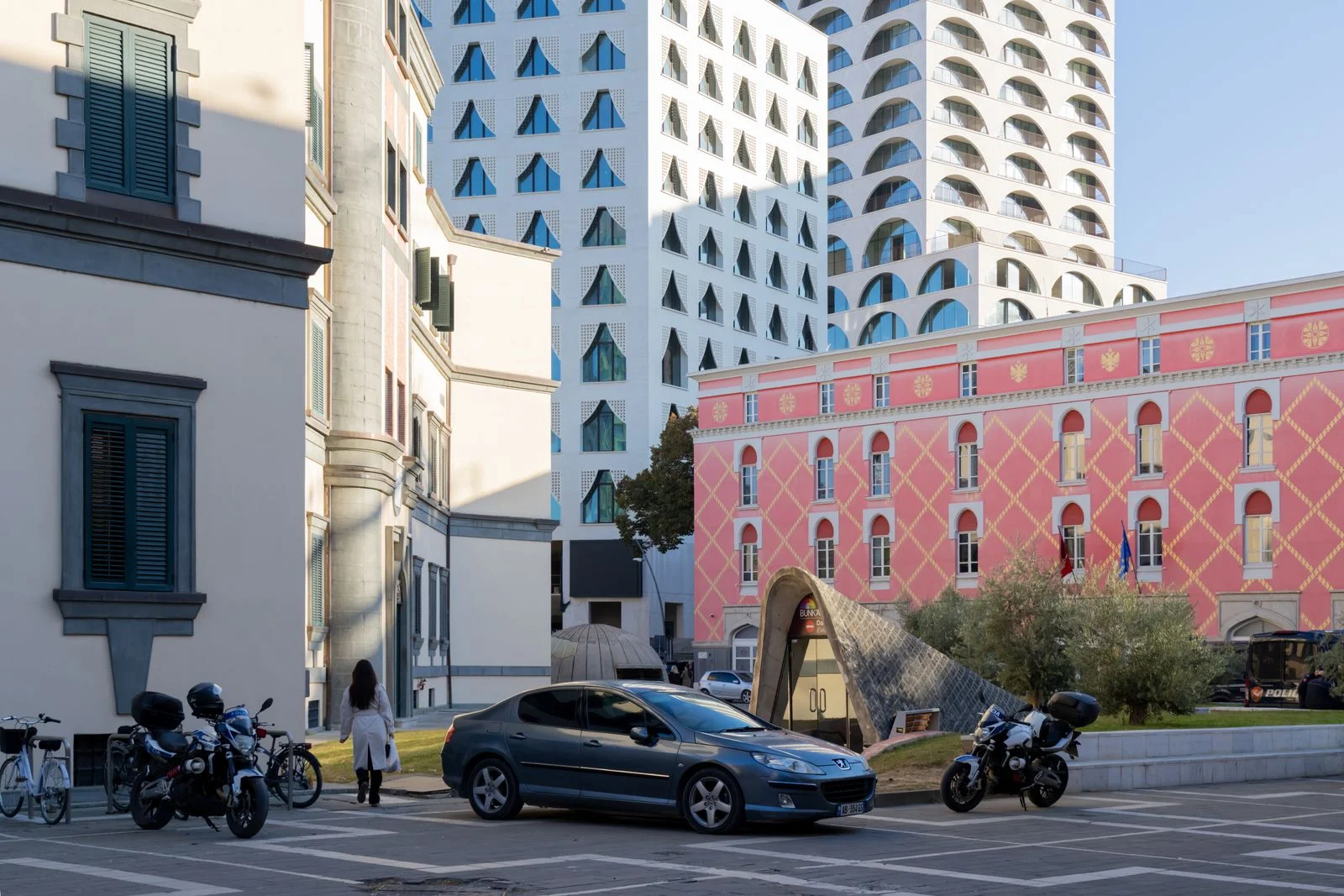
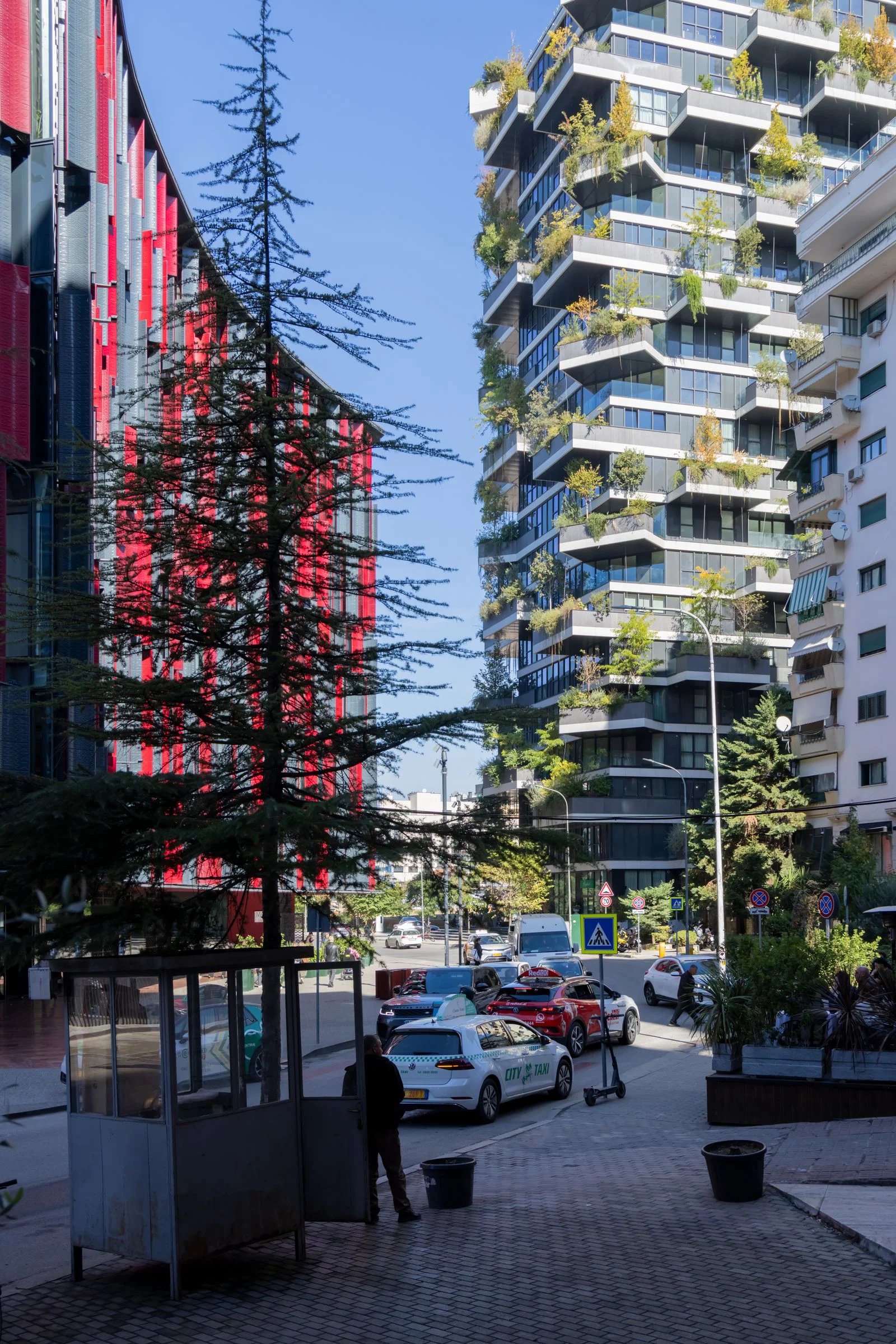
The result is a compact center full of vivid color and unusual forms. Italian architect Stefano Boeri designed a tree-covered “vertical forest.” Nearby stands a bright red Marriott by fellow Italian architect Marco Casamonti. The Hotel Plaza Tirana, by Johan Anrys of Belgian firm 51N4E, shifts from an ellipse at street level to a rectangle at the top.
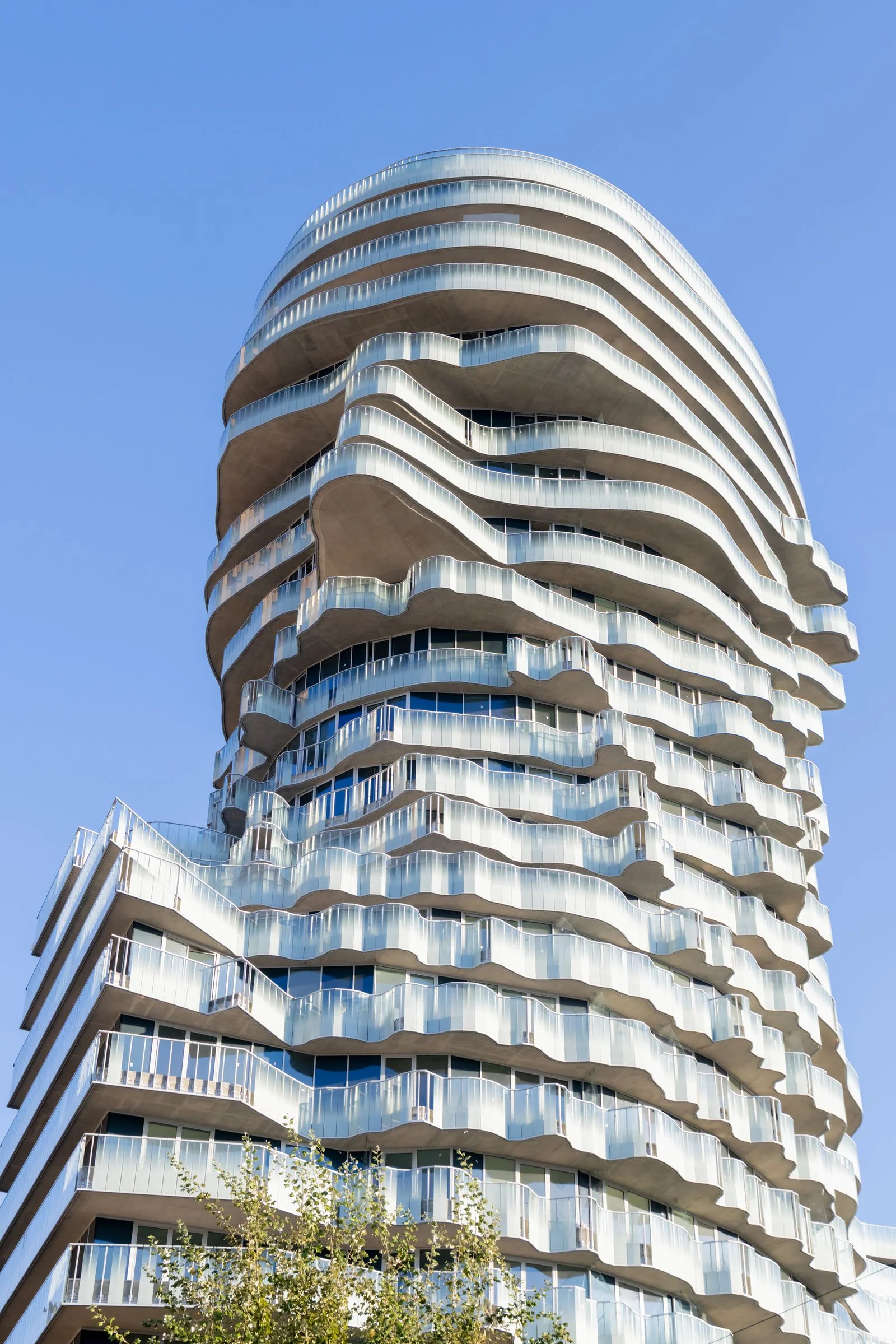
Then there’s the condo building by MVRDV shaped like a human head, with its façade and balconies forming facial features, including a prominent nose. The architects have called it the head of Skanderbeg, the 15th-century military figure. Some Albanians see Rama instead. The prime minister calls both interpretations “urban legends,” describing the design as “the form of a man through history.” Then, gesturing toward me, he added that it looked like me, too. The exchange is playful; the dispute over who these buildings represent is less so.
Architecture’s promise—and its limits
Tirana’s new buildings can be striking, but the “nose” on the MVRDV building raises a fair question: does the city need another architectural spectacle, or a design people will actually want to live in? The vertical forest, the Marriott and the Plaza Hotel are handsome additions. The nose may be a memorable one-liner. That’s not quite the same thing as a good home.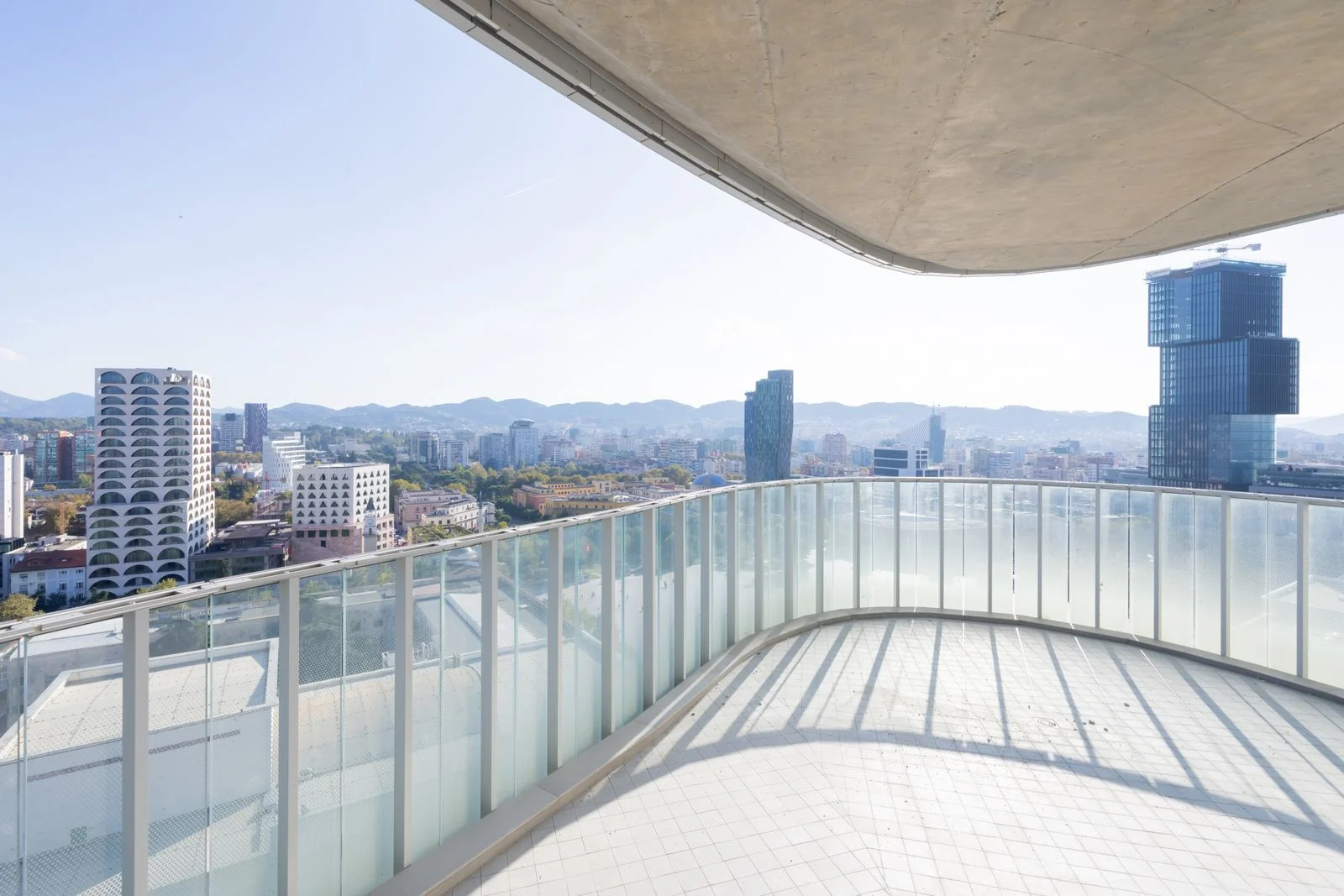 Johan Anrys, one of the first foreign architects to work in Albania, says the experience has taught him how architecture can improve society. He knows local architects worry that outsiders are taking their jobs. But his Tirana studio employs 20 Albanian architects, and he argues that foreign firms have created more work for Albanian architects than they’ve displaced.
Prime Minister Edi Rama makes a sharper case. He says the Albanian architects who object to his invitations to international firms are “the mediocre ones”; he believes others welcome the chance to work alongside names such as Herzog & de Meuron, OMA and Diller Scofidio & Renfro. Foreign firms that win competitions must hire architects licensed in Albania to help deliver their designs. Rama likens this arrangement to China two decades ago, when prominent commissions went to foreign architects and local practitioners learned from them. “If we continue this kind of cooperation,” says Greca, who has worked for Rama almost continuously since 2003, “there will come a day when Albanian architects will win competitions not only here but around the world.”
That is the optimistic argument. The politics around it are harder to brush aside.
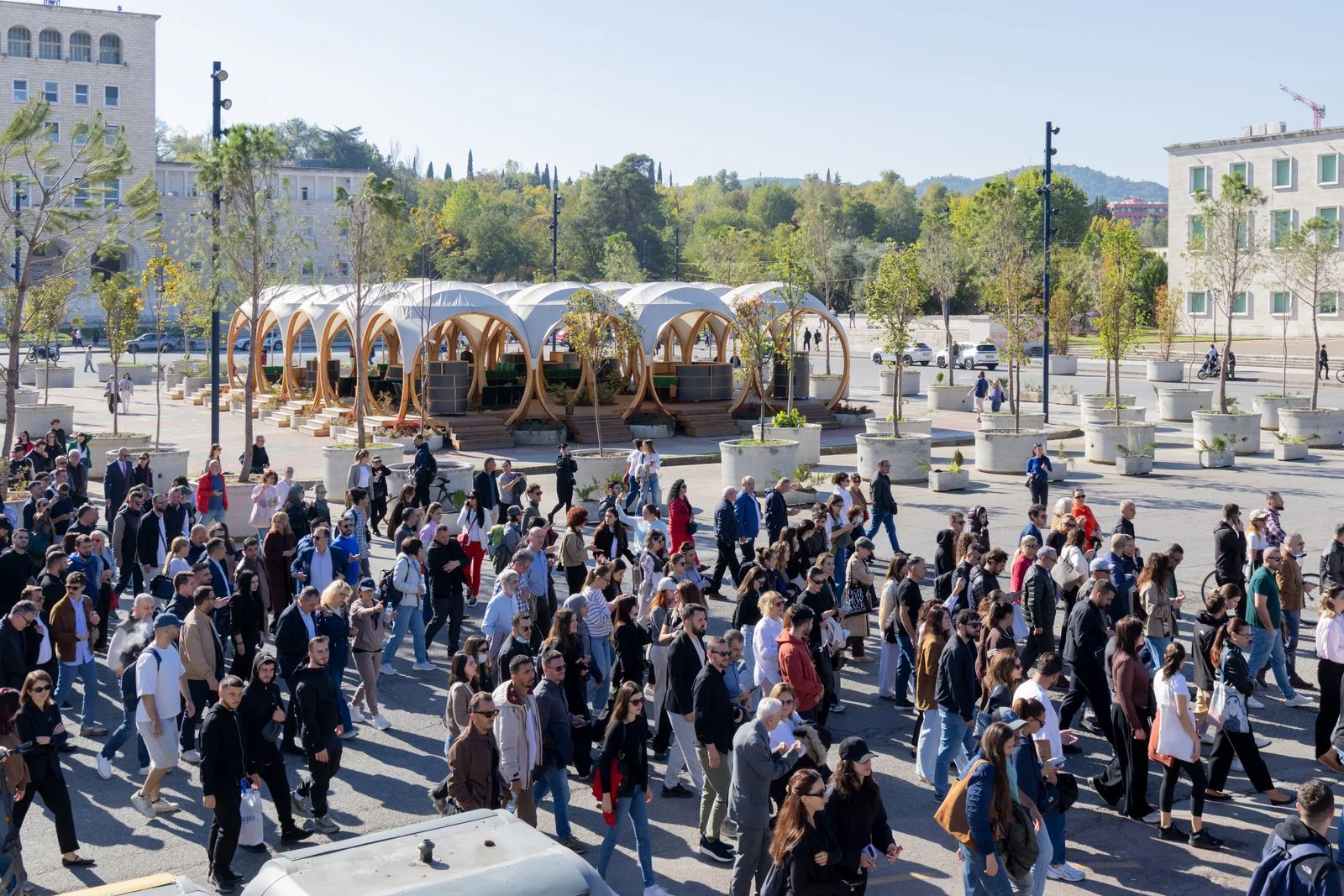
Anti-government protesters on the streets of Tirana, with the art installation Tirana Moons by Austrian architect Chris Precht in the background
Greca’s close association with Rama has made her a divisive figure among local architects. During a lunchtime protest march, she spotted architects and students from the nearby Faculty of Architecture and Urbanism at the Polytechnic University of Tirana. Within minutes, organizer Gent Progni posted a photo of Greca and the reporter on Instagram, accusing her of using a disabled person as cover to spy on the march. Ten days later, the post had nearly 7,000 likes. Progni later said his objection was not to foreign architects themselves, but to Rama’s use of prominent international names to lend credibility to development projects he considers controversial—projects he says lack transparency, public consultation and accountability. He framed that dispute as part of a wider fight over corruption, concentrated power and the sale of Albania’s public wealth. That distinction matters: the argument on the street is about who controls development and who benefits, as much as about who designs the buildings.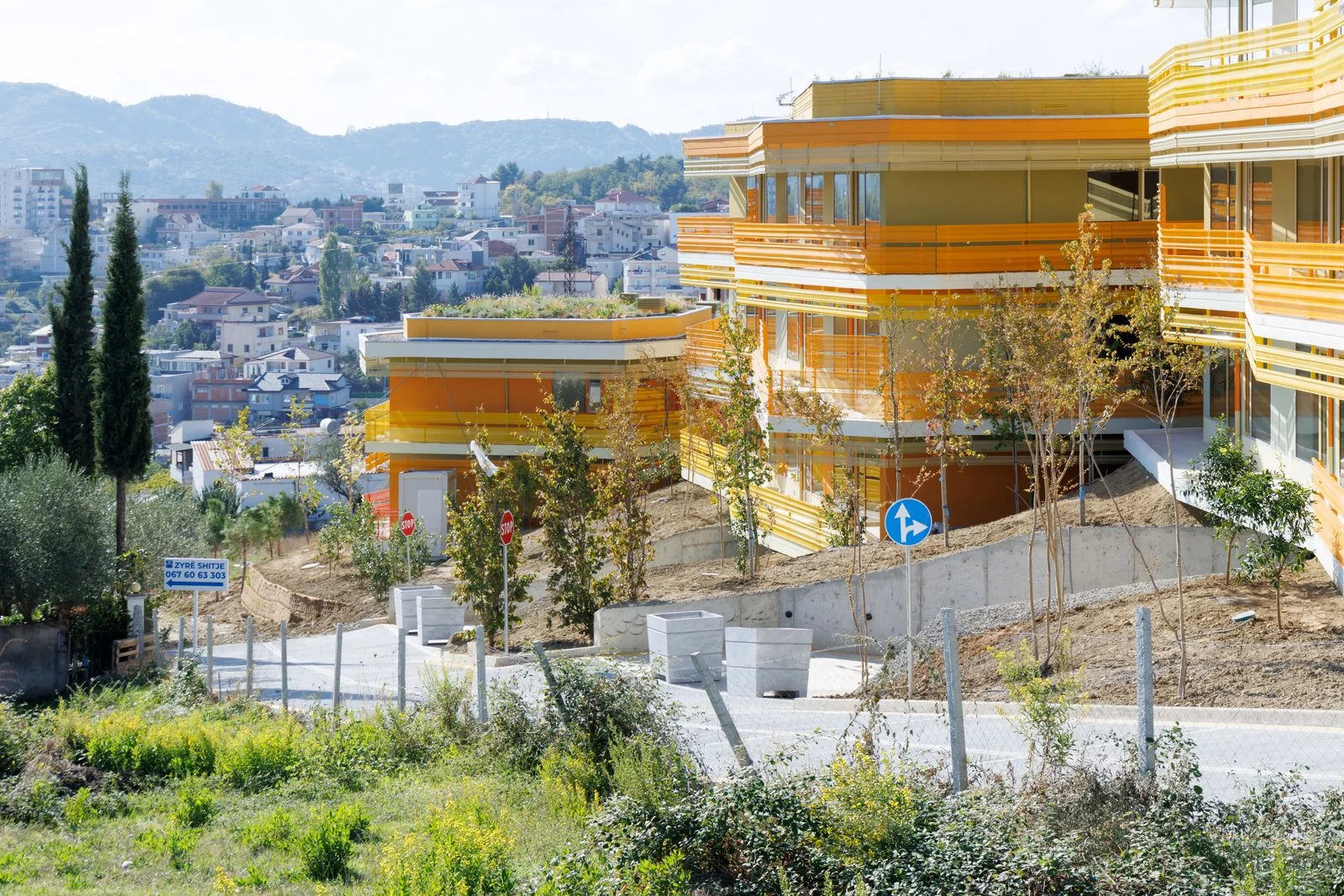
A housing project by Madrid-based firm SelgasCano
Rama, for his part, acknowledges that the building boom has produced work he dislikes. He criticized one project whose stone cladding gives way higher up to printed material made to look like stone. Other buildings remain unfinished or stand empty; in some cases, developers have replaced foreign architects with local firms partway through construction, abandoning the original design specifications. “We need the investors to stick with the architects,” Rama says. But money is tight, and, as he puts it, “Certain architecture needs a certain quality. But compromises are forced by the limitations of the place.” The scale of the ambition is clearer in Anneke Abhelakh’s book The Albanian Files. It gives 60 foreign architecture firms at least eight pages each to present their Albanian work and lists more than 500 projects. Only about one in ten has been built. That gap says plenty about the distance between a city’s architectural pitch and what investors, politics and construction can deliver. The dispute intensified after Rama backed efforts by a company associated with Jared Kushner and Ivanka Trump to build luxury resorts on previously undeveloped land. The proposal drew accusations of money laundering and other corruption. An architecture conference began just days later, and protests demanding that foreign “starchitects” leave became intertwined with environmental and anti-Trump sentiment in what came to be called the Flamingo Revolution. Can the projects continue under that pressure? Rama won the most recent election by the largest majority of his career and says he has no plans to resign. He also wants a museum devoted to the foreign firms working in Albania: one room for each of the 60 firms, displaying drawings, models and photographs. He says he has a site and describes the planned institution as “a big store of dreams, hopes and challenges, illusions and delusions. It will be a great place to go.” The architect, naturally, would be selected through an international competition. I left Albania with more questions than answers—and thousands of photographs to sort. One shows me with my arm around Rama, a reflexive pose when a camera appears. Politics aside, it’s difficult to dismiss the appeal of a leader who loves architecture. But affection for architecture doesn’t settle the harder questions about public consent, money or who gets to shape Tirana. Those will determine whether the city’s dreams become buildings people can live with.
Discussion
Sign in to join the discussion.