Explore five Sufi pilgrimage sites in Mangystau, where centuries-old mosques carved into cliffs and hillsides blend faith with the desert landscape.

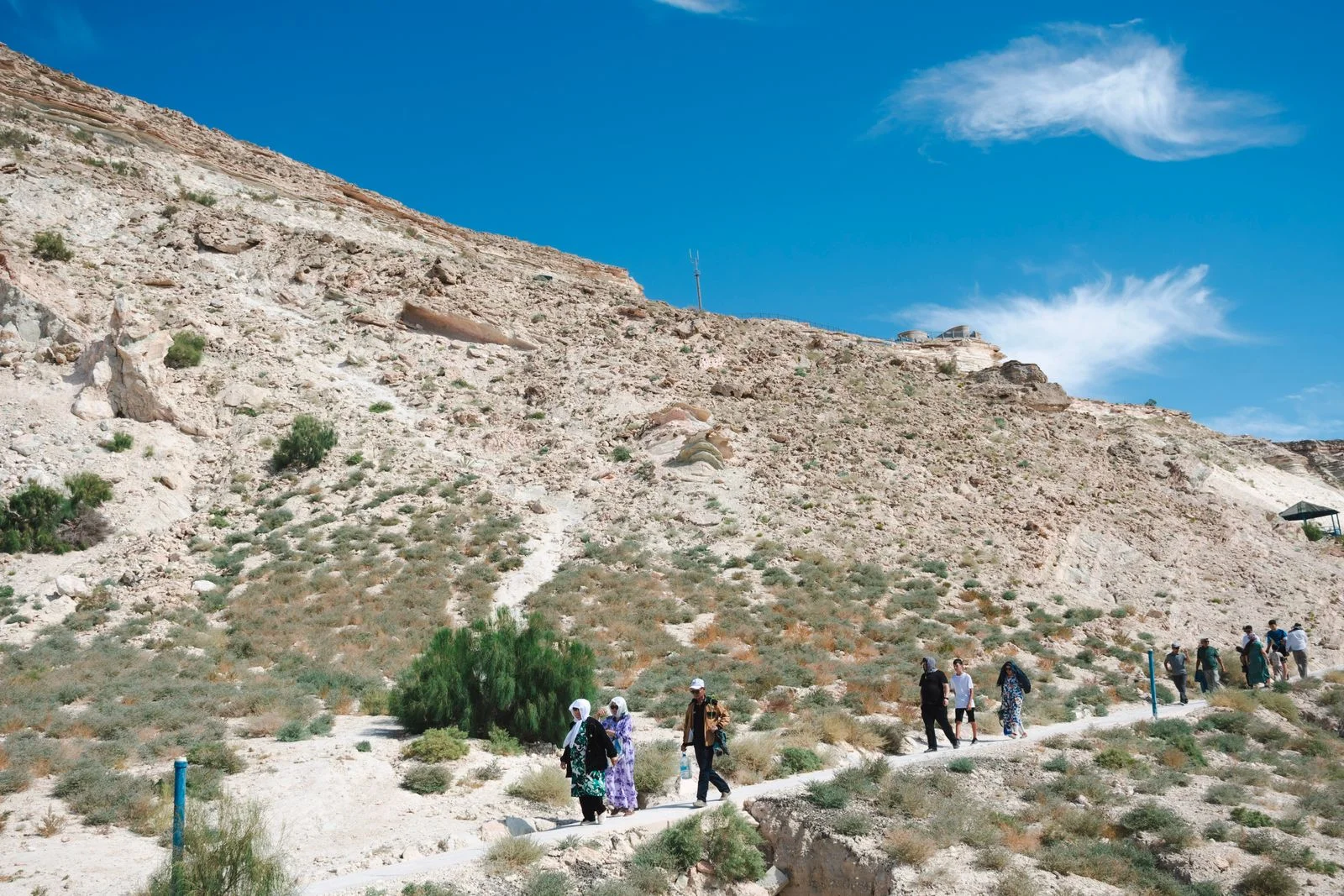 *On the route to Beket-Ata, visitors follow a path across the steep hillside with [Mangystau Tour 999](https://mangystautour999.kz/). Photo: Avantika Chaturvedi*
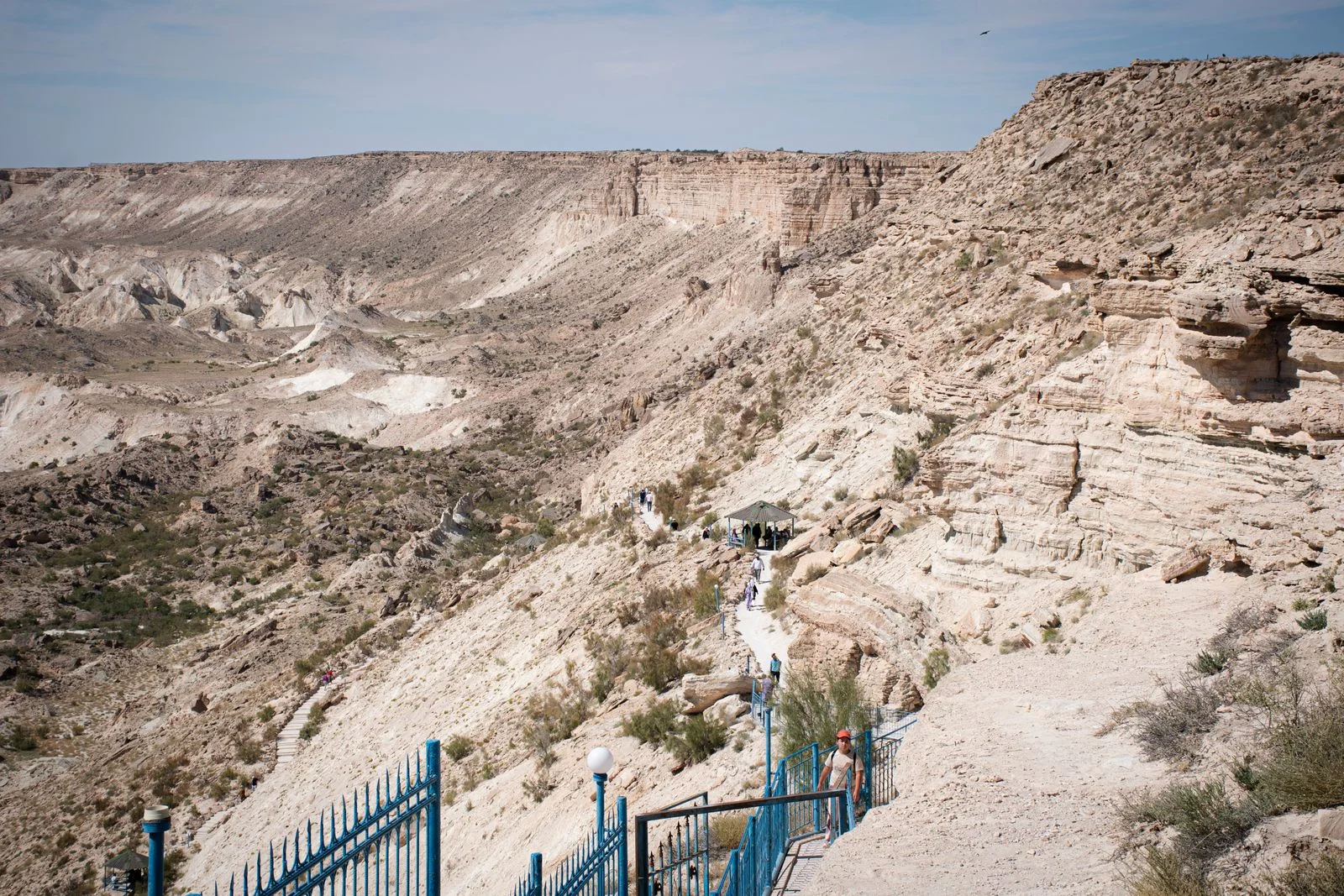 *Steps descend into the canyon on the way to Beket-Ata. Photo: Avantika Chaturvedi*
The climb is only one part of what draws people here. Pilgrims visit five sacred complexes—Beket-Ata, Shopan-Ata, Karaman-Ata, Shakpak-Ata and Sultan-Epe—to honor Sufi masters, pray for blessings and seek guidance. Across the sites, architecture and geology are difficult to separate: the rooms, floors and ceilings are carved from the surrounding stone. These are not grand monuments set against the desert. They seem to emerge from it.
The mosques date from the 12th to 18th centuries, and the “Rock Mosques and Associated Sacred Sites of Mangystau” joined the [UNESCO World Heritage List](https://whc.unesco.org/en/list/1760/) in July. Each site is linked to a different Sufi master, whose influence took shape in rock-cut spaces shaped by nomadic building traditions—caves, cliff faces and chambers below ground.
That understated scale is the point. After three weeks traveling through Kazakhstan’s cities, mountains and pine forests, I spent my final week in Mangystau, which felt unlike anywhere else I’d seen in the country. I had recently visited Astana’s Grand Mosque, with its blue domes, soaring minarets and broad expanses of marble. I wondered whether these smaller, rougher shrines would feel modest by comparison. They didn’t. Their close relationship with the land is what stayed with me.
I’m not Muslim, but I was struck by the commitment behind these places. Sufi teachers and their families crossed hundreds of kilometers of unforgiving terrain to establish places of worship, then spent years in prayer and contemplation; some were eventually buried there. With Red Maya Travel and Mangystau Tour 999, I visited all five sites by guided 4x4. The mosques offer a humble, striking expression of faith—one shaped by scarcity, distance and the desert itself.
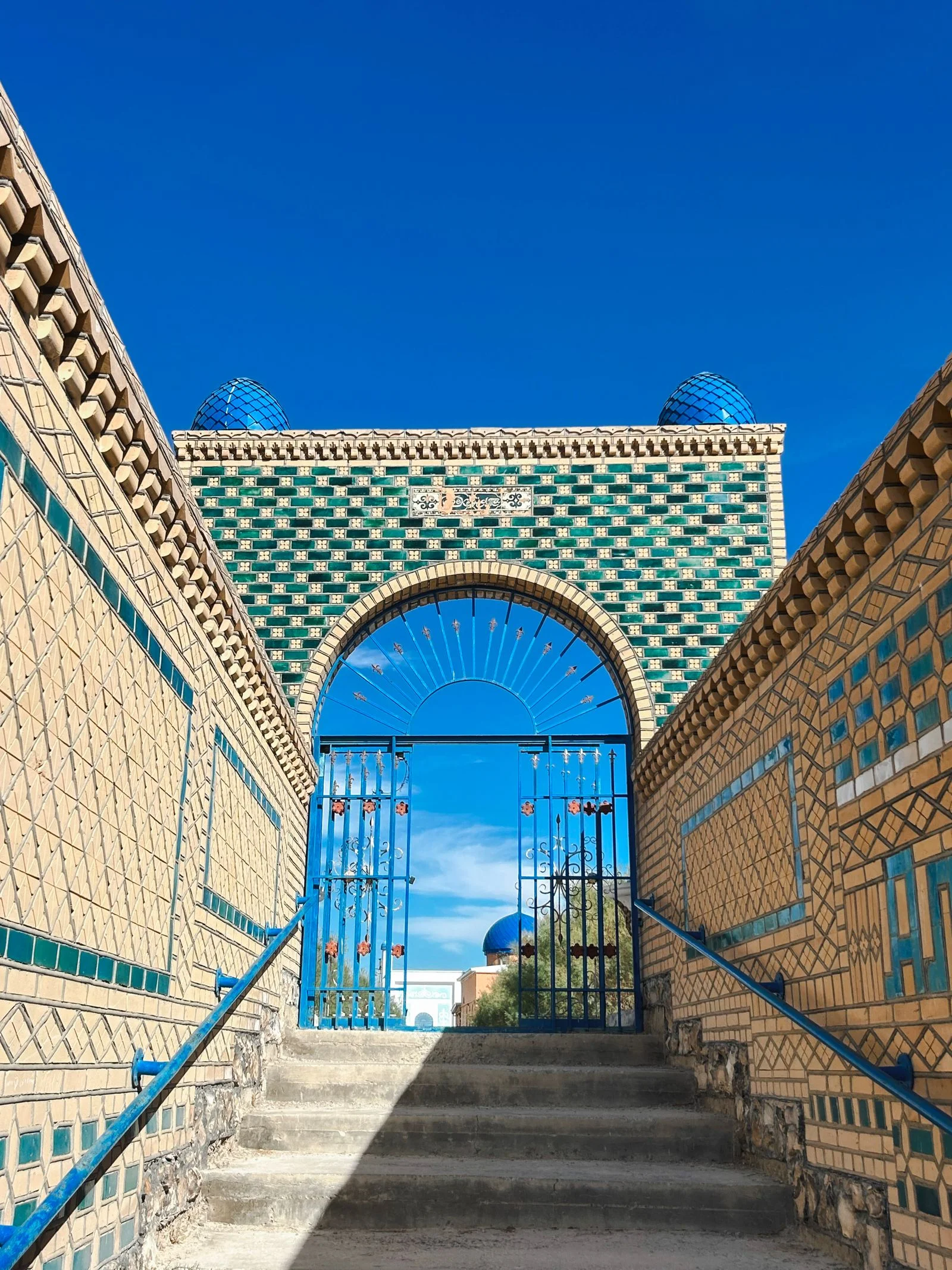 *A decorated arch marks the steps to Beket-Ata. Photo: Avantika Chaturvedi*
Shopan-Ata: a mosque of 12 chambers
Shopan-Ata is named for a 12th-century Sufi teacher and stands within a necropolis containing more than 2,000 monuments. The burial ground includes domed mausoleums and kulpytas: carved stone steles traditionally used as Kazakh gravestones. Inside the mosque, cut into the rock, a shaft of daylight falls across two sacred wooden poles. Local custom gives those poles a particular role. Pilgrims recite a prayer and circle them three times counterclockwise, a practice believed to help the spirits hear their requests. Some also tie white cloth around the wood, knotting a prayer to the site. The custom may reflect older Shamanic and Tengrian practices of tying cloth to sacred trees and mountain passes to honor nature spirits—traditions that became intertwined with Muslim saint veneration.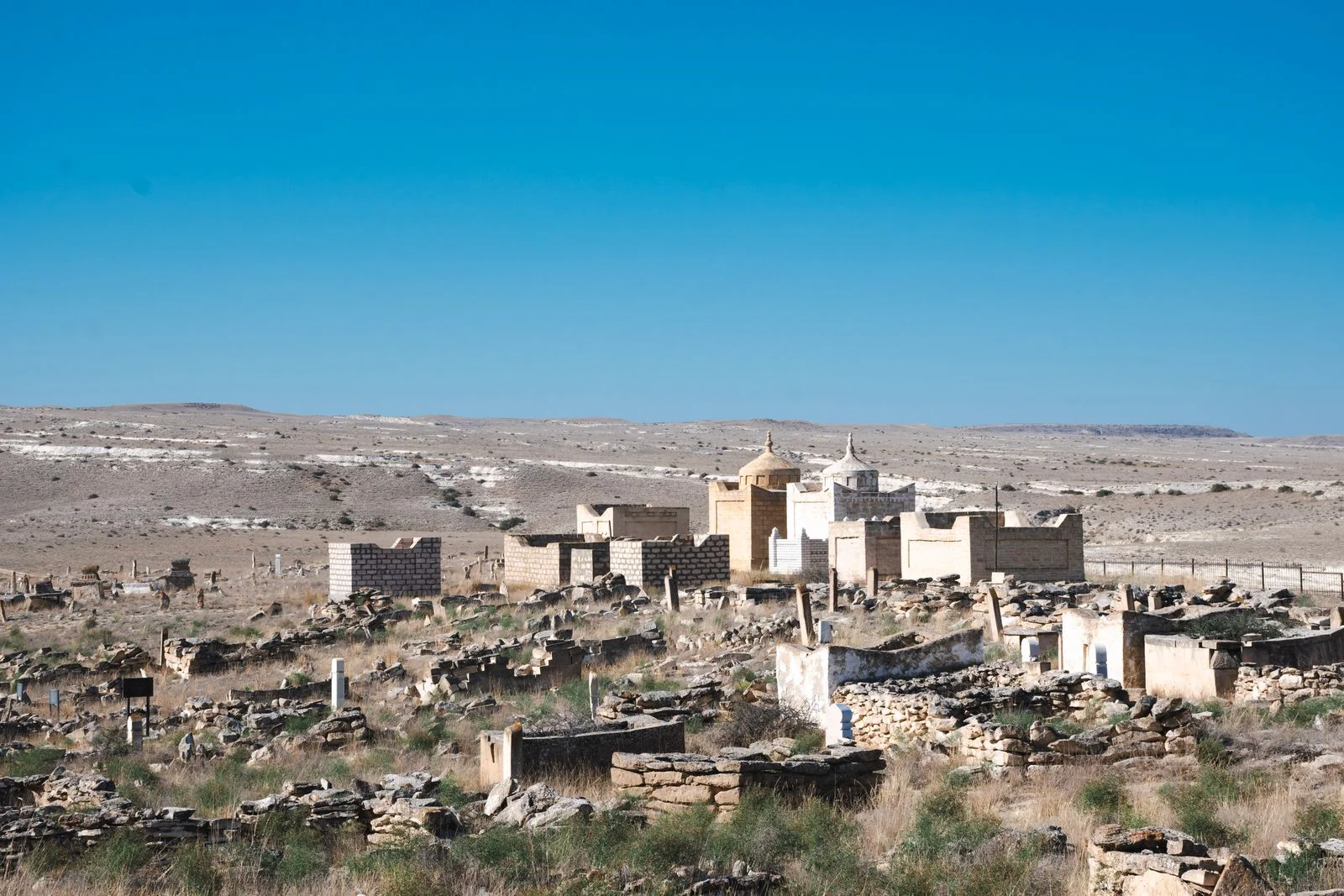 *A necropolis at the Shopan-Ata complex. Photo: Avantika Chaturvedi*
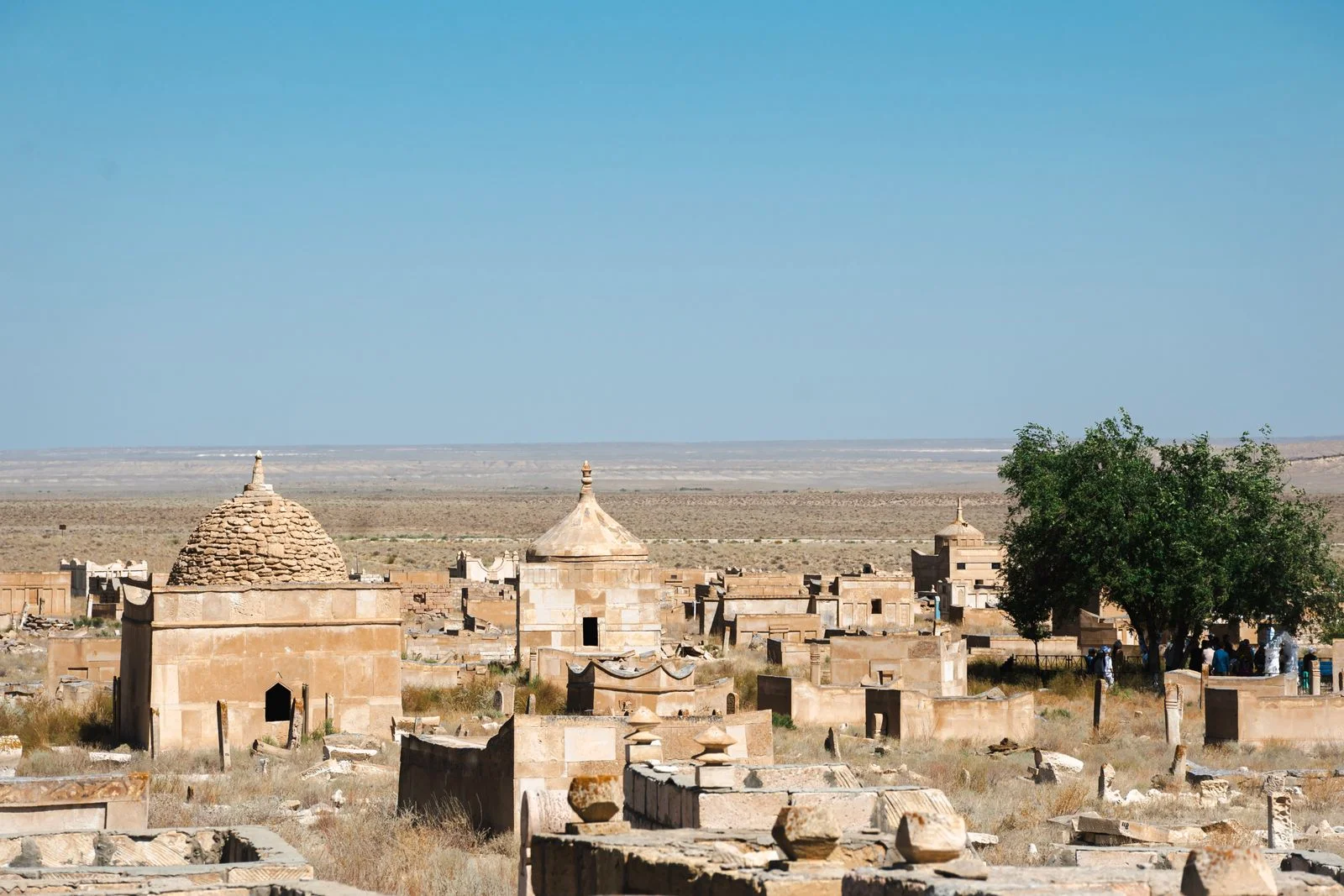 *Domed mausoleums at Shopan-Ata. Photo: Avantika Chaturvedi*
Water helps explain why these complexes took root where they did. A well beside the shrine offers pilgrims respite in the dry country; the sites grew around the limited resources that made life there possible.
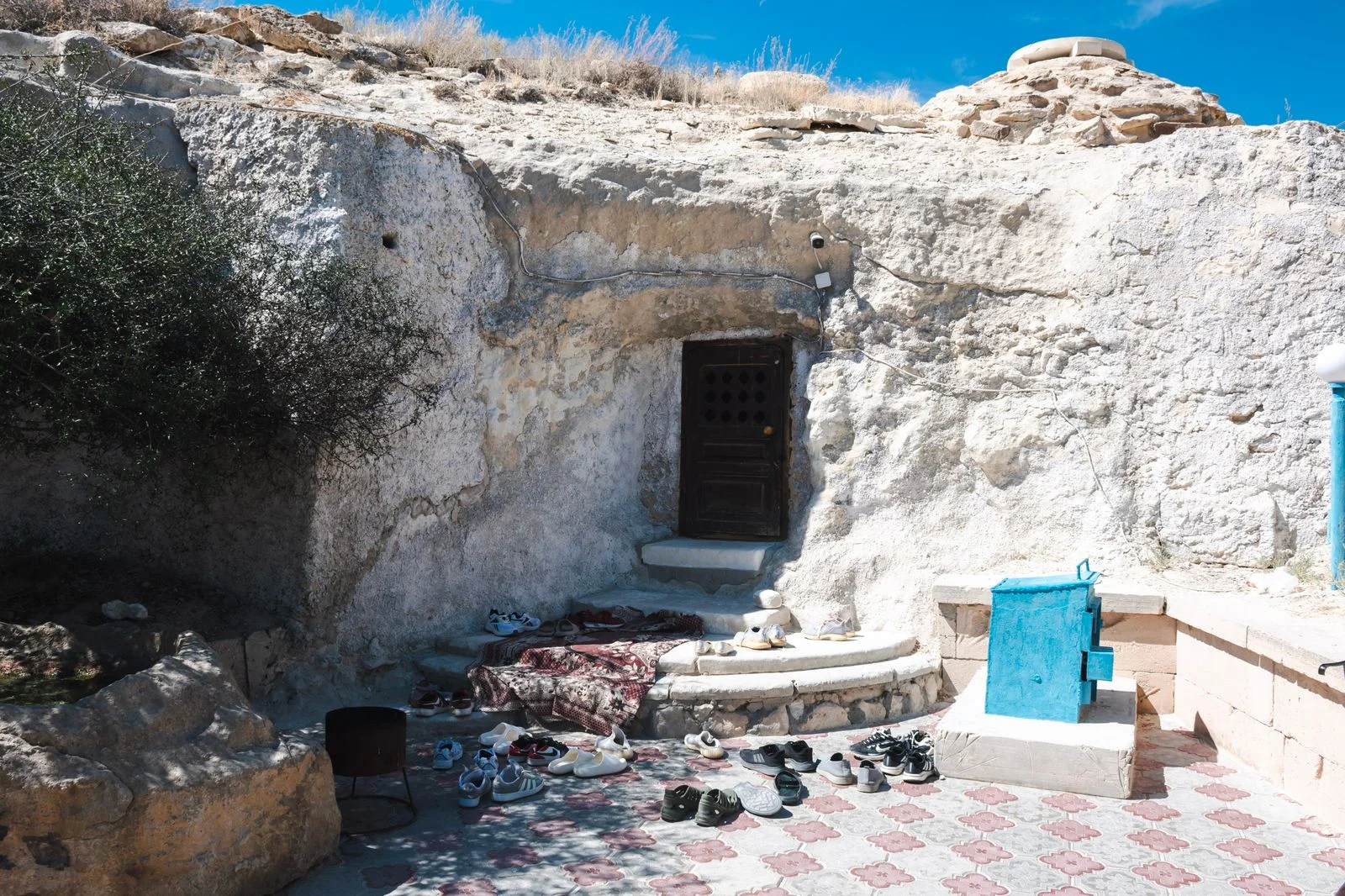 *The Shopan-Ata entrance sits beneath a mulberry tree. The mosques were built around oases that sustained life in the desert. Photo: Avantika Chaturvedi*
Local legend says Shopan-Ata later appeared to Beket-Ata in a dream and offered him spiritual guidance. That story helps explain why pilgrims treat this shrine as an important stop before continuing to Beket-Ata.
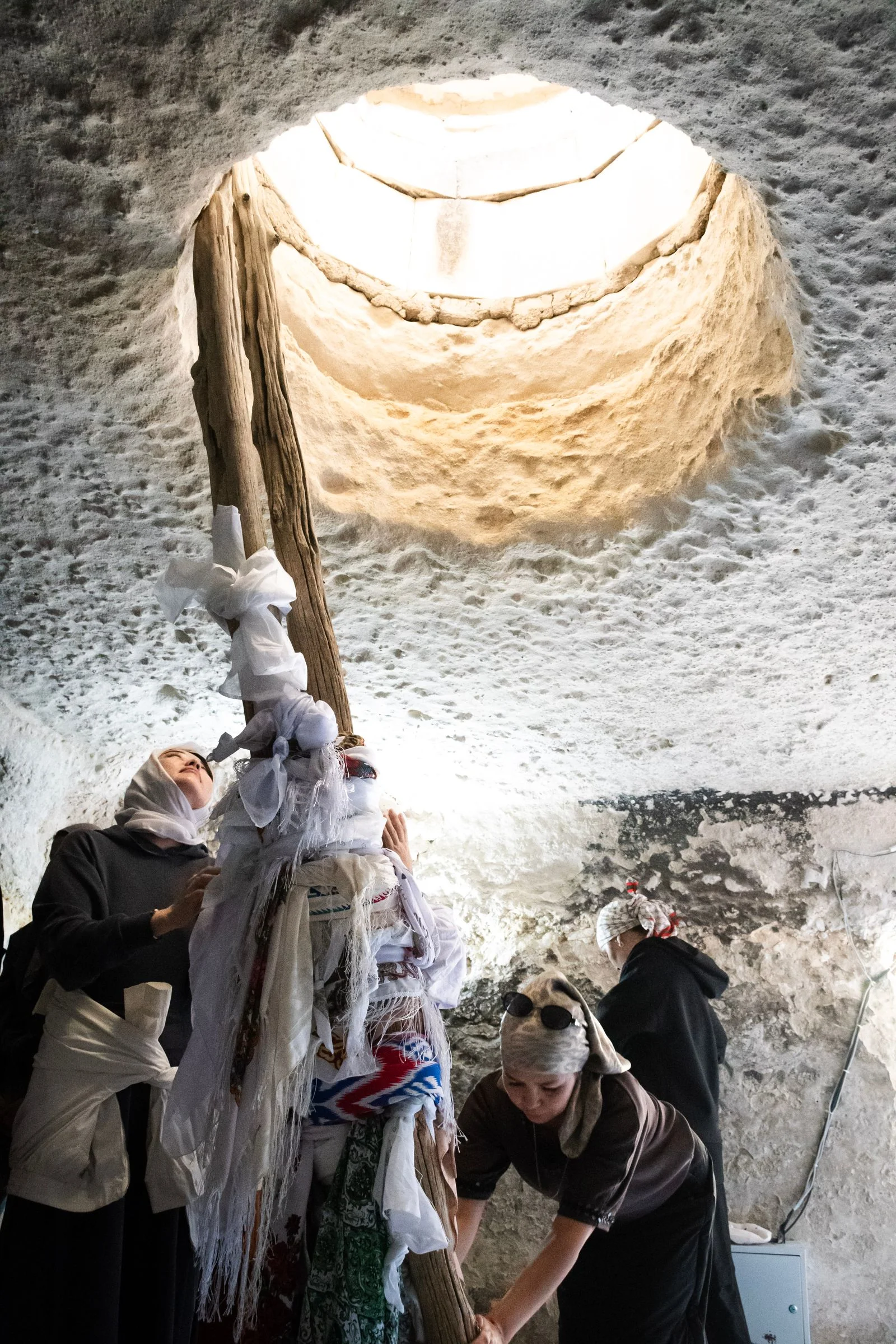 *Visitors tie white cloth to a sacred wooden pole as they seek blessings. Photo: Avantika Chaturvedi*
Beket-Ata: a shrine in the cliff
Beket-Ata is the best-known of the five sites. Founded by 18th-century Sufi teacher Beket Myrzagululy, the shrine sits in a remote canyon about 170 miles from Aktau, Mangystau’s gateway on the Caspian Sea. The drive from Shopan-Ata takes just over an hour, but the final descent is steep. The path down into the canyon makes the old idea plain: here, the effort to reach a shrine remains part of the act of devotion.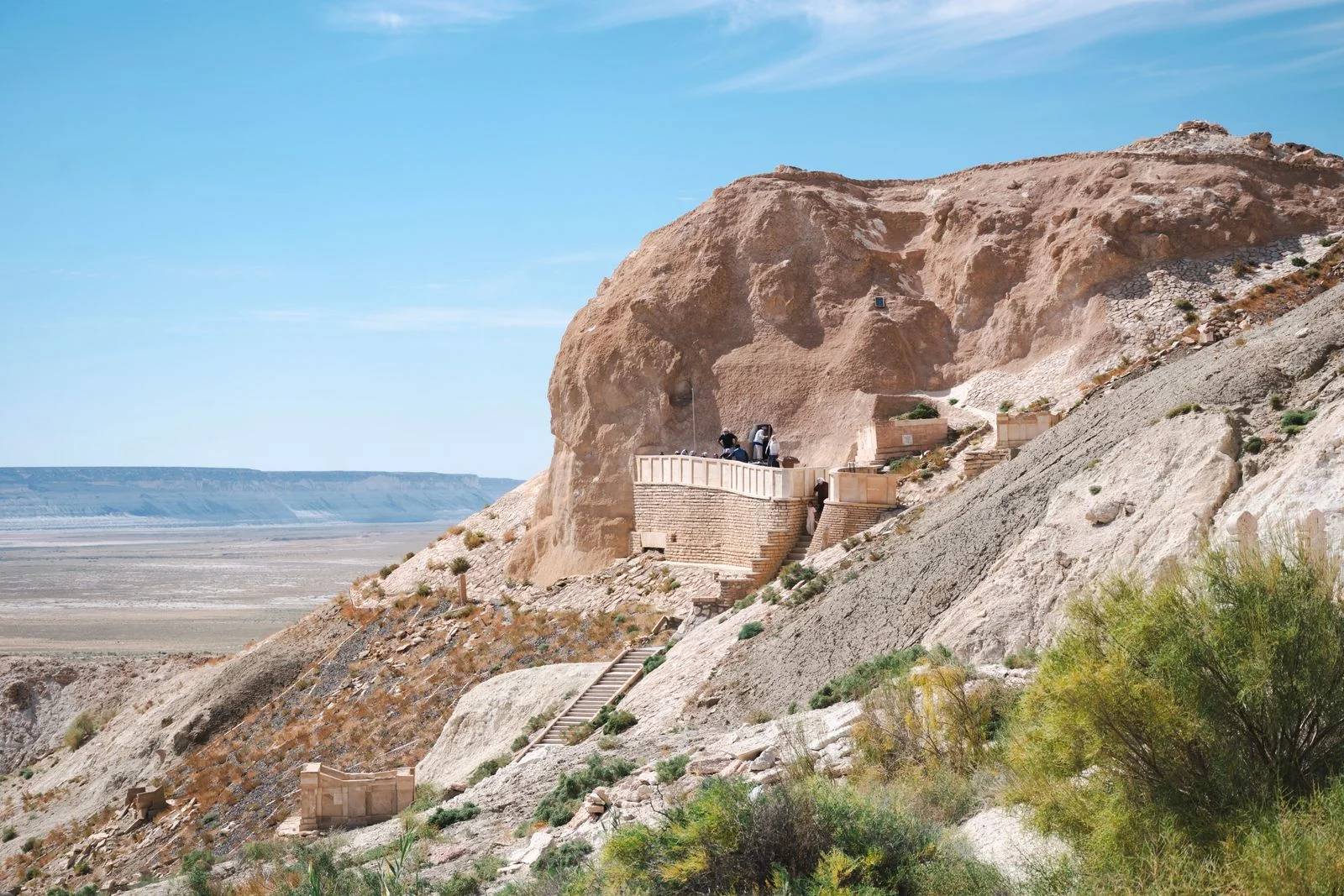 *The last steps lead to the Beket-Ata shrine. Photo: Avantika Chaturvedi*
Hospitality at Beket-Ata
At Beket-Ata, the carved rooms follow the cliff’s contours. Daylight filters through narrow ceiling openings, catching the rugs laid over the stone floor. An imam welcomes visitors and explains the chambers: one holds Beket-Ata’s grave, another is associated with his sister, and others serve as separate prayer spaces for men and women.
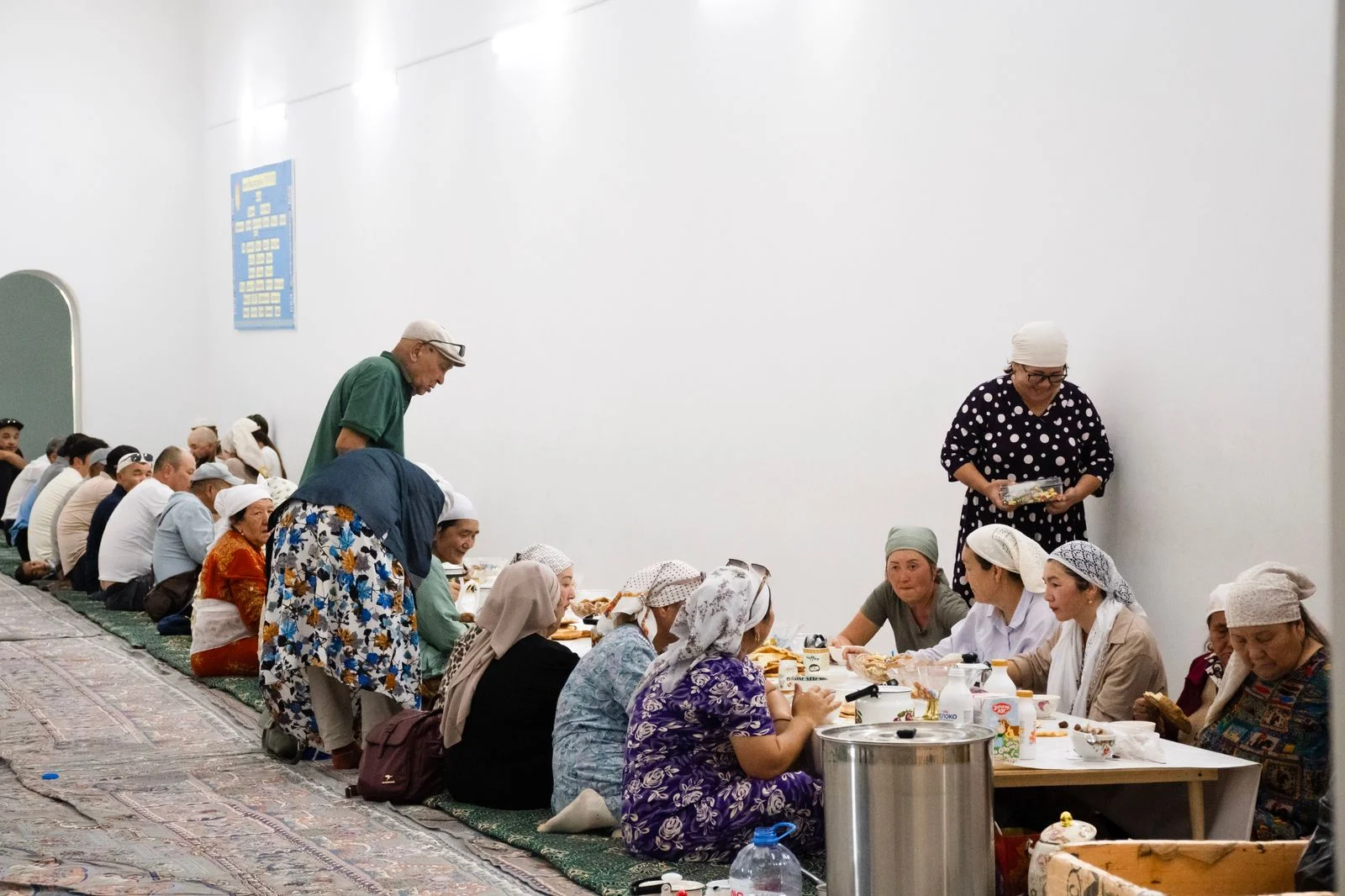
The dining hall makes the pilgrimage’s social side plain. A long table is kept supplied, and visitors sit together to eat. The mosque offers freshly cooked meat; pilgrims leave bread, sweets, tea, yogurt, jam and other food for those who come later. The arrangement says more about hospitality than any plaque could.
Shakpak-Ata’s marks in the chalk
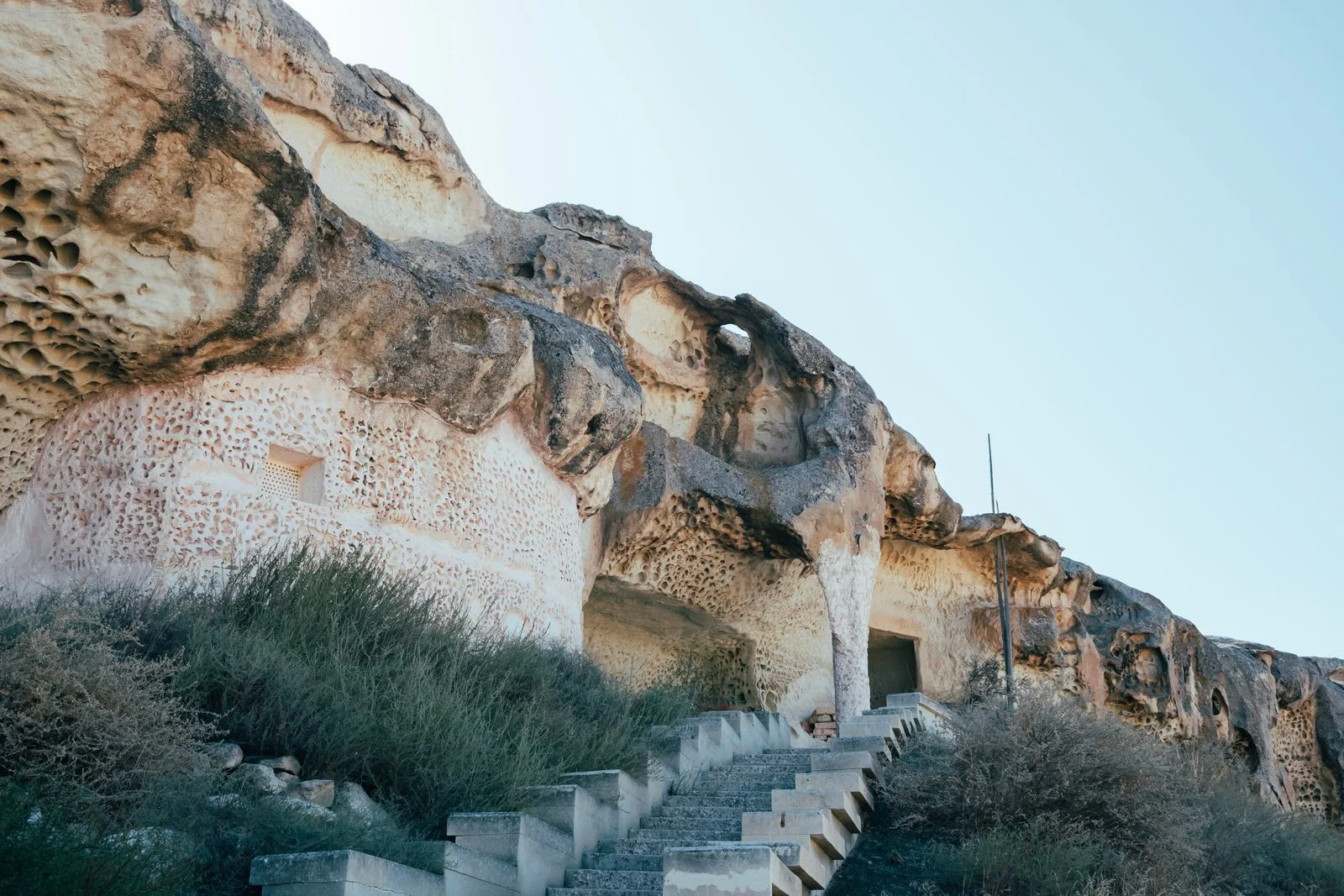
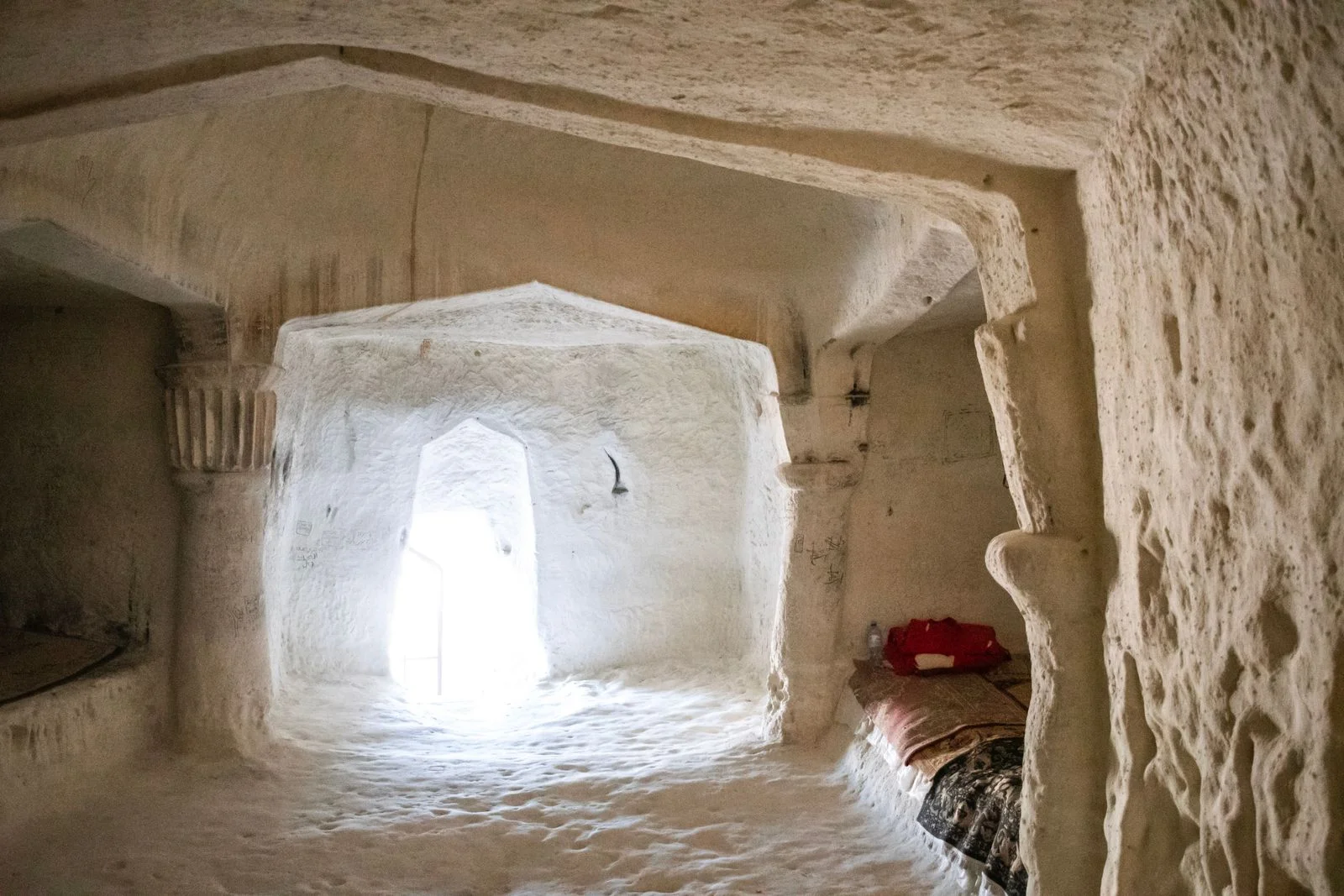
At Shakpak-Ata, on the Tyub-Karagan Peninsula, the mosque’s cross-shaped plan is cut into a vast chalk cliff. The pale, porous rock has a honeycomb texture, formed when this part of Mangystau lay beneath the ancient Tethys Sea millions of years ago. Inside, Arabic, Persian and Turkic drawings and inscriptions—some dating to the 18th century—trace the presence of pilgrims who crossed Central Asia long before modern vehicles and satellite internet eased the journey.
Sultan-Epe, protector of seafarers
Sultan-Epe sits beside a deep canyon, where a stream runs through mulberry, buckthorn, blackberry and wild herbs. This pocket of greenery feels unlikely in one of Kazakhstan’s driest regions. The shrine overlooks the Caspian, and local tradition casts Sultan-Epe as a guardian of sailors and fishermen. He is said to have been the son of Hakim-Ata, the Sufi poet and disciple of Khoja Ahmed Yasawi—a lineage that links this site to the spiritual traditions surrounding Shopan-Ata and Beket-Ata.
Karaman-Ata and the long road back
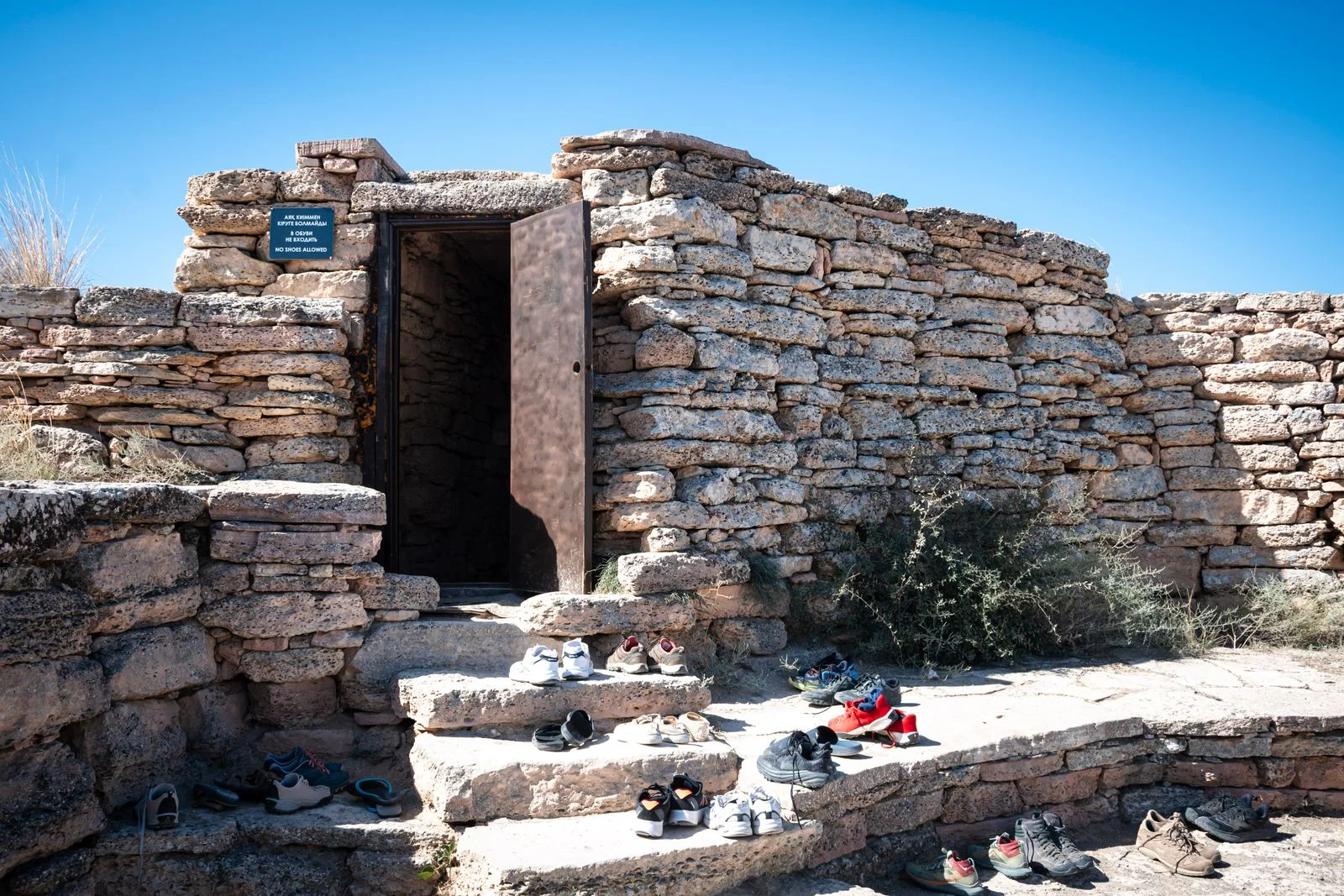
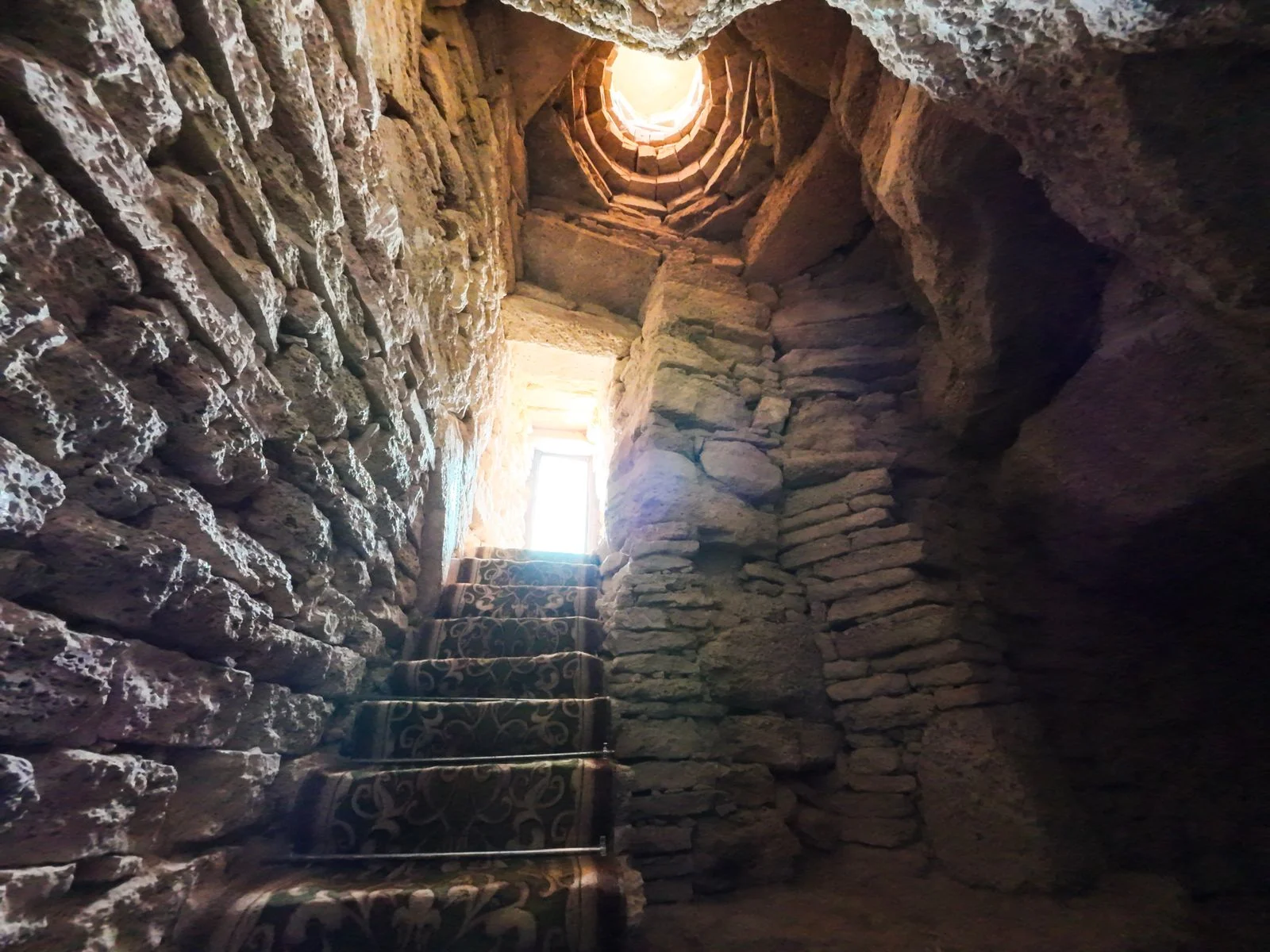
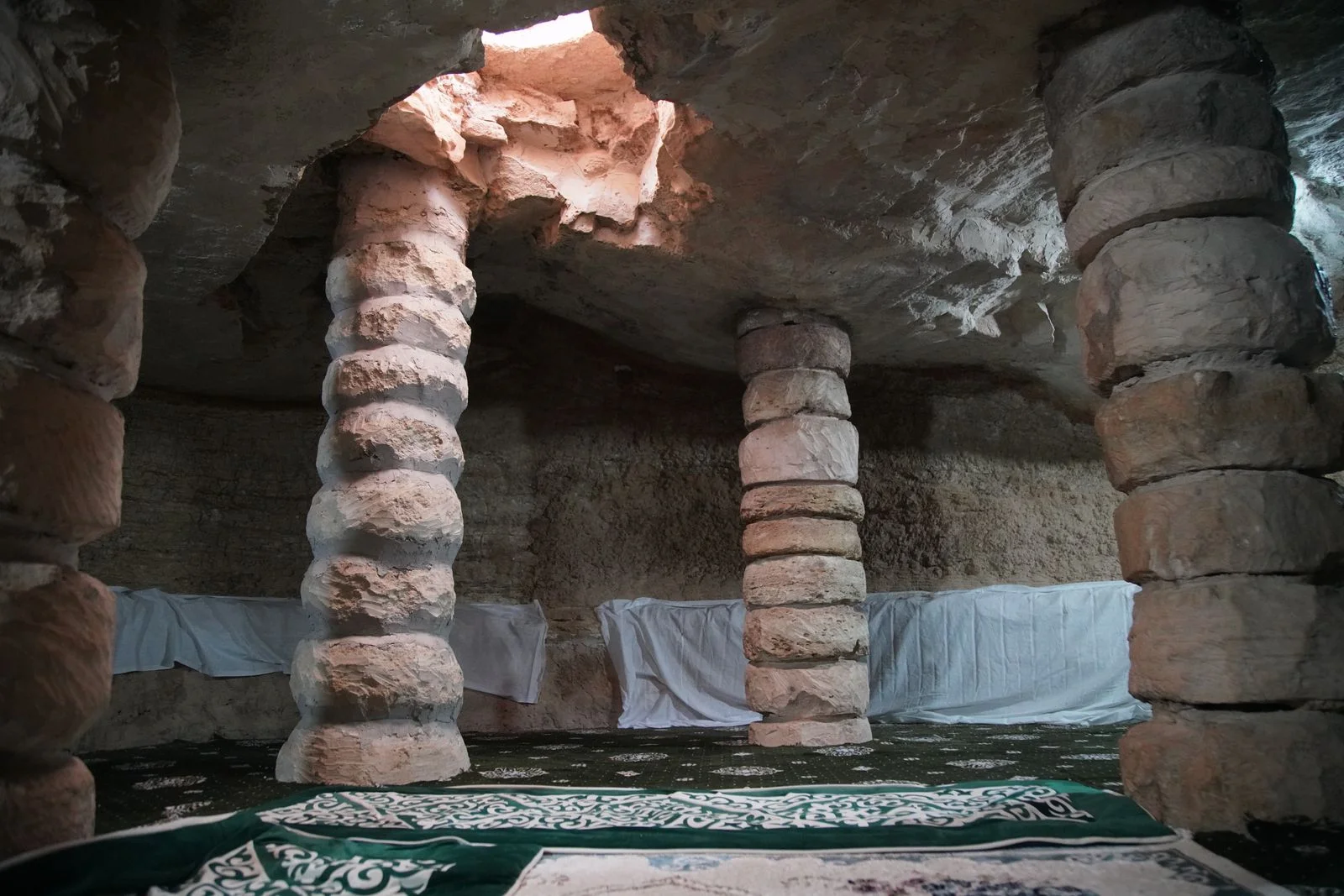
The circuit ends at Karaman-Ata, one of the largest of the five rock mosques. Its seven-hectare necropolis is scattered with funerary monuments, some more than a thousand years old. The mosque descends into a low marl hill; inside, the air cools sharply. A tight passage opens into a circular room believed to have been used for Sufi practices, including devotional whirling, in which worship is expressed through movement.
Getting between the sites still takes preparation: the drives cross remote country with little or no mobile coverage and few fuel services, so a sturdy vehicle and a trusted local guide matter. Yet the journey complicates the usual picture of an empty, unforgiving desert. A well, a patch of shade beneath a mulberry tree, a shared meal—small acts of welcome recur along the route. That generosity is part of what these pilgrimages preserve.
Discussion
Sign in to join the discussion.