Cleeman Realty Group represented the buyer of two grocery-anchored centers in Hornell and Geneseo, totaling 453,350 square feet.
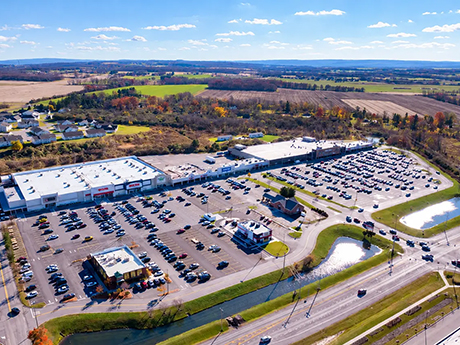
Two Wegmans-anchored shopping centers in upstate New York changed hands as part of a 453,350-square-foot retail portfolio. The properties span Hornell and Geneseo, with long-standing grocery tenants underpinning both centers. Their sale combines two established local retail destinations in one portfolio, though the centers have different tenant lineups and distinct roles within their respective markets.
Two centers, distinct tenant mixes
Hornell Plaza in Hornell totals 253,603 square feet and is anchored by Wegmans Food Markets and Walmart. In Geneseo, the 199,747-square-foot Genesee Valley Shopping Center pairs Wegmans with Tractor Supply, T.J. Maxx, Harbor Freight Tools, Five Below and Dollar Tree. The two properties therefore share a grocery anchor while drawing on different mixes of large-format and specialty retailers.
That distinction matters when assessing a shopping center portfolio. A grocery store can give a property a regular-visit component, while other tenants may attract customers for household goods, apparel, discount shopping or specific errands. The tenant lists here suggest that each center draws on more than one retail category. They don't, by themselves, reveal how much space each retailer occupies, how much customer traffic the centers receive or how the stores perform.
Hornell Plaza's combination of Wegmans and Walmart places two major retail anchors at the same property. Genesee Valley's lineup is more varied by name, spanning value-oriented retailers, specialty goods and general merchandise. Here's the thing: a list of tenants offers a useful first read, but it's only a starting point. Lease terms, occupancy, sales performance and the condition of the buildings would all shape a fuller account of the assets, and those details aren't provided here.
Long-term grocery commitments
Wegmans has operated at both locations since the 1990s and recently extended its leases long term at each center. That continuity stands out across a portfolio combining two established grocery anchors with a broad lineup of national retailers. A long-standing supermarket presence can be meaningful to a shopping center because grocery visits tend to be recurring, giving customers a reason to return as part of their regular routines.
A long-term lease extension also provides a clearer view of one part of a property's tenancy. It signals that the tenant has committed to remaining at the location for an extended period, which can matter to owners evaluating occupancy and to other businesses that benefit from a shared retail destination. Still, the announcement doesn't specify the lease length, rent, renewal options or any other financial terms. It would be a mistake to read more into the extensions than the reported commitment.
Wegmans' tenure at both sites is a common thread, not a complete measure of either center's health. A property can have a respected anchor and still face questions about other vacancies, maintenance needs or changing customer habits. None of those conditions is described in the available information. The reliable point is narrower: the grocery tenant has operated in both centers for decades and has extended its leases at each.
A portfolio across two upstate markets
The combined 453,350 square feet brings two substantial properties under one transaction, while their locations in Hornell and Geneseo keep them tied to separate local markets. For an owner, a multi-property portfolio can offer a way to hold retail space across more than one community. The mix may spread exposure among different tenants and shopping patterns, but the size of the portfolio alone doesn't establish how diversified its income is. That depends on information such as tenant rent, lease duration and each property's share of total revenue.
The reported square footage also helps put the properties in proportion. Hornell Plaza accounts for 253,603 square feet, while Genesee Valley Shopping Center totals 199,747 square feet. Together those figures match the stated portfolio total. That arithmetic confirms the reported scale of the deal; it doesn't tell readers what the buyer paid or how the properties compare in value.
For retail operators, the tenant mix can affect how a center functions day to day. A supermarket may anchor repeat visits, while stores with different merchandise can serve other shopping needs. Those uses may complement one another, but the actual relationship depends on local demand and how shoppers move through a property. (And this is the part most people overlook.) Well-known tenant names aren't a substitute for information about customer traffic, sales or leasing conditions.
Buyer representation and what the sale signals
Cleeman Realty Group brokered the transaction and represented the buyer. Michael Cleeman and Sam Seelenfreund handled the assignment. The sale brings together two sizable retail properties in separate upstate markets, with Wegmans’ extended commitments providing a clear point of continuity for the portfolio.
Brokerage representation identifies who worked on the transaction, but it doesn't establish the buyer's plans, the sale price or the property's financing. Those details aren't included in the source material. The clearest account of the deal is therefore its reported scope: two centers, their combined square footage, the named tenants and the buyer's representative.
This is more significant than it looks in one specific respect: both centers have the same long-standing grocery anchor, yet their other tenants give them different profiles. That gives the buyer exposure to a shared source of continuity alongside distinct retail lineups. Whether that combination produces stronger performance will depend on facts not reported here, including tenant economics and local shopping demand.
What to watch next
If you're working in this space, the useful follow-up questions are practical. How much of each center is occupied? What share of rental income comes from Wegmans and the other anchors? Are leases for the remaining tenants spread across different terms? The transaction announcement doesn't answer those questions, but they help explain what information would be needed to assess the portfolio beyond its headline size.
For now, the long-term Wegmans extensions offer the most concrete signal about continuity at both locations. They give the centers a shared anchor relationship that reaches back to the 1990s, while the other named tenants distinguish Hornell from Geneseo. That said, a lease commitment is one piece of a property's story, not a verdict on its future performance. The sale puts both assets in new hands; what follows will depend on the buyer's plans and the centers' operating results, neither of which is described here.
Two established grocery locations. Separate communities. A combined portfolio of more than 450,000 square feet.
Discussion
Sign in to join the discussion.