Transforming Travel: Award-Winning Airport Designs Across the Globe
Published
Sep 03, 2026
Views
877
Strategically designed airports enhance travel experiences while reflecting local culture, merging functionality with striking architecture.
Elevating Travel Through Design
Airports aren't just transit hubs; they can be remarkable pieces of architecture that enhance the travel experience. Recently, the prestigious Prix Versailles honored a selection of exquisitely designed airports, underscoring how these structures integrate local culture and natural elements. Among these award-winning designs, two notable entries hail from the United States, showcasing a blend of modern aesthetics and functional design that reflects their surroundings.
These architectural masterpieces reinforce the notion that the journey is as vital as the destination, providing travelers with a striking first impression. The terminals recognized this year serve as statements of identity, crafting a warm, welcoming atmosphere that resonates with both visitors and locals. If you're in the travel or design industries, the latest awards highlight trends worth considering, particularly in how thoughtful airport designs can enhance passenger experience.
Guangzhou Baiyun International Airport, Terminal 3, China
The theme "Blossom in Guangzhou" truly captures the essence of Terminal 3 at Guangzhou Baiyun International Airport. This terminal is a celebration of the city's nickname, the "City of Flowers." Architecturally, its design mirrors the beautiful natural surroundings, featuring curved shapes, open terraces, and gardens that bring the outdoors in. The extensive use of wood instead of cold metals creates a warm, inviting environment, enhancing the overall aesthetic experience for travelers.
Frankfurt Airport, Terminal 3, Germany
At Frankfurt Airport, Terminal 3 represents a different vision, one inspired by urban living. With a layout that emulates city streets and squares, including a vast marketplace that spans roughly 694,000 square feet, the terminal offers more than just air travel convenience. This immense structure, nearly as expansive as Frankfurt's own city center at 1.89 million square feet, exemplifies an ambition to blend urban design with functionality in traveler experiences. The design emphasizes how well-thought-out airport layouts can draw parallels with city planning, reflecting the growing trend of integrating community spaces within travel hubs.
Lokapriya Gopinath Bordoloi International Airport, Guwahati, India
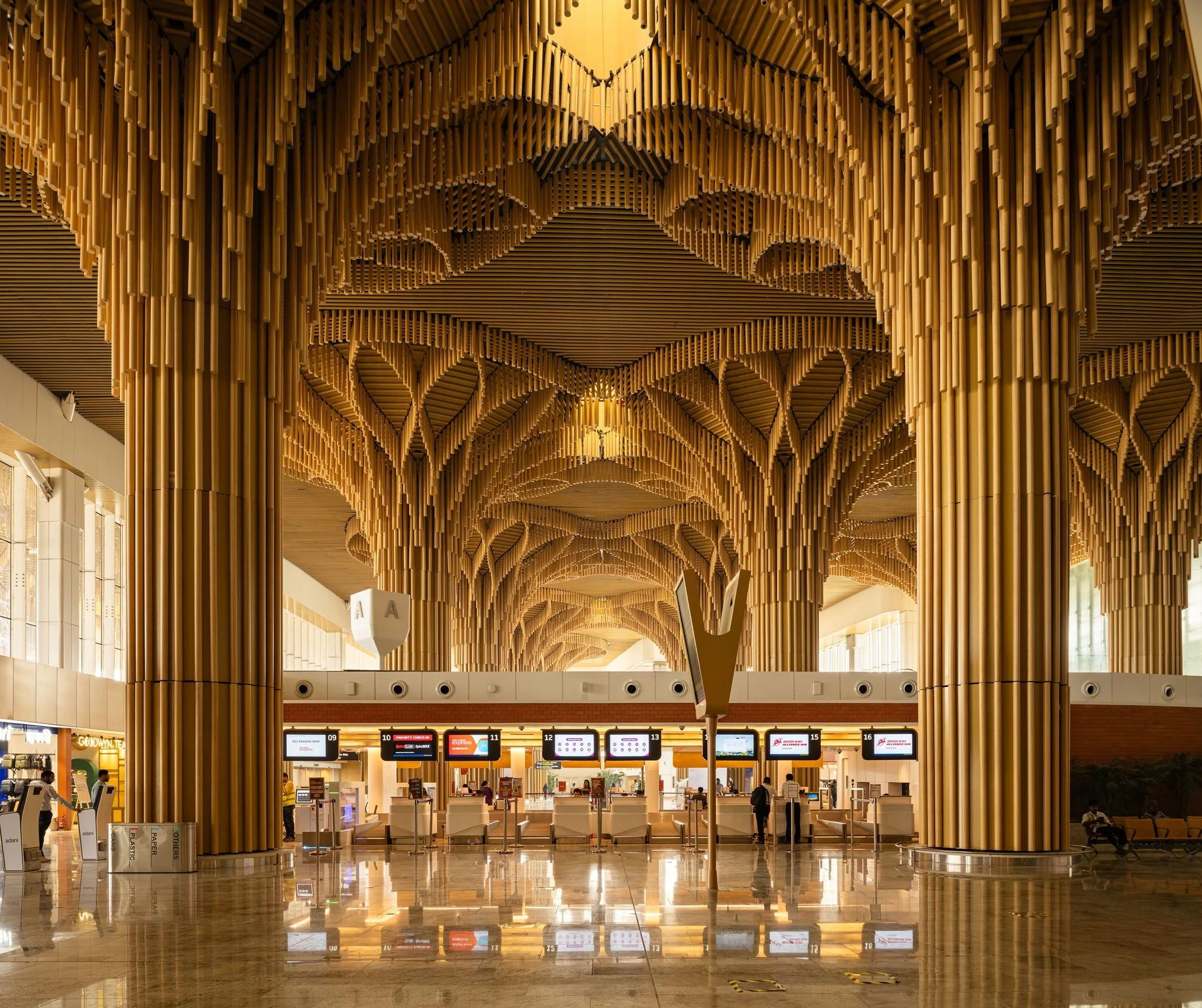
In Guwahati, the design of Terminal 2 at Lokapriya Gopinath Bordoloi International Airport is inspired by the delicate bamboo orchid. Architect Nuru Karim created a terminal that mimics the essence of a bamboo forest, with waiting areas adorned by displays of local art and handicrafts. This design not only highlights India’s rich heritage but also provides travelers with a unique cultural experience during their transit. Such initiatives are a reminder that airports can play a pivotal role in representing the identity of their region, making the travel experience much more engaging and enriching.
In essence, these terminals illustrate the potential for airports to do more than facilitate travel; they can become cultural landmarks that redefine the passenger journey.
The Future of Airport Design
As airports evolve into gateways that reflect both functionality and cultural identity, we’re witnessing a significant shift in architectural philosophy. The projects highlighted — Navi Mumbai International, Techo International in Phnom Penh, and the revamped Pittsburgh International Airport — showcase not just aesthetic choices but also environmental consciousness. These airports aren’t merely transit hubs; they’re statements about the regions they serve.
For example, the design of Navi Mumbai's terminal takes inspiration from the lotus flower, intertwining beauty with purpose. The architectural firm Zaha Hadid Architects incorporated a floral motif that resonates culturally, making the airport a local landmark while enhancing passenger experience through engaging digital artwork interspersed throughout. This isn’t just about catching the eye; it’s about creating a memorable journey for travelers who might spend extended hours waiting for flights.
Contrast that with the Techo International Airport, where the focus shifts to sustainability. Foster + Partners have designed a terminal that significantly reduces energy reliance through a cleverly integrated roof that mimics Cambodia’s traditional architecture while optimizing natural light. With features like rainwater harvesting and local plant installations, this airport embodies a commitment to ecological balance, setting a precedent other facilities might follow.
And let’s not overlook the Pittsburgh International Airport, which blurs the line between interior spaces and the natural landscape of Pennsylvania’s Allegheny Mountains. This biophilic approach, characterized by ample daylight and outdoor terraces, enhances passenger comfort, proving that good design can positively influence mood and well-being.
Here’s the thing: these airport projects are about more than just aesthetics or green practices. They represent an acknowledgment of how crucial traveler experience is in modern architecture. If you’re in the business of real estate or urban planning, these airports exemplify emerging standards that demand a balance of creativity, sustainability, and cultural relevance in designing public spaces. With global air travel on the rise, how industry leaders respond to these trends will shape the future of not just airports but the communities they serve as well.
The journey of transforming these terminals may hold valuable lessons for any sector aiming to enhance user experience while instilling a sense of place. The emphasis on thoughtfully integrated architectural elements is likely to persist as cities continue to expand and evolve. Consider how you might apply these insights to your own projects — the importance of identity, community integration, and sustainability in design can’t be overstated in today’s marketplace.
Discussion
Sign in to join the discussion.