
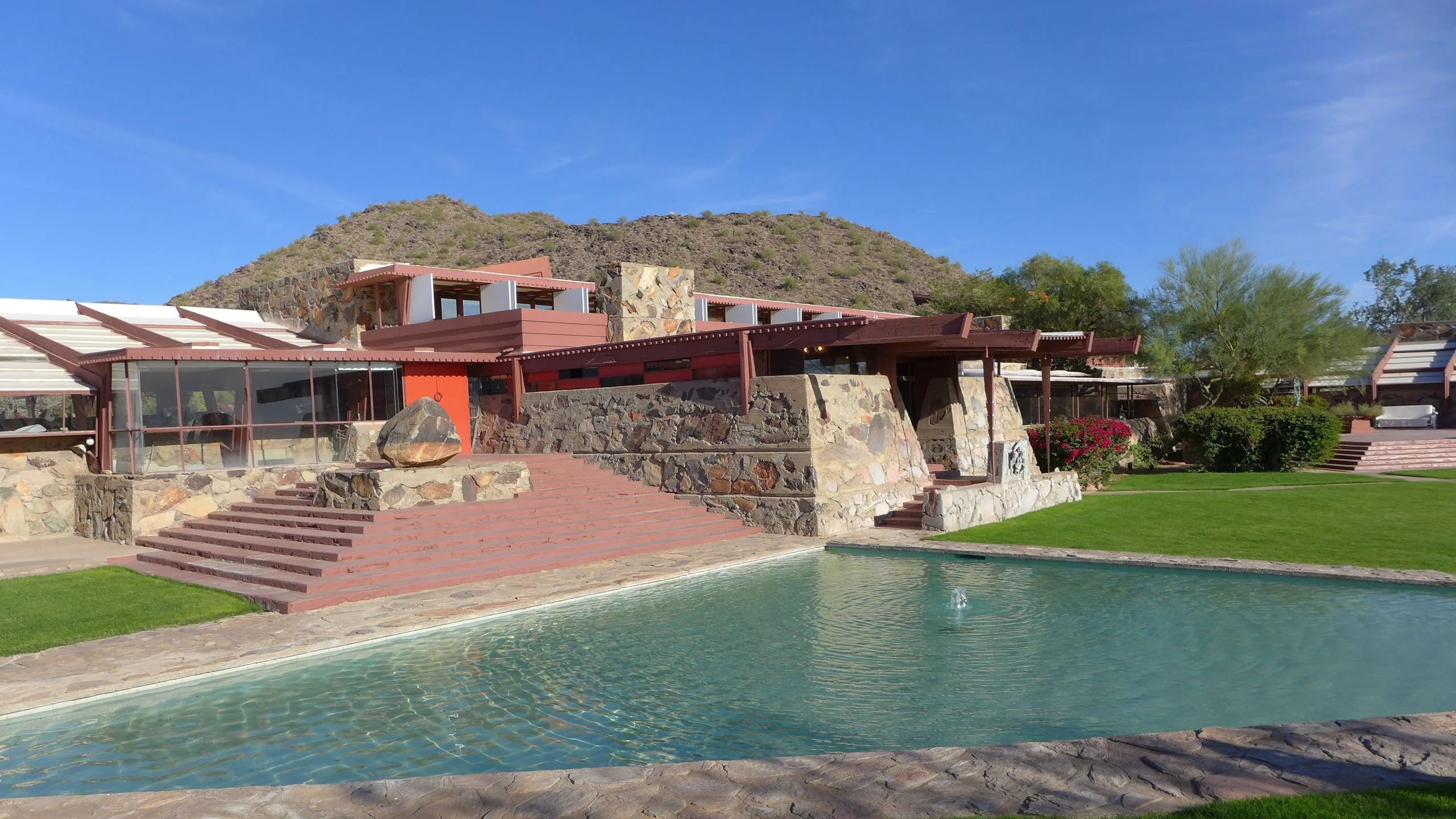
Taliesin West, Frank Lloyd Wright’s winter home and studio, is reopening following a death at the site on Friday, October 16.
The victim, identified as Brother Rogério Renato Mateucci, the rector of Pontifical Catholic University of Paraná in Brazil, was touring the UNESCO World Heritage site in Scottsdale, Arizona, when a piece of debris from the building’s roof fell and hit his head, the New York Times reported. The accident occurred around 2 p.m. following strong winds—local weather service reported gusts up to 32 miles per hour—which dislodged the a piece of the structure. According to the Scottsdale fire department, he died instantly. No other injuries occurred.
“The Foundation mourns the loss of Rogério Renato Mateucci, who tragically died on October 16 in an accident at Taliesin West,” Joseph Specter, president and CEO of the Frank Lloyd Wright Foundation, which owns and operates the building, shared with AD in a statement.
“Taliesin West has been closed to the public to allow the Foundation to conduct a thorough safety inspection of the site, including its roofing and structures, and to cooperate fully with local authorities, who have determined the incident was weather-related.” AD reached out to the Scottsdale Police Department for comment, but had not heard back at the time of publication.
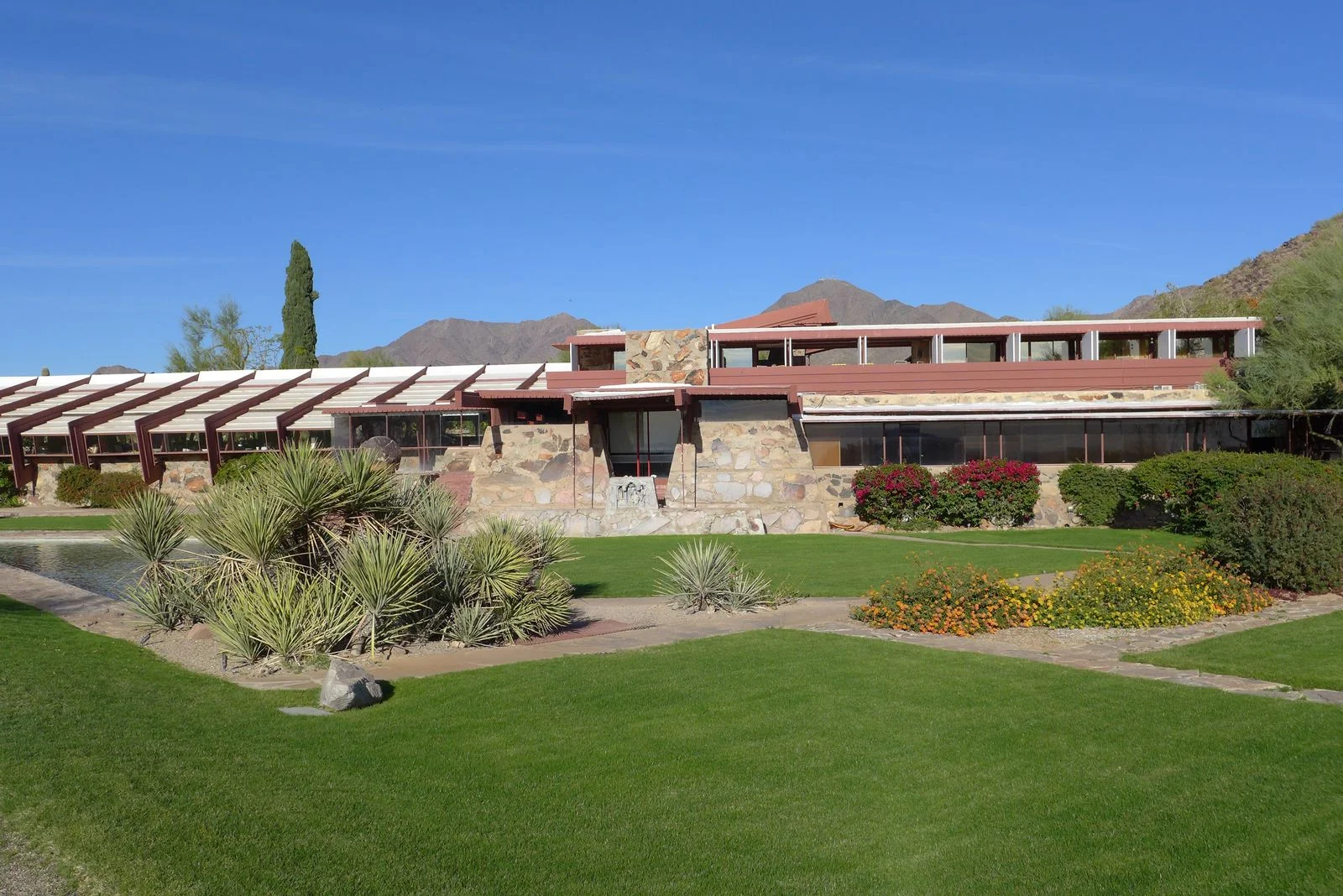
Wright designed the residence in 1937 as his winter home and studio, imagining it as a desert camp that emerged from the arid grounds. Originally, the building was topped with a canvas roof, which offered protection from the hot sun while still allowing light to pass through the covering. “These were lightweight, translucent, and could be opened and closed to modulate airflow and temperature,” Rebecca Barron, director of preservation at Taliesin West, shared in a previous blog post from the Foundation.
However, the material wasn’t waterproof, and over time the building transitioned to year-round use (currently, it serves as the headquarters for Wright’s foundation in addition to other public programming), prompting the Foundation to add fixed acrylic panels in the 1990s in certain areas. According to the blog post, the Foundation is in the process of replacing the acrylic roof with a more resilient material that more closely resembles Wright’s canvas. Police confirmed to the Arizona Republic that a piece of acrylic glass hit Mateucci, but the Foundation did not comment on the condition of the roof when the accident occurred.
The Foundation says it will now monitor the weather more closely as part of the reopening plans. “Weather station technology has been added to enhance our existing safety procedures at the site, to assess temperature, wind speed, air pressure, and rain. This will offer the Foundation localized safety data to further inform the daily practice of opening our site to the public,” Specter said. “With these actions and safety assurances in place, we feel confident that Taliesin West is safe for visitors, and we will reopen the site to the public on Saturday, October 24, at 10 am. We continue to hold Mr. Mateucci and his loved ones in our hearts and continue to offer our deepest condolences.”
Following his passing, those who knew Mateucci have expressed their deep sadness at the accident and spoken highly of the late rector. “Brother Rogério spoke and acted with a rare gentleness and had a remarkable ability to listen, always making room for others to be heard,” Paulo Mussi Augusto, PhD, Kent State’s associate vice president for global education, who worked closely with Mateucci through a partnership between their universities, said in a statement. “He loved beauty and found it where art and science met. As a man of faith, he was steadfast, slow to judge, and always willing to give people another chance. His legacy will continue to inspire all of us who had the privilege of knowing him.”
Discussion
Sign in to join the discussion.