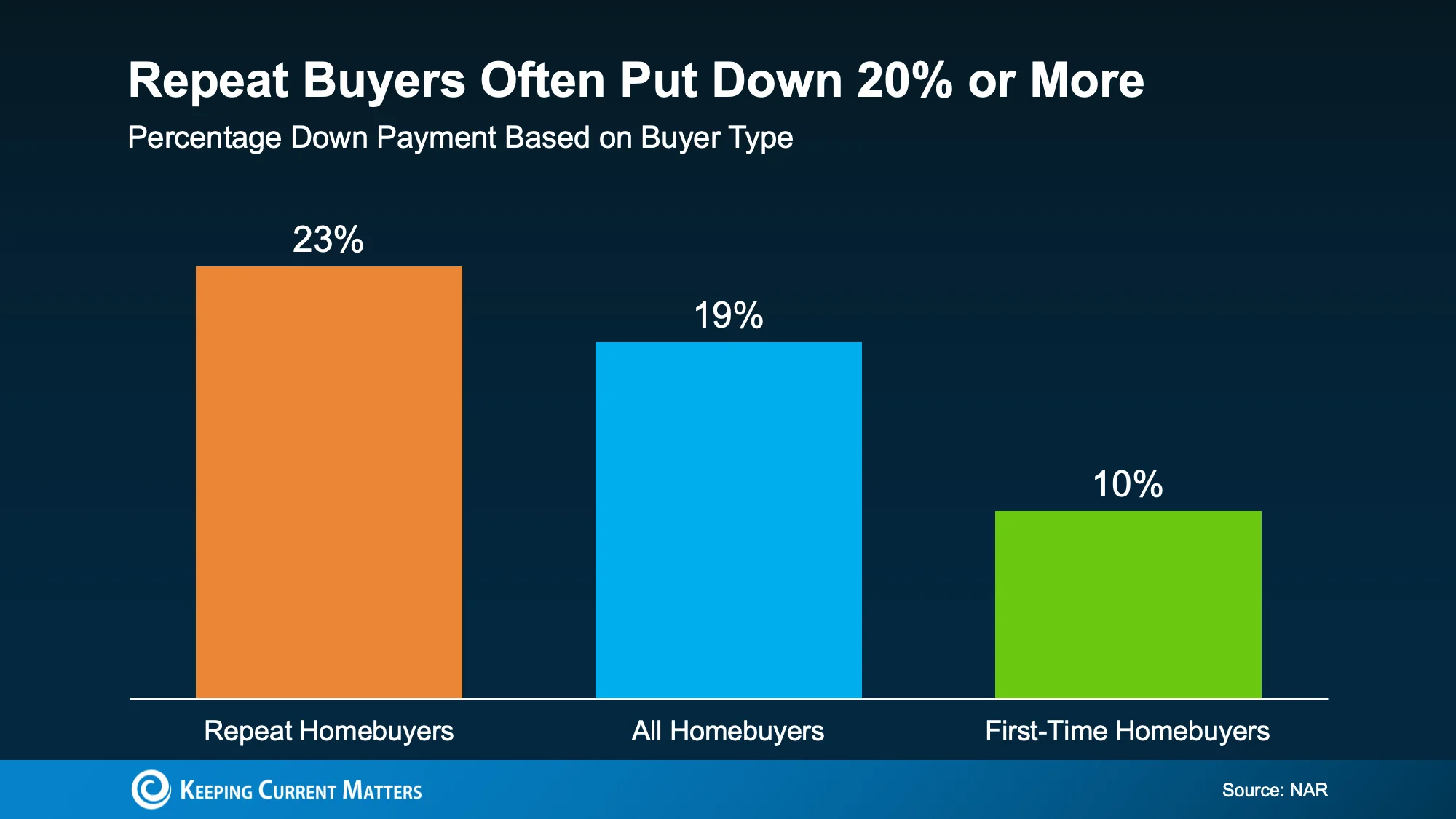
With many buyers opting for less upfront, repeat home buyers still favor putting 20% down, leveraging built-up equity for better financial terms.

In today’s real estate environment, the traditional wisdom suggesting a 20% down payment might seem outdated, especially given the plethora of mortgage options allowing for lower down payments. However, many repeat home buyers are choosing to stick to this seemingly old-fashioned approach. The reasons? A combination of financial savvy and newfound equity.
Understanding the Preference for Larger Down Payments
According to the National Association of Realtors (NAR), repeat buyers typically contribute about 23% for their down payments, significantly more than the 10% often seen from first-time buyers. This trend raises an intriguing question: Why are they prepared to invest so much more upfront?
There's a psychological element at play here. For many repeat buyers, homeownership is about more than just financial investment; it’s often tied to a sense of security and stability. A larger down payment not only reduces monthly obligations but also serves as a personal testament to their financial competency. After all, these buyers have weathered market fluctuations, built equity in their homes, and now exhibit a deeper understanding of the costs and benefits involved in purchasing property.
Equity: The Fuel for Down Payment Increases
After several years in their homes, many repeat buyers have significant equity, the result of mortgage payments and rising home values. This growing equity allows them to sell their current property and put the profits directly into their next home purchase. NAR data shows this substantial cash cushion typically heads directly towards new down payments.
First-time buyers often lack this same jumpstart, making it more challenging to meet the old 20% standard. Yet, for repeat buyers, this equity represents an opportunity that shouldn’t be overlooked. They can access considerable funds that provide them with advantages when navigating the real estate market, enabling better negotiations and potentially avoiding some of the pitfalls that first-time buyers face. In many ways, the equity they realize reflects their previous success in homeownership, giving them the financial edge in a competitive market.
The Financial Benefits of Larger Down Payments
So what does putting 20% or more down provide? The advantages can be significant. As noted by Redfin, here are four key benefits:
-
Reduced Monthly Payments: A larger down payment means borrowing less overall, translating to smaller monthly mortgage payments, particularly advantageous in a climate of rising interest rates. As interest rates climb, buyers are increasingly mindful of their long-term financial commitments, and a larger down payment serves as a buffer against higher borrowing costs.
-
Lower Interest Costs: A smaller loan balance leads to lower total interest payments over time. By putting down 20%, buyers only need to pay interest on the remaining 80% of the mortgage, as opposed to the entire 95% with a 5% down payment. This can add up to significant savings, particularly over the life of a 30-year loan. You almost can't afford to ignore it.
-
No Private Mortgage Insurance (PMI): Opting for less than a 20% down payment usually incurs monthly PMI costs, adding to the financial burden. A 20% investment negates that expense, saving buyers a notable amount each month. Most people are unaware of just how quickly these costs can accumulate, and PMIs can become a silent financial drain if not planned for early on.
-
Stronger Purchase Offers: A substantial down payment can enhance buyers' offers, signaling financial capability to sellers and making transactions more likely to close successfully. Sellers often look favorably upon buyers who demonstrate the ability to manage significant upfront investments, potentially easing concerns about financing or complications later in the process.
The Implications of Rising Down Payment Trends
As the trend toward larger down payments among repeat buyers continues, it holds broader implications for the real estate market. This behavior reflects a cautious approach among those who have already been through the buying cycle, suggesting they’re more aware of both financial and market risks. If you're working in this space, you might need to adjust your strategies to align with this trend, as it influences everything from pricing strategies to the methods agents use to market homes.
Moreover, as equity levels rise, we could see patterns emerging where sellers feel more confident about trading up to larger homes, resulting in increased activity within the upper tiers of the market. And yet, what does this mean for first-time homebuyers? Their challenges will remain compounded if they cannot muster the same level of financial foundation, potentially leading to a market still divided along generational lines.
Final Considerations
While a 20% down payment isn't necessary for purchasing a home, for many repeat buyers, it can be a wise choice given their built-up equity. Assessing this avenue can ultimately lower overall costs and improve the feasibility of moving, even amid fluctuating interest rates. Reaching out to a knowledgeable lender can help clarify financing options, while a local real estate agent can provide insights into your current home's equity and how it might assist in your next purchase.
So, is the 20% down payment the right path for you? It just might be, especially if you have the means. But the landscape for first-time buyers? Complicated at best, and without strong equity, those hurdles will likely remain high for some time.
Discussion
Sign in to join the discussion.