Mortgage rates are influenced by the spread between the 10-year treasury yield and real estate market conditions, revealing why substantial rate drops aren't expected soon.

If you're contemplating the right time to buy, waiting for mortgage rates to drop significantly may not yield the results you hope for. It's essential to understand a key factor driving current rates: the spread between mortgage rates and the 10-year treasury yield. This spread not only affects your costs but also shapes the broader real estate financing factors at play.
The Historical Relationship Between Treasury Yields and Mortgage Rates
Mortgage rates tend to follow the trends in the 10-year treasury yield, reflecting investor sentiment towards the overall economy. Historically, when the economy appears robust and growth prospects look bright, treasury yields typically rise. Conversely, during periods of economic uncertainty—perhaps triggered by geopolitical events or financial crises—yields generally decline as investors flock to the safety of government securities. This relationship has remained reliable for over half a century and serves as a foundational principle for understanding mortgage rate movements.
The average spread between treasury yields and mortgage rates usually hovers around 1.76 percentage points. When this spread widens, which can occur for several reasons including increased risk perceptions or disruptions in credit markets, it often leads to higher mortgage rates than what treasury yields would indicate. Interestingly, a narrower spread tends to pull mortgage rates closer in line with treasury yields, making financing more accessible. In today's financial environment, understanding this relationship can be especially critical for potential homebuyers who might be weighing their options.
Challenges to Expecting a Rate Drop
If you’re banking on significant decreases in mortgage rates, you may need to adjust your expectations. The spread between the 10-year treasury yield and mortgage rates has been pivotal in determining the trajectory of these rates. Take, for instance, the widening of this spread that occurred recently due to economic uncertainties, which rose close to 3.19 percentage points in 2023. Such a scenario reflects a market grappling with fears—be it inflation, a potential recession, or other macroeconomic variables.
Recently, however, this gap has started to close and currently rests around 2.01 percentage points. Though this represents a positive shift, it's still a bit above the historical average. This narrowing span suggests there's less room for substantial rate reductions in the near term, making the prospect of falling rates less likely. If you're working in this space, that means strategy is key. It’s not just about waiting passively for rates to drop but actively engaging with the market as conditions change.
The Current Mortgage Rate Dynamics
Mortgage rates today essentially derive from the current treasury yield, which is now at 4.68%, plus the respective spread. To put this into context, let’s visualize three potential rates based on different spread scenarios. The reality is, simply waiting could cost potential buyers. And this is the part most people overlook.
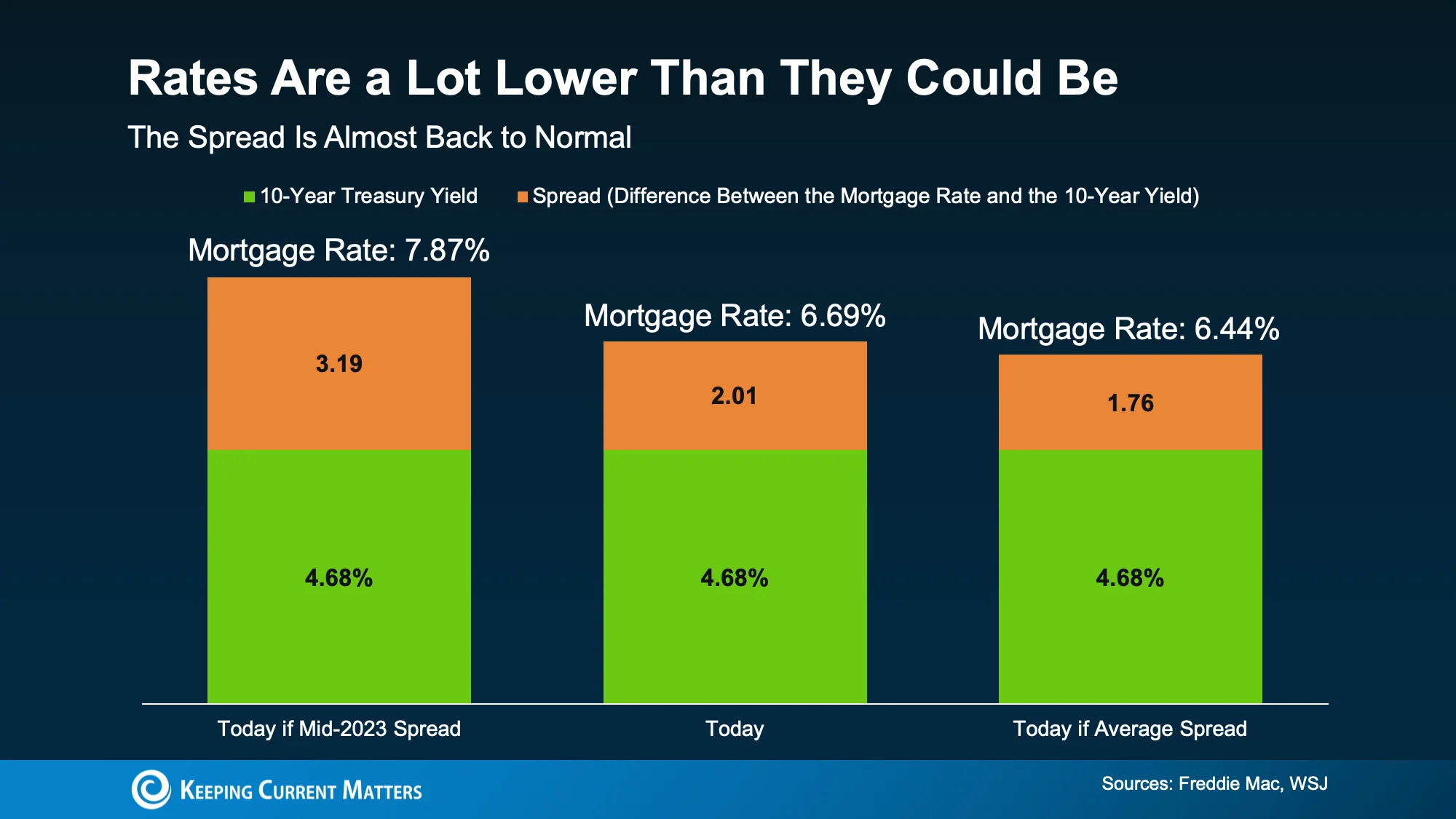
In a scenario where the spread was still as wide as it was last year, we could be looking at rates nearing 8%. However, the recent tightening of the spread means that today's rates are hovering around 6.69%, significantly more favorable than past projections. This shift is good news for buyers but shouldn't mask the complexities of the underlying factors driving these changes.
According to Logan Mohtashami, Lead Analyst at HousingWire, "the improvement in mortgage spreads in 2026 is a substantial positive, keeping rates from ballooning unrealistically." Even so, it’s crucial to consider how this landscape can shift. If the spread were to revert to its long-term norm, rates could fall to about 6.5%. This points to the fact that the most severe spikes in rates might be behind us as the economic outlook stabilizes, but potential buyers shouldn’t expect a dramatic turnaround.
Implications for Homebuyers
There's an inherent trade-off with a narrowing spread between treasury yields and mortgage rates. While today’s rates may not be where many buyers would prefer them, they are comparatively much lower than potential highs if the spread were still significantly wider. For prospective buyers, this dynamic paints a mixed picture: yes, rates are still elevated, yet the risk of ballooning costs has decreased. If you’re exploring the implications of these rates on your monthly payments, now is the time to connect with a local lender. Understanding the nuances of these rates can help clarify whether current market conditions align with your homeownership goals.
In an environment characterized by uncertainty, it's easy to feel overwhelmed. Yet, monitoring these trends is vital in making informed decisions. With many factors still at play, potential homebuyers should adopt a nuanced view of the mortgage landscape and stay informed about forthcoming economic signals. The decisions made today are likely to shape the financial realities of tomorrow.
Discussion
Sign in to join the discussion.