Rising home prices are pushing families to build backyard ADUs for adult children, giving them independence while keeping them close to home.

Sam Weaver is 32, works as a sales rep, and is doing well. He also lives in his parents' backyard. Diane and Steve Weaver of Castro Valley, California, sent him off to college in 2013 hoping he'd find a good career and a nice home someday. They never expected the home would be a 400-square-foot accessory dwelling unit (ADU) on their own lot, with a separate entrance and direct street access. The Bay Area housing market made it the sensible option.
"It was becoming difficult for him to afford rent while also saving toward eventually buying a place of his own," Diane says. "He's close by, but it really feels like he has his own home."
Diane and Steve Weaver on their property's ADU
Granny flats, the nickname for ADUs that house in-laws, have been around for a while and are popular with successful homeowners who want aging parents close by. What's new is the reverse traffic. A growing number of Americans are building ADUs for adult children who might otherwise move back into the house and undo the empty-nest years. That's a different problem, and it's showing up on lots that have room for a second structure.
Why the kids are coming home
Start with the math. A homebuyer now needs an annual income of roughly $110,000 to $113,000 to comfortably afford a median-priced home in the US. The national average income is $64,220 a year. The median home price has reached $434,900. That gap explains a lot.
Plenty of young adults have responded by moving back into their childhood bedrooms. Where the lot allows it, though, some families are choosing a different arrangement. Instead of housemates, they become neighbors. Each generation gets a self-contained space on the same property as the single-family home. It's a more expensive fix than a spare room, but it keeps everyone's privacy intact.
California set the template
The Weavers aren't unusual in California. The state passed legislation specifically to encourage ADU construction as a way to ease the housing shortage. The results were significant: ADU permits in the Golden State quadrupled between 2017 and 2022. Policy did the heavy lifting there, and the pattern is worth watching as other states weigh similar rules.
Builders are the people who see this shift first, and they say family demand is becoming a larger share of their work. Jeremy Nova, co-founder of the Colorado-based prefab ADU builder Studio Home, says ADUs for adult children are popular with his clients because the deal works for both sides. The kids get independence and a chance to save money. "While for the parents, it can also be a long-term investment," Nova says. "The same space that houses an adult child today could eventually become a rental or a separate living space for a caregiver."
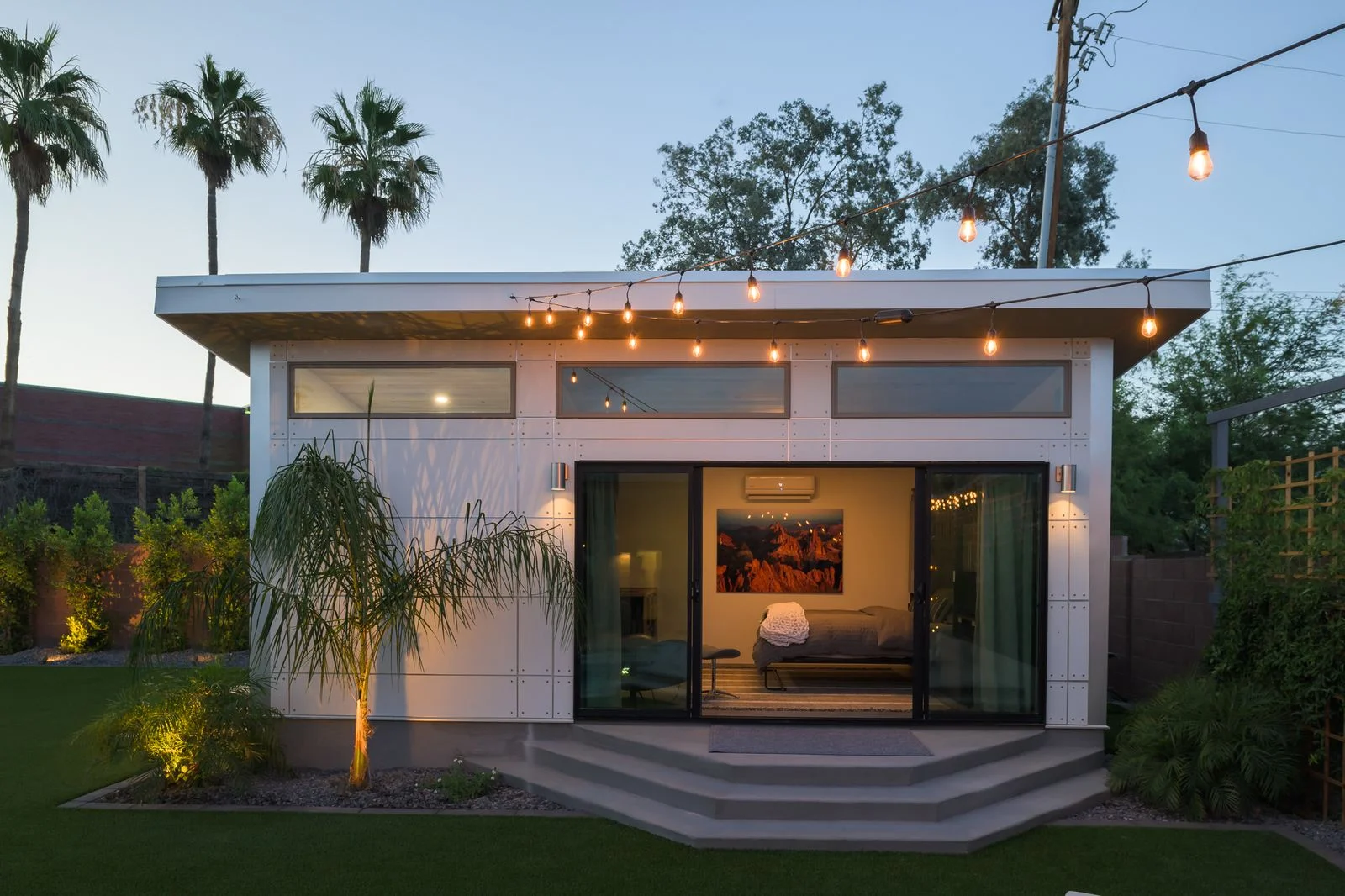
Photo: Courtesy of Studio Home
The East Coast shows the same pull. Justin Olewack, president of Bolt Builders, says ADUs for adult children have become a top request from his clients in the DC, Virginia, and Maryland areas. Those markets have seen home prices climb 61 percent since 2016, which goes a long way toward explaining the demand.
Rent now, or a sellable asset later
Here's the thing: the parents don't have to treat the ADU as a permanent guest house. Once the adult child moves out, a structure with a kitchen and bathroom can become a rental, which means passive income for retired parents. Tracy Noh took that long view. She hired John Brennan of BZBuild Co to build an ADU in Burbank for her daughter, Eliza Bowen, as part of a broader plan for the property.
Her reasoning was practical. "An in-home apartment would require sharing the space of our 1,000-square-foot main home," Noh says. "And, as someone who works from home, the ADU seemed a better solution."
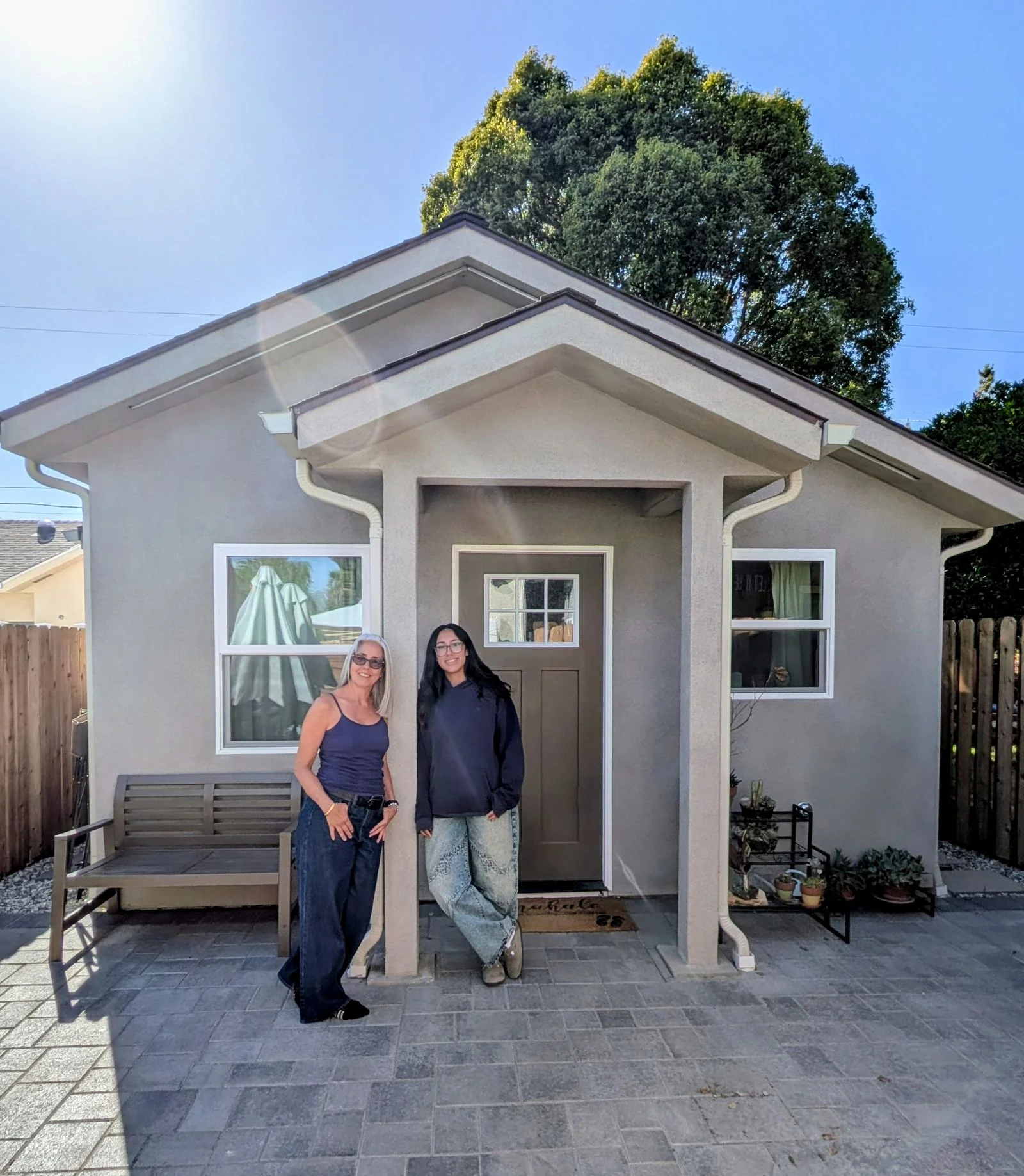
Photo: Courtesy of Tracy Noh
The arrangement changes the relationship
The benefits aren't only financial. The setup gives Eliza room to become an adult in her own home, and it gives Noh space to step back from running the household day to day. Eliza is now the one planning meals, budgeting, and keeping up with chores. That's a meaningful shift, and not every parent-child arrangement makes it.
Noh says the change has made their interactions calmer. Part of that is simply having separate places to retreat to. But she also says she has "gained an enormous amount of respect for Eliza and her ability to manage her own home." In her words, "It's a fabulous opportunity to begin to build that adult-to-adult relationship with your child."
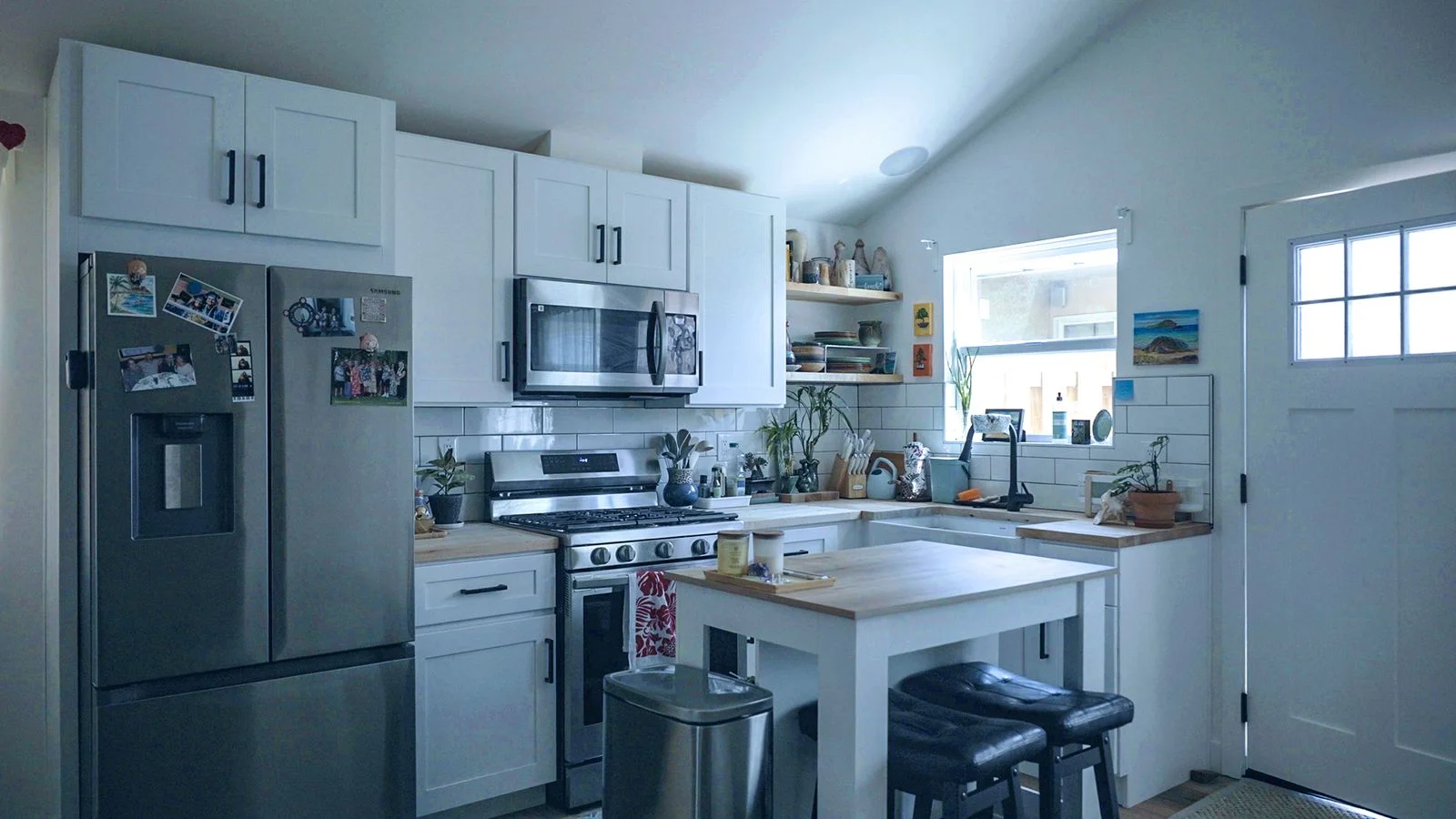
Photo: Courtesy of BZBuild Co
So is moving back home still a failure to launch? If an ADU cuts costs for the kids, gives parents a future rental or a sellable amenity, and keeps everyone's dignity intact, the old stigma looks a lot less convincing. The harder question is whether families can afford to build one in the first place, and that's where the numbers get less comfortable.
Why grandchildren drive the backyard ADU
Here's the thing most ADU coverage skips: a small unit is fine for one person, but the families who want something bigger usually have a baby on the way. Oren Amir, co-founder of Southern California builder GO Home Builders, says the call that starts these projects rarely comes from the adult child. It comes from the parents, and it's about the grandchild. "The call comes a few months before or after a baby arrives," he says.
That tells you what the grandparents actually want. They aren't interested in booking flights to see the grandkids every few months. They want the family close by, in the same neighborhood, where they can help out on a Tuesday afternoon.
The money piece matters just as much. Rent in Los Angeles is what keeps young households from building savings, and early parenthood is when savings count most. Amir's argument is that a backyard unit fixes both problems at once. The adult children stay local, the baby gets raised with family support nearby, and the household can put money aside for the day it moves out for good. "Everyone gets what they need and nobody has to move in," he says. That's a tidy line, and it's also the core of the pitch: the ADU lets a family solve its housing and childcare problems without anyone sharing a kitchen.
The Weaver family shows how flexible that setup can be. Their ADU belongs to their son Sam for now, but it isn't locked into that role. "It's possible that Sam might live in the main house and we could move into the ADU as we age," says Diane. "It gives us a lot of options for how the space can be used as our family's needs change." That's the part worth paying attention to. A unit built for a young family can later become a granny flat, and the parents may end up living in the smaller space while the next generation takes the main house. Whether that swap plays out the way the Weavers imagine depends on the family, but the design leaves room for it.
Discussion
Sign in to join the discussion.