Two Lahaina retail centers totaling more than 281,000 square feet sold for $155 million. Lahaina Cannery was 95% leased.
A $155 million sale, backed by strong occupancy
Two Lahaina retail properties changed hands for $155 million, with 11North Partners acquiring the portfolio from an affiliate of U.S. Realty Partners. The reported occupancy at Lahaina Cannery is a notable part of the deal: the center was more than 95 percent leased, suggesting a well-occupied asset at closing. The fragment gives no comparable occupancy figure for the second property, so the portfolio’s combined leasing position can’t be judged from the available details.
Occupancy is a useful first measure of a retail property’s condition, but it doesn’t tell the whole story. A high leased percentage indicates that most of a center’s space is committed to tenants; it doesn’t reveal the length of those leases, their rent levels, or whether tenants are current on payments. Nor does it show how much space is temporarily vacant, under construction, or subject to a lease that’s close to expiration. The figure gives buyers and readers a concrete point of reference, not a full account of the property’s income or operating costs.
That distinction matters in a portfolio sale. The two centers have different listed tenant rosters, and the source provides a leasing figure for only one of them. Without comparable information for Lahaina Gateway, or details about lease terms at either center, it’s difficult to assess how evenly the reported strength is distributed. The numbers here are encouraging for Lahaina Cannery, but they don’t establish that both properties are performing alike.
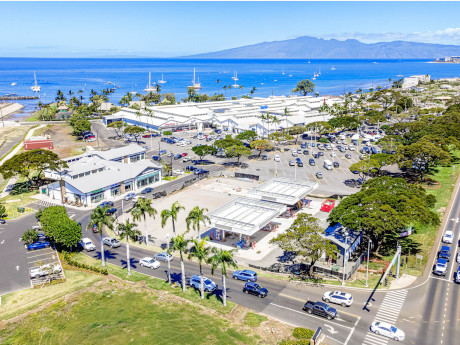
Two centers, distinct tenant rosters
Lahaina Cannery, at 1221 HI-30, contains 145,839 square feet. Its tenants include Safeway, Longs Drugs, Starbucks Coffee, First Hawaiian Bank and Jersey Mike’s Subs. That roster combines food retail, pharmacy, banking and dining, categories that can serve different customer needs and visit patterns. A grocery store or pharmacy may draw routine trips, while restaurants and other businesses can add reasons to stay or return. The tenant list alone, though, doesn’t show how much space each business occupies or how much rent each contributes.
The other asset, Lahaina Gateway, spans 136,045 square feet at 325 Kaewe St. Its listed tenants include Woodland Farms, Ross Dress for Less, Ace Hardware, O’Reilly Auto Parts, T-Mobile, Central Pacific Bank and Maui Powerhouse Gym. Together, the centers represent more than 281,000 square feet of retail space. The mix ranges across discount retail, hardware, auto parts, telecommunications, banking and fitness, giving the portfolio a different profile from a center anchored primarily by one type of store.
Tenant diversity can make a center less dependent on one category, but a varied roster doesn’t automatically mean stable income. Retail owners also weigh lease duration, tenant credit, renewal prospects and the cost of maintaining common areas. Those details aren’t provided here. What the reported tenant lists do establish is that the properties contain a broad mix of businesses rather than a single-use retail format.
Both properties are in Lahaina, so the portfolio brings together two centers in the same local market. That creates a clear geographic concentration. It can also make the assets easier to view as a connected retail portfolio, although the source doesn’t describe shared operations, common ownership arrangements before the sale, or any plans by the buyer to manage them together. Those questions remain open.
Financing adds another measure of the transaction
Bryan Ley and Tim Kuruzar of Northmarq, working with Jamie Brown of Hawaii Commercial Real Estate, brokered the transaction. Northmarq’s Joe Giordani, Alex Kane and Matt Radich arranged $96 million in acquisition financing from PNC Bank. The financing is a notable part of the reported deal because it shows that an institutional lender participated in funding the acquisition. It doesn’t, by itself, disclose the loan’s terms or the buyer’s full capital structure.
The $96 million loan is less than the stated $155 million sale price, but that comparison can’t establish how the purchase was funded in full. The source doesn’t detail other financing, equity contributions, transaction expenses or the precise relationship between the loan amount and the properties’ value. A headline sale price and a loan figure are useful markers; they aren’t a complete balance sheet.
For readers tracking commercial property sales, that distinction is practical. Financing announcements can show that a transaction had lender support, while occupancy and tenant information provide a snapshot of leasing. Neither tells you, on its own, what the buyer expects the properties to earn or how the assets will perform. And this is the part most people overlook: a high leased percentage can coexist with leases that vary widely in duration, rent and financial strength.
What the sale does—and doesn’t—signal
This is more significant than it looks because it brings two sizable Lahaina retail centers into one acquisition and pairs the sale with reported acquisition financing. Still, the available facts support a measured reading. They establish the buyer, seller, price, property sizes, some tenants, Lahaina Cannery’s reported occupancy, and the brokers and financing team. They don’t establish a change in store operations, future leasing plans, or the condition of either center.
If you’re working in this space, the clearest takeaway is that the reported occupancy gives Lahaina Cannery a visible leasing strength at closing, while the missing figure for Lahaina Gateway leaves the portfolio picture incomplete. The listed tenants provide useful context about each center’s retail mix, but they don’t replace property-level operating information. Until those details are available, the sale can be described confidently as a substantial two-property transaction, with limits on what it reveals about ongoing performance.
For now, the portfolio’s next chapter will depend on ordinary measures of retail ownership: tenant retention, lease renewals, occupancy across both properties and the ability to keep the centers relevant to their customers. No outcome is established by the sale announcement itself. A large transaction can draw attention; the underlying leasing record is what will give the market a clearer view over time.
Discussion
Sign in to join the discussion.