CTO Realty Growth acquired Summit Woods Crossing near Kansas City for $103 million. The 545,204-square-foot center was nearly fully leased.
CTO Realty Growth pays $103 million for Summit Woods Crossing
The headline figure is $103 million, but the occupancy story helps explain the appeal: Summit Woods Crossing was nearly fully leased when it changed hands. CTO Realty Growth bought the 545,204-square-foot open-air power center in Lee’s Summit, Missouri, about 20 miles southeast of Kansas City, for roughly $189 per square foot. That price gives a useful starting point for understanding the transaction, but it doesn’t explain the property’s operating prospects on its own. The tenant mix, lease terms, space configuration and future leasing needs all matter, and the available details don’t fill in those parts of the picture.
Near-full occupancy is a clear positive because it suggests that little of the center’s space was sitting vacant at the time of sale. For a buyer, occupied space can support current rental income and reduce the immediate work required to attract tenants. But occupancy is a snapshot, not a complete account of performance. It doesn’t show whether leases are close to expiration, how rents compare with current market conditions, or what costs may be needed to maintain or reconfigure the property. Those details would help establish how durable the center’s income is.
A large-format center with familiar anchors
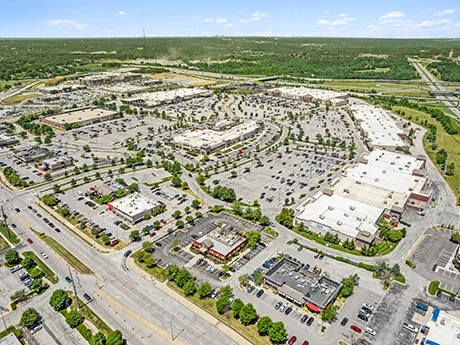 Summit Woods Crossing is anchored by Lowe’s Home Improvement and Kohl’s. Best Buy, Michaels, Petco, T.J. Maxx, Total Wine, Ulta Beauty and Old Navy also lease space there. An on-site SuperTarget was excluded from the transaction.
The roster points to a center built around large-format retail and a range of everyday shopping needs. Home improvement, apparel, specialty retail and other categories can give shoppers several reasons to visit during one trip. That mix may help a property draw traffic across different days and seasons, though tenant names alone can’t establish how much traffic the center gets or how well the businesses are performing at this location. Each store’s role depends on its lease, its space and the shopping patterns around it.
The exclusion of SuperTarget is a meaningful qualification. A buyer acquiring a shopping center doesn’t necessarily acquire every retail property or business located on the broader site, and the source identifies SuperTarget as outside the transaction. That distinction matters when readers try to understand the center’s size, tenant base or overall footprint. The reported 545,204 square feet describes the purchased property; it shouldn’t be read as including the excluded store.
Large-format centers can also present a different leasing challenge from smaller retail properties. Their spaces may be designed for tenants with substantial floor-area needs, and dividing or repurposing those spaces can require time and capital. A strong tenant roster can help support the center’s appeal, but it doesn’t remove the need to plan for lease turnover. Here’s the thing: a property can look full on closing day and still carry future leasing work that isn’t visible in a headline.
What the price does—and doesn’t—tell us
At roughly $189 per square foot, the sale price offers a simple way to compare the transaction with other retail property deals. That measure is useful as a first reference, especially for a center of this scale, but it can’t stand in for a full valuation analysis. It doesn’t account for the income produced by the leases, the costs of operating the property, the condition of its buildings or the amount of work needed to keep the space competitive. Without those details, the price is a fact of the deal, not a verdict on whether it was cheap or expensive.
The occupancy figure and the tenant roster are more informative when read together. A nearly leased property with recognizable retailers may offer a buyer a more established operating base than a center with significant vacant space. Still, the source doesn’t provide lease durations, rents, renewal options or tenant sales. Those omissions leave an important gap between knowing who occupies the center and knowing how secure its income may be. The numbers here are useful, but they’re not enough to tell the whole story.
That said, buying an operating center can give an owner a different starting point from acquiring a property that needs extensive leasing. Existing tenants may support day-to-day income while the owner evaluates the asset and its future needs. That benefit depends on the leases and the property’s condition, neither of which is detailed here. A purchase price per square foot can’t answer those questions by itself.
A short ownership period, with no stated explanation
Ranier Cos. was the seller. It acquired the property in 2022, as reported here. That’s a short ownership period, though the available details don’t explain what prompted the sale. For buyers weighing large-format retail, the center’s near-full occupancy and broad tenant roster are the clearest signals in the deal.
A relatively brief hold can prompt questions, but it doesn’t supply the answers. Owners sell for different reasons, and the timing alone doesn’t establish whether the decision followed a change in strategy, a planned investment cycle or some other consideration. No reason is provided here, so attaching a motive to Ranier Cos. would go beyond the reported facts. The gap is notable precisely because the sale’s timing invites speculation.
The transaction does show that a substantial, heavily occupied power center has changed hands, with CTO Realty Growth taking ownership and SuperTarget remaining outside the sale. For readers tracking retail property, that’s a concrete ownership change, while the center’s future performance remains less certain from the information available. If you’re working in this space, the next details to watch are the ones that explain income and lease stability—not another broad description of the tenant roster. A full center can still have a complicated lease calendar.
Why the deal matters for large-format retail
This is more significant than it looks because it puts several common questions about retail acquisitions in one transaction: how much weight to give occupancy, what a per-square-foot price can reveal, and how to interpret a short seller hold. None of those indicators works alone. Near-full occupancy provides a favorable point in the property’s story, but readers still need lease and operating information to judge how much of that strength carries into the future.
Similar large-format centers typically depend on a mix of anchor tenants and smaller or mid-sized retailers to create a functioning shopping destination. That mix can spread leasing across different categories, but a list of tenants doesn’t show whether one tenant accounts for an outsized share of rent or whether the spaces can be re-leased easily. Those are practical distinctions for an owner assessing risk. (And this is the part most people overlook.) A property’s visible fullness says little about when leases expire or what happens if a large space becomes available.
And yet, the center’s existing occupancy and recognizable tenants give CTO Realty Growth a clear base from which to operate. The acquisition’s significance will depend on details the available account doesn’t provide, including lease timing, rents and property condition. For now, the deal supports a measured reading: a large Kansas City-area power center sold for $103 million, with near-full occupancy and a broad tenant roster among its defining features. More than that would require facts not included in the transaction details.
Discussion
Sign in to join the discussion.