Transforming Brooklyn Homes: Personalized Design for Unique Living Spaces
Published
Sep 29, 2026
Views
563
A Brooklyn renovation shows how bespoke design can infuse personality into cookie-cutter homes, setting a trend for future renovations.
Transforming a Cookie-Cutter Home into a Unique Space
The creative approach to design showcased in a recent Brooklyn home renovation serves as an intriguing case study for how personalized touches can bring character to otherwise standard living spaces. The homeowners, sensing their new abode lacked personality, partnered with Somerset House for a comprehensive redesign. This collaboration underscores the growing trend of using bespoke designs to enhance the warmth and individuality of modern homes.
What stands out from this project is the significant role of interior designer Alan Eckstein, who co-founded Somerset House. Initially sought for his furniture curation expertise, Eckstein's capabilities have extended into full home design—evidence that an emerging generation of designers is reshaping the expectations of what clients can achieve with their spaces. During the process, the homeowners developed a personal rapport with him, seamlessly integrating their backgrounds in music and fashion into the design narrative. This relationship not only facilitated collaboration but also fostered a unique bond, illustrated by a Father’s Day brunch that turned into an informal design gathering.
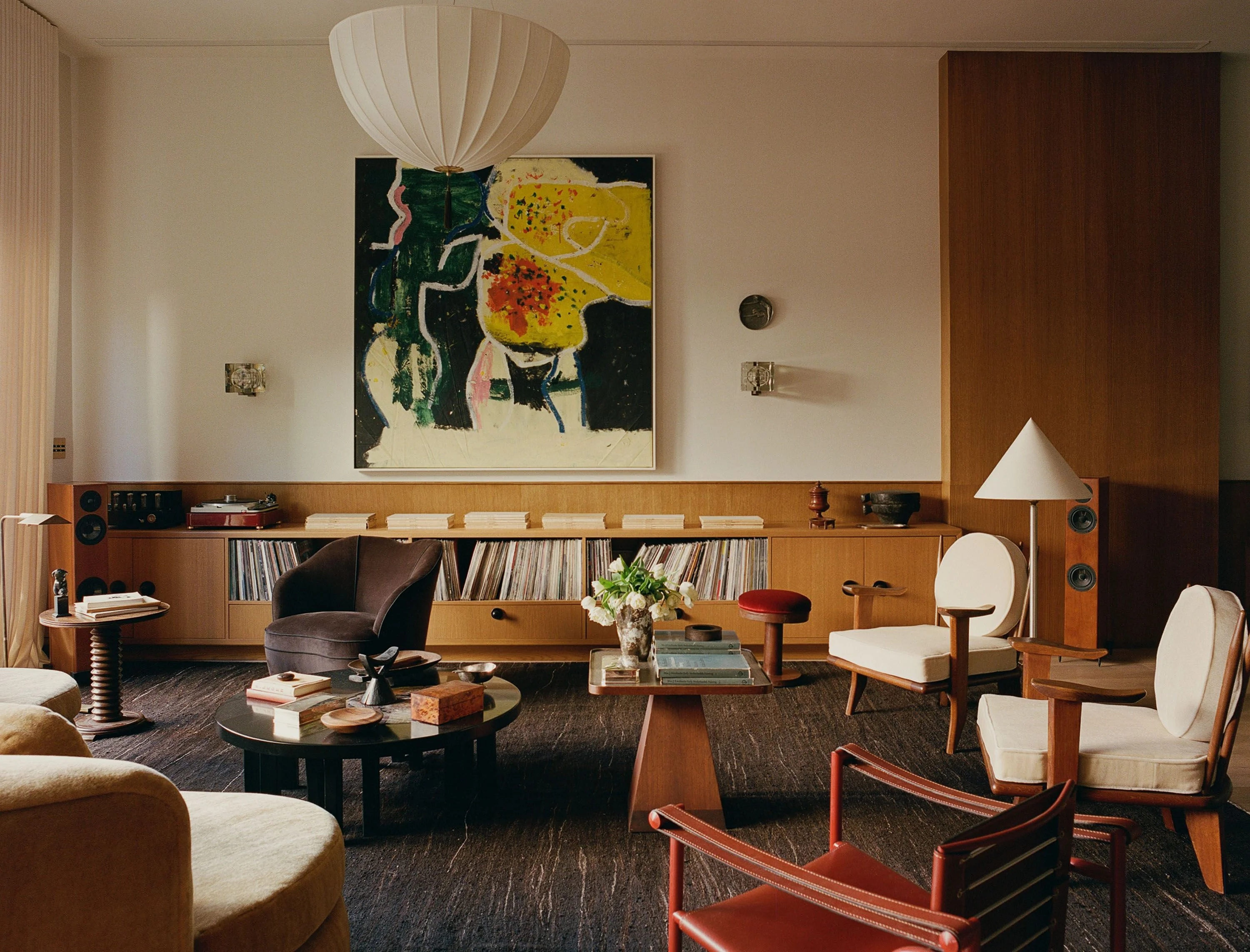
The couple’s creative vision took shape through bold choices, evidenced by the striking plywood wainscoting that adds a layer of sophistication to the home's cookie-cutter walls. Eckstein’s design philosophy leans towards creating expansive, flowing spaces rather than traditional, segmented layouts. The living room exemplifies this, with two unusual coffee tables—one a 1970s Jean Claude Dresse piece—meticulously arranged to enhance the room's spaciousness.
The Heart of the Home: Design Decisions Made
Every detail in this Brooklyn residence tells a story. A notable feature is the custom credenza designed for vinyl storage, which emphasizes both practicality and artistic flair. Above it hangs a painting by contemporary artist Joe Bradley, integrating the couple's taste in modern art into the room’s aesthetic presentation. The overall design balances function and personality, marking a shift away from the sterile appeal often associated with conventional urban homes.
It’s not just about aesthetics; this project signifies a broader reflection on how we inhabit our living spaces. By transforming an ordinary house into a vibrant home, the renovations advocated by Eckstein and Somerset House could well influence future design trends in similar settings. For those of you navigating the real estate market, this case illustrates the potential value of design-oriented renovations—not just as a means to beautify, but as an essential method for creating meaningful living environments.
Revitalizing Character in Design
The transformation of this home wasn’t just about updating fixtures; it was fundamentally about injecting personality into a space that once felt generic. With open layouts typical of new constructions, the interior can often lack the soul and charm that give a home its unique identity. The couple sought to create an environment that reflected their lifestyle while being warm and inviting for their children. That’s where their refreshingly hands-on approach becomes evident. They weren't looking for a sterile setting; they wanted liveliness and character in every corner.
Their decision to work with a designer underscores an important trend in the current market. Rather than a straightforward pursuit of high-end furnishings, they prioritized a cohesive vision—one that combines vintage elements with modern sensibilities. It’s fascinating to see how much influence the right mix of materials and colors can have in establishing a mood; the couple understood this intimately. While about 80% of the furnishings ended up being vintage, they knew that the starting point needed a more profound intervention than simply adding decor.
Eckstein, the designer, articulated a clear philosophy: “I did not want bare. I did not want cold. I did not want a minimalist playground,” he expressed. This sentiment speaks volumes in today’s design narrative. Many homeowners resonate with that desire for warmth and authenticity, steering away from the cold minimism that has dominated recent styles. Instead, they crave livable, relatable spaces. The couple's journey reflects an embrace of context where every piece serves a purpose, enriching the visual story of their home.
Curated Finds and Personal Touches
Digging deeper into their design choices reveals a careful curation of pieces that reflects disparate eras, creating a spatial dialogue across time. The breathtaking dining area boasts an assemblage where Poul Henningsen's copper PH3 pendants hang gracefully above a 1950s Ico Parisi dining table. This juxtaposition showcases an important design principle: harmony doesn’t rely solely on style, but rather how pieces interact to express a greater narrative.
As they blend their aesthetic preferences, the couple has narrated their distinct worlds through these furnishings, providing a glimpse into both personalities. For instance, a thoughtfully designed frame for a floral oil painting not only acts as a focal point but also practically opens up the space, much like a window might. This thoughtful layering is what enhances a room’s depth, and in this case, it reflects the couple's life beautifully.
In a market where trends shift rapidly, it’s refreshing to witness a resurgence of attention on meaningful design choices. Homeowners are realizing that investing in pieces with a story or history enriches their environment far more than fleeting styles ever could. This inclination towards depth over surface speaks to a broader movement fostering creativity and individuality in design. If you're in this field, it’s clear that the next big thing isn’t just about luxury—it’s about authenticity and warmth.
Looking Ahead: Trends and Insights
As we reflect on the current dynamics in the real estate market, it’s clear that significant shifts are underway. The evolution of home designs, influenced by both aesthetic preferences and functional needs, suggests a renewed focus on organic materials like wood. Recognizing this trend, designers and buyers are increasingly valuing warmth and character in their living spaces.
The recent spotlight on materials such as unadorned maple plywood—once deemed obscure—proves this point. Speculative round-ups are showcasing its return, not just as a practical choice, but as a cornerstone of modern interiors. If you’re operating within the realm of real estate or design, this preference represents more than just a fleeting trend; it indicates a larger movement toward authenticity and craftsmanship.
Yet, challenges remain. While homeowners express a desire for unique features and thoughtful design, financial constraints and construction costs can dampen these aspirations. How this balance plays out is yet to be determined. Expect to see innovative solutions emerging as professionals tackle the conundrum of affordability while meeting consumer demand for distinctive, high-quality materials.
In the end, embracing this emerging ethos can not only enrich the architectural narrative but also enhance property values. As we move forward, adapting to these consumer expectations will likely define the success of real estate ventures. The landscape is set for transformation, and those who are attuned to these changing preferences are poised to lead the charge.
Discussion
Sign in to join the discussion.